Oregon’s firearm storage rule is ORS 166.395, titled securing firearms, penalties and civil liability. It says an owner or possessor of a firearm shall, at all times that the firearm is not carried by or under the control of the owner, possessor or authorized person, secure the firearm with an engaged trigger or cable lock, in a locked container, or in a gun room. [1]
This guide covers what the Oregon statute says, the definitions that give it meaning, what makes a firearm not secured, the exceptions, the violation classes and fines, and the civil liability rule. It describes the statute text as of October 2026. This is general information, not legal advice.
- Oregon’s ORS 166.395 requires an owner or possessor to secure a firearm with an engaged trigger or cable lock, in a locked container, or in a gun room whenever it is not carried by or under the control of an authorized person. [1]
- In Oregon a firearm is not secured if a key or combination is readily available to a person the owner has not authorized. [2]
- Oregon treats a violation as a Class C violation, rising to Class A if a minor obtains the unsecured firearm and the owner knew or should have known a minor could gain access. [2]
- Oregon violations carry fines but no imprisonment, and the securing rule also creates per se negligence if the firearm injures someone within two years. [3] [2]
What ORS 166.395 says
ORS 166.395 is a securing duty rather than a ban on any particular act. In Oregon, the duty applies at all times that a firearm is not carried by or under the control of the owner, possessor or authorized person. [4]
When the firearm is outside that control, Oregon lists three ways to secure it: with an engaged trigger or cable lock, in a locked container, or in a gun room. [1]
The session-law note on the statute reads 2021 c.146 section 3. [1]
Who the Oregon statute covers and what “control” means
The Oregon duty falls on an owner or possessor of a firearm. It is not limited to households with children, and the base duty does not mention a child. A minor appears later in the text, where the penalty rises if a minor obtains an unsecured firearm. [1]
ORS 166.392 defines the word that decides when the duty applies. Control, in relation to a firearm, means that the owner or possessor is close enough to the firearm to prevent another person who is not an authorized person from obtaining it. [5]
The second branch of the definition is the home. Oregon also treats a firearm as under control when the owner or possessor is in the person’s own residence, either alone or with only authorized persons who also live in the residence and who are not minors, and the residence is secure. [5]
Oregon defines a minor as a person under 18 years of age. [5]
What counts as secure storage in Oregon
Oregon defines each of the three options in ORS 166.392. A trigger or cable lock is a device that, when installed in a firearm, is designed to prevent the firearm from being operated without first deactivating the device, or a device incorporated into the design of the firearm that is designed to prevent its operation by any person not having access to the device. [5]
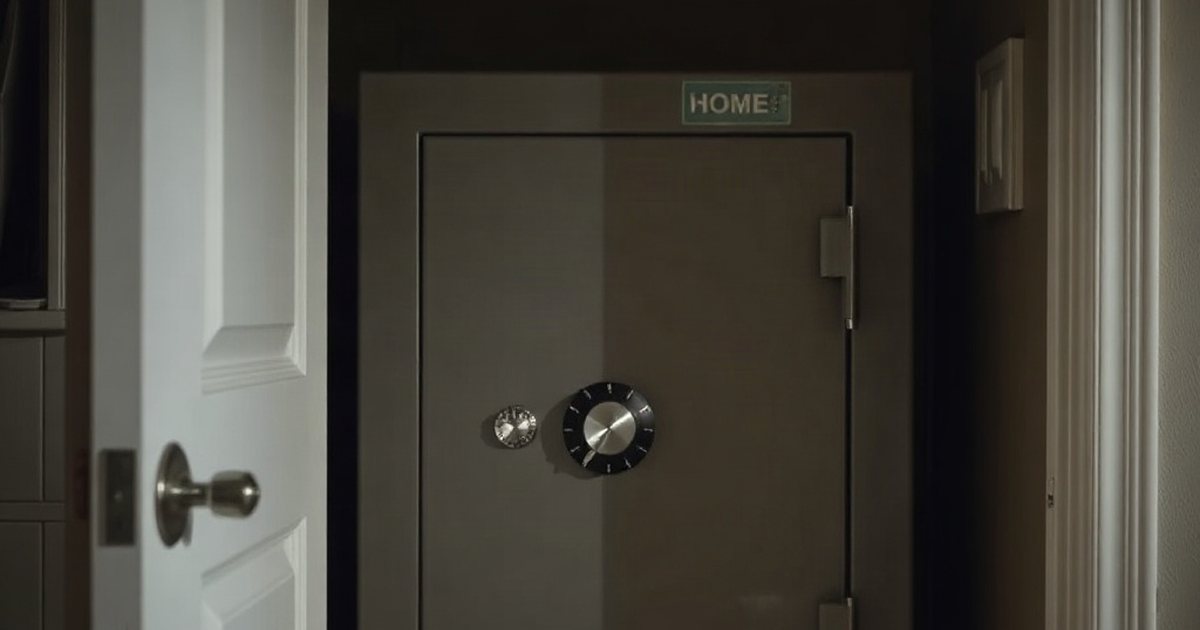
A container, in Oregon’s definition, is a box, case, chest, locker, safe or other similar receptacle equipped with a tamper-resistant lock. Within a vehicle it includes a glove compartment, enclosed trunk or center console equipped with a tamper-resistant lock. [5]
A gun room is an area within a building enclosed by walls, a floor and a ceiling, including a closet, that has all entrances secured by a tamper-resistant lock and that is kept locked at all times when unoccupied. [5]
When an Oregon firearm is not secured
Oregon then lists situations in which a firearm is not secured. One is where a key or combination to the trigger or cable lock or the container is readily available to a person the owner or possessor has not authorized to carry or control the firearm. [2]
Another is a handgun that is left unattended in a vehicle and is within view of persons outside the vehicle. [4] These parts of the text show that Oregon looks at who can open the lock, not only at whether a lock exists.
Exceptions in the Oregon text
Oregon exempts certain police officers. ORS 166.395 does not apply to a police officer, as defined in ORS 181A.355, with respect to a particular firearm if storage of the firearm is covered by a policy of the law enforcement agency employing the officer and the firearm is stored in compliance with the policy. [1]
The civil liability rule has its own exceptions. It does not apply if the injury results from a lawful act of self-defense or defense of another person. It also does not apply if the unsecured firearm was obtained by a person as a result of the person entering or remaining unlawfully in a dwelling. [1]
Related Oregon sections cover transfers. When a transfer requires a criminal background check, the person shall transfer the firearm with an engaged trigger or cable lock or in a locked container. [6]
Another provision says that a person who delivers or otherwise transfers a firearm to a minor shall directly supervise the minor’s use of the firearm. [6]
Oregon violation classes, fines and civil liability
In Oregon, a violation of the securing duty is a Class C violation. [1] The penalty rises to a Class A violation if a minor obtains an unsecured firearm as a result of the violation and the owner or possessor knew or should have known that a minor could gain unauthorized access to the unsecured firearm. [2]
ORS 153.018 sets the maximum fine for an individual: $2,000 for a Class A violation, $1,000 for a Class B violation, $500 for a Class C violation and $250 for a Class D violation. [3] That means the maximums for ORS 166.395 are $500 at Class C and $2,000 at Class A.
The same fine statute says the law creating a violation may impose other penalties in addition to a fine but may not impose a term of imprisonment. [3] Each firearm owned or possessed in violation constitutes a separate violation. [1]
Civil liability is a separate track. If a firearm obtained as a result of a violation is used to injure a person or property within two years of the violation, then in an action against the owner or possessor to recover damages the violation constitutes per se negligence. [2]
The statute adds that the presumption of negligence may not be overcome by a showing that the owner or possessor acted reasonably. [1]
How Oregon courts have applied the statute
The statute sets the structure a court would work from. It has a base duty, three defined ways to meet it, a list of situations in which a firearm is not secured, two violation classes, a separate violation for each firearm, and a civil rule that treats a violation as per se negligence. [1]
The civil rule ties the two-year window to injury caused by a firearm obtained as a result of the violation. [2] Anyone with a specific question about how it applies should read the statute text or ask an Oregon lawyer.
Oregon among state storage laws, and what it means for choosing storage
RAND describes child-access prevention and safe storage laws as laws that allow prosecutors to bring charges against adults who intentionally or carelessly allow children to have unsupervised access to firearms. [7] RAND’s list of states and the District of Columbia with negligent-storage laws includes Oregon. [8]
Oregon’s own text uses the categories already described: an engaged trigger or cable lock, a locked container, or a gun room. [1] Whether a given lockbox or cable lock fits the definition depends on the tamper-resistant lock language, not on the look of the product. [5]
There is a gap between meeting the definition and keeping a determined teenager out. Under the Oregon text a firearm is not secured if the key or combination is readily available to an unauthorized person, so a device is only as effective as the control over its key or code. [2] No product can be said to satisfy the statute on its own.
FAQ
What is Oregon’s gun storage law?
It is ORS 166.395, titled securing firearms, penalties and civil liability. It says an owner or possessor shall secure a firearm with an engaged trigger or cable lock, in a locked container, or in a gun room whenever it is not carried by or under the control of the owner, possessor or authorized person. [1]
How does Oregon define a minor for the storage law?
ORS 166.392 defines a minor as a person under 18 years of age. [5]
What is the penalty for violating Oregon’s storage law?
A violation is a Class C violation, or a Class A violation if a minor obtains an unsecured firearm and the owner or possessor knew or should have known a minor could gain unauthorized access. The maximum individual fines are $500 for Class C and $2,000 for Class A, and a violation may not carry imprisonment. [2] [3]
Is a handgun in a car covered by Oregon’s rule?
Under the Oregon text, a handgun that is left unattended in a vehicle and is within view of persons outside the vehicle is not considered secured. [4]
What does per se negligence mean in the Oregon statute?
If a firearm obtained as a result of a violation is used to injure a person or property within two years, then in an action against the owner or possessor the violation constitutes per se negligence, and the presumption may not be overcome by showing reasonable conduct. [1]
This is general information, not legal advice. Oregon’s statute can be amended, so read the current text of ORS 166.395 or ask an Oregon lawyer about your own situation. A lock or container that fits a legal definition does not replace supervision.
Sources
- ORS 166.395 (securing firearms; penalties; civil liability). Oregon Legislature, accessed 2026-10-13
- ORS 166.395 Securing firearms; penalties; civil liability (subsections 1 to 3). Oregon Legislature, accessed 2026-10-13
- ORS 153.018 (maximum fines for violations). Oregon Legislature, accessed 2026-10-13
- ORS 166.395(1): securing firearms; when a firearm is not secured. Oregon Legislature (Oregon Revised Statutes, chapter 166), accessed 2026-10-13
- ORS 166.392 (definitions for the Cindy Yuille and Steve Forsyth Act). Oregon Legislature, accessed 2026-10-13
- ORS 166.400, 166.403 and 166.405 (transfer lock, supervision of minors, dealer notice). Oregon Legislature, accessed 2026-10-13
- The Effects of Child-Access Prevention Laws. RAND Corporation (Gun Policy in America), accessed 2026-10-13
- The Effects of Child-Access Prevention Laws (state lists). RAND Corporation (Gun Policy in America); host blocks scripted fetches (403), page loads in a browser, accessed 2026-10-13
Fire, burglary and lock ratings are quoted as the manufacturer or testing lab states them, with the source on each page. Safe-storage and child-access laws vary by state and change; check your state's current statute. No safe or lock replaces supervision of children around firearms. We do not sell or link to firearms or ammunition. This is general information, not legal advice. As an Amazon Associate we earn from qualifying purchases.
