Massachusetts General Laws chapter 140, section 131L makes it unlawful to store or keep any firearm in any place unless it is secured in a locked container or equipped with a tamper-resistant mechanical lock or other safety device, properly engaged so as to render the firearm inoperable by any person other than the owner or other lawfully authorized user. [1]
This guide covers what the Massachusetts statute says, how its penalty text is structured, what the state’s appellate courts have said a locked container must be, and how the state treats storage products for sales tax and warranty purposes. It describes the statute text as of October 2026. This is general information, not legal advice.
- Massachusetts General Laws c.140 s.131L(a) makes it unlawful to store or keep any firearm in any place unless it is in a locked container or has a properly engaged tamper-resistant lock or safety device. [1]
- In Massachusetts, the Supreme Judicial Court wrote that a qualifying container must at least be capable of being unlocked only by a key, combination or similar means. [2]
- Massachusetts courts held that the duty arises when the firearm is stored or outside the owner’s immediate control, and that a vehicle is not itself a locked container. [3] [2]
- RAND’s list of states and the District of Columbia with negligent-storage laws includes Massachusetts. [4]
What Massachusetts law says
Section 131L(a) is written as a rule about firearms, not about children. In Massachusetts the rule applies to any firearm in any place, and the two ways of complying are a locked container or a tamper-resistant mechanical lock or other safety device that is properly engaged. [1]
The text is taken from the Massachusetts Legislature’s publication as of October 2026. [1]
The words “owner or other lawfully authorized user” define who is allowed to make the firearm usable. The device has to render the firearm inoperable by any person other than that owner or user. [1]
Who the Massachusetts statute covers
Massachusetts General Laws c.140 s.131L(a) opens with “any firearm” and “any place.” The statute contains no element about a child‘s presence, a reasonable belief that a child could get access, or any particular type of firearm. [1]
Age enters through the penalty text. The Massachusetts penalty subsections include a tier tied to a person younger than 18 years of age who does not possess a valid firearm identification card issued under section 129B and who may have access without committing an unforeseeable trespass. [5]
That wording describes a person under 18 without a valid identification card, and it speaks of access without an unforeseeable trespass. It appears in the penalty text, so it should be read together with the full statute rather than as a stand-alone definition. [1]
What counts as secure storage in Massachusetts
The Massachusetts Supreme Judicial Court has addressed the point directly. In Commonwealth v. Reyes, the court wrote that a gun owner can comply with the statute by making the firearm mechanically inoperable through a tamper-resistant mechanical lock, or by restricting physical access to it by securing it in a locked container sufficient to keep it out of the hands of an unauthorized person. [2]

The court also set a floor. At a minimum, to be secure, any qualifying container must be capable of being unlocked only by means of a key, combination, or other similar means. [2]
Earlier, the Massachusetts Appeals Court read the word “locked” together with the word “secure.” In Commonwealth v. Parzick it said the statute requires guns to be maintained in locked containers in a way that will deter all but the most persistent from gaining access, and that even a door locked with a key is not secure if the key is hanging next to the lock. [6]
Exceptions, limits and what the courts carved out
Massachusetts does not require a firearm to be locked away at every moment. In Commonwealth v. Runyan, the Supreme Judicial Court wrote that the gun owner’s obligation arises only when the firearm is stored or otherwise outside the owner’s immediate control. [3]
From that, the court concluded that a gun owner may carry or keep a loaded firearm under his or her control in his or her home without securing it with a trigger lock or comparable safety device. [3]
Vehicles raise a separate question. In Reyes the court wrote that a motor vehicle is not itself a securely locked container within the meaning of the storage statute, but that storing a firearm in a securely locked container within a motor vehicle would satisfy its requirements. [2]
Massachusetts penalties
The Massachusetts penalty subsections set two fine ranges. [5]
- One tier carries a fine of not less than $1000 nor more than $7,500, or imprisonment. [5]
- The tier tied to a person younger than 18 without a valid firearm identification card carries a fine of not less than $2,500 nor more than $15,000, or imprisonment. [5]
- Selling a firearm without the required safety devices is treated under a separate section, 131K, which says such a firearm is defective and that the sale constitutes a breach of warranty and an unfair or deceptive trade act or practice. [7]
How Massachusetts courts have applied the statute
Three reported decisions are discussed here, and each answers a different question.
Commonwealth v. Parzick (Appeals Court, 2005)
In Commonwealth v. Parzick (2005), 64 Mass. App. Ct. 846, a jury found the defendant, Stephen Parzick, guilty of improper storage of a firearm under c.140 s.131L and of possessing a firearm without a valid firearm identification card. The opinion notes that the closet was not equipped with a lock. [6]
The defendant’s argument turned on the word “locked.” The Appeals Court wrote that his reading ignored the requirement that a container be not only locked but also secure, and it affirmed. [6]
Commonwealth v. Runyan (Supreme Judicial Court, 2010)
In Commonwealth v. Runyan (2010), 456 Mass. 230, the Commonwealth pursued a count under s.131L(a) for failing to secure a rifle in a locked container or by means of a trigger lock or comparable safety device. [3]
The question was how far the duty reaches. The court held that the duty arises when the firearm is stored or otherwise outside the owner’s immediate control, reversed the judge’s decision, and vacated the dismissal of the count. [3]
Commonwealth v. Reyes (Supreme Judicial Court, 2013)
In Commonwealth v. Reyes (2013), 464 Mass. 245, Amaury Reyes was convicted of improperly carrying a firearm in a motor vehicle under s.131C(a) and of unlawfully storing a firearm, after leaving it in his motor vehicle, under s.131L(a) and (b). [2]
The court also found that the failure to include guidance for the jury on that point was not harmless error, and it held that the defendant was entitled to a new trial on the storage charge. [2]
Where Massachusetts sits among state storage laws
RAND’s list of states and the District of Columbia with negligent-storage laws includes Massachusetts. [4]
Massachusetts section 131L(a) applies to any firearm in any place and has no element about a child’s access. [1]
RAND also reports that, as of January 1, 2025, 35 states and the District of Columbia have child-access prevention laws, and that state laws vary on whether penalties are classed as misdemeanors or felonies and on the age threshold for being a minor. [8] Massachusetts’ rules here are Massachusetts’ alone.
What this means for choosing storage
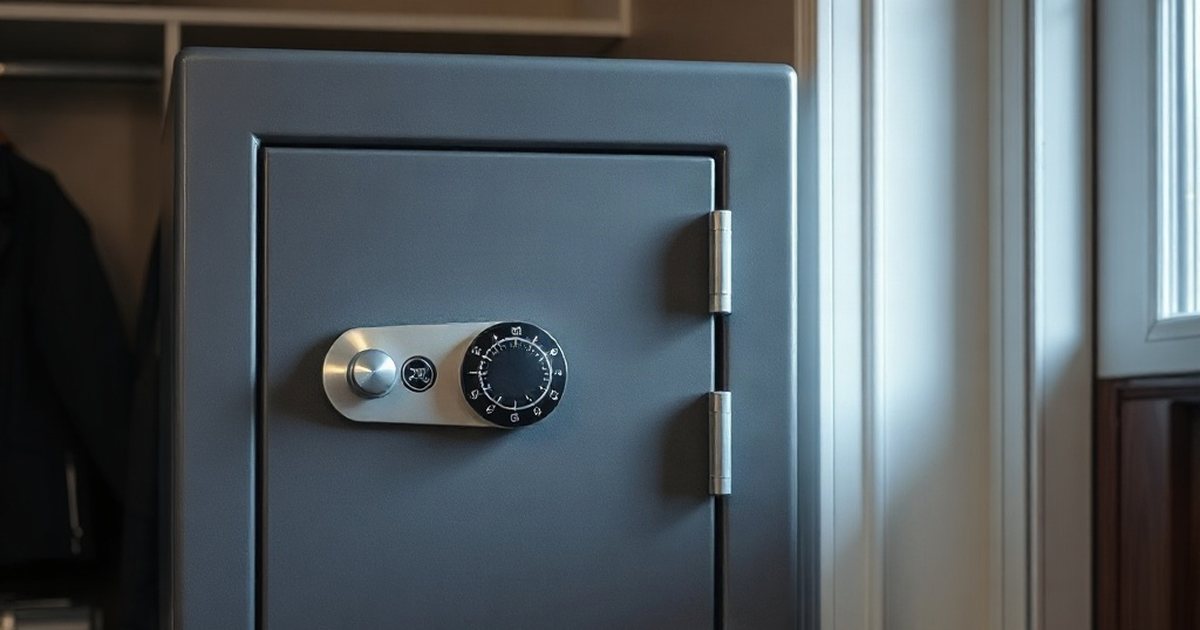
The Massachusetts statute names two kinds of method: a locked container, and a tamper-resistant mechanical lock or other safety device. [1] The state’s own tax material uses similar words, describing exempt items as safes designed for storing firearms and ammunition with a tamper-resistant mechanical lock or other safety device, and safety devices designed to prevent discharge by unauthorized users. [9]
That tax exemption is a sales tax matter. It does not state what satisfies s.131L, and no product can be said to satisfy the statute by itself. [9]
The decisions point to a gap between a lock being present and storage being secure. A key kept beside the lock, as Parzick noted, defeats the point of the lock, and Reyes requires a container openable only by a key, combination or similar means. [6] [2] The cases do not address who in a household knows a code or holds a key, which is a practical question.
FAQ
What is the main Massachusetts gun storage law?
It is Massachusetts General Laws c.140 s.131L. It makes it unlawful to store or keep any firearm in any place unless the firearm is secured in a locked container or equipped with a properly engaged tamper-resistant mechanical lock or other safety device. [1]
Does Massachusetts require a loaded gun in the home to be locked up at all times?
The Supreme Judicial Court wrote in Commonwealth v. Runyan that the owner’s obligation arises only when the firearm is stored or otherwise outside the owner’s immediate control. [3]
Is a car a locked container under Massachusetts law?
Not by itself. In Commonwealth v. Reyes the court wrote that a motor vehicle is not itself a securely locked container, but storing a firearm in a securely locked container within a vehicle would satisfy the statute’s requirements. [2]
Is a locked closet door enough in Massachusetts?
In Commonwealth v. Parzick the Appeals Court wrote that even a door locked with a key is not secure if the key is hanging next to the lock. [6]
What are the Massachusetts fines?
The penalty text includes a fine of not less than $1000 nor more than $7,500, and a tier tied to a person under 18 without a valid identification card with a fine of not less than $2,500 nor more than $15,000. [5]
This is general information, not legal advice. Statutes and court decisions change, so read the current text of Massachusetts General Laws c.140 s.131L or ask a Massachusetts lawyer about your own situation. A lock or container reduces access but does not replace supervision.
Sources
- Massachusetts General Laws c.140 s.131L – Storage of firearms. Massachusetts Legislature, accessed 2026-10-13
- Commonwealth v. Reyes, Massachusetts Supreme Judicial Court (2013), 464 Mass. 245. Massachusetts Supreme Judicial Court, accessed 2026-10-13
- Commonwealth v. Runyan, Massachusetts Supreme Judicial Court (2010), 456 Mass. 230. Massachusetts Supreme Judicial Court, accessed 2026-10-13
- The Effects of Child-Access Prevention Laws (state lists). RAND Corporation (Gun Policy in America); host blocks scripted fetches (403), page loads in a browser, accessed 2026-10-13
- M.G.L. c.140 s.131L Weapons stored or kept by owner (full text of penalty subsections). Massachusetts Legislature, accessed 2026-10-13
- Commonwealth v. Parzick, Massachusetts Appeals Court (2005), 64 Mass. App. Ct. 846. Massachusetts Appeals Court, accessed 2026-10-13
- M.G.L. c.140 s.131K – firearms sold without safety devices; liability. Massachusetts Legislature, accessed 2026-10-13
- The Effects of Child-Access Prevention Laws. RAND Corporation (Gun Policy in America), accessed 2026-10-13
- Tax Expenditure 3.114 – Exemption for Sales of Commercial Gun Safes and Trigger Lock Devices. Massachusetts Executive Office for Administration and Finance (Governor FY25 Budget), accessed 2026-10-13
Fire, burglary and lock ratings are quoted as the manufacturer or testing lab states them, with the source on each page. Safe-storage and child-access laws vary by state and change; check your state's current statute. No safe or lock replaces supervision of children around firearms. We do not sell or link to firearms or ammunition. This is general information, not legal advice. As an Amazon Associate we earn from qualifying purchases.
