A budget gun safe buys access control, speed and convenience. Among the budget safes covered here, it does not buy a named independent burglary rating: none of the gun safe listings in this price band states a UL 1037 residential security container classification, and the fire claims are mostly the maker’s own. [1] [2] That is not a reason to skip the category, because for many households a child or a guest is the first concern and a burglar the second.
This guide sorts what the money buys by threat, then covers what you give up compared with a burglary-rated or fire-classified safe.
- In this price band the listings reviewed give access control, alarms and speed, not a named independent burglary rating.
- Steel gauge is the honest number: a lower gauge means thicker steel, and the cabinets here range from 14-gauge to 16-gauge. [3]
- Small safes in this band, such as the SentrySafe STW123GDC, name their fire and water marks.
- Anchor every light cabinet, keep keys from children, and use leftover budget on humidity and batteries.
Start with the threat, because the budget fits some better than others
If the threat is a child or a visitor, a locked, bolted cabinet is a legitimate first step. The American Academy of Pediatrics advises that all guns be locked and unloaded, with ammunition locked separately, and that children and teens never have access to keys or combinations. [4] A cabinet does that job. It does not replace supervision, and it is not theft-rated.
If the threat is a burglar, ratings matter more than features. UL’s revised RSC standard sets level one at a five-minute attack by one technician with common hand tools such as drills, screwdrivers and hammers, and level two at a ten-minute attack by two technicians with more aggressive tools. [1] Without a listing that names a level, you are comparing steel and bolts, not a tested result.
Budget rifle and shotgun cabinets
This is where the money buys the most steel. The listings below all describe a quick-access electronic cabinet with a key backup. Each describes its steel; none names an independent burglary or fire rating.
Kaer 3 Gun Safe for Rifles and Pistols
This fully assembled cabinet describes 14-gauge cold-rolled steel with three solid locking bolts, a keypad and emergency key, and a dual alarm for wrong codes and vibration. Its capacity is two to three long guns. Mild steel at 14 gauge is 1.90 mm thick, against 2.66 mm at 12 gauge. [3]
Intergreat 12-15 Gun Safe
Intergreat’s 12-15 gun cabinet is listed with 16-gauge cold-rolled steel and four large 1.5-inch live-locking bolts, with a stated capacity of 12-15 long guns with optics or shotguns up to 53 inches tall. A gauge table lists 16 gauge as roughly 1/16 inch, which is thinner than the 14-gauge Kaer above. [5]

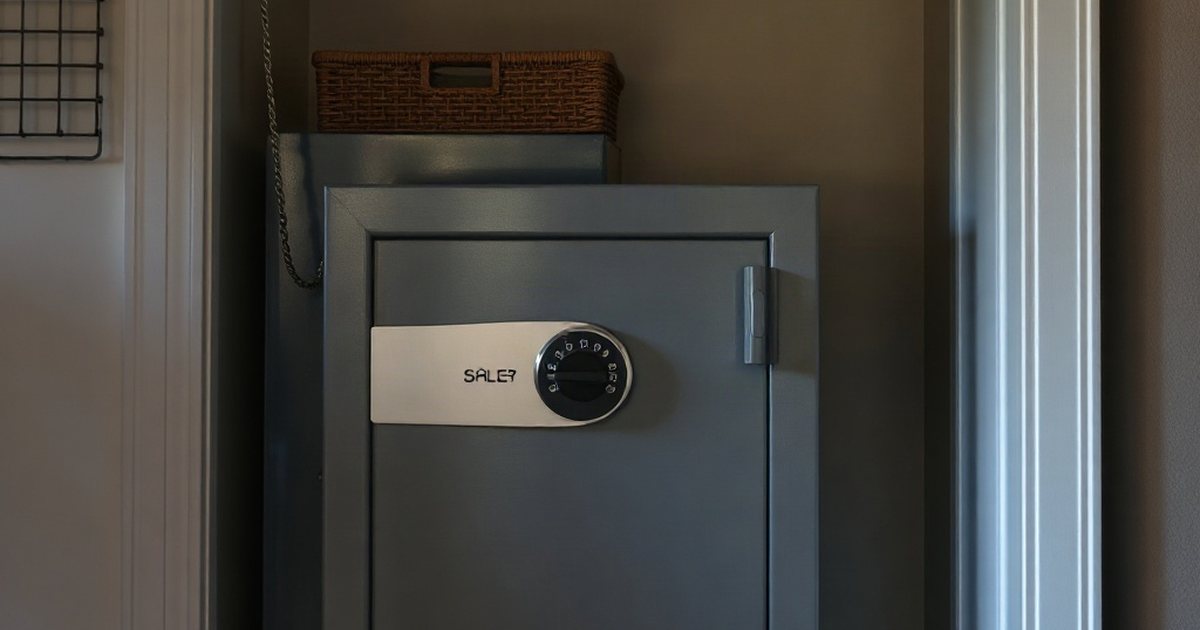
Kaer 10-12 Gun Safe Fingerprint 1380CZ
The 1380CZ is listed with 16-gauge cold-rolled steel and four large 1.5 inch live-locking bolts, plus a fingerprint, PIN or key lock. Its listing gives the steel gauge and the bolt count, though its fingerprint reader brings the questions covered in the biometric guide.
Kaer 15-20 Heavy Duty Gun Safe, pre-assembled
The pre-assembled 15-20 model describes 14-gauge steel on the door and body with three 20mm locking bolts.
The same listing covers other variants at higher prices, so only the lower-priced ones fit this guide’s budget focus. It names no independent burglary or fire rating.
Superday 15-18 Rifle Gun Safe
Superday’s listing claims capacity for up to 18 rifles, but describes its construction only as sturdy material and gives no gauge or bolt count, and it says the safe has a fire protection function without any time or temperature. A listing without steel or fire numbers gives you nothing to compare.
Small safes with named tests
Among the listings reviewed, the safes that name their marks are small. SentrySafe’s 1-Hour Fireproof Safe STW123GDC states it is UL Classified to endure 1 hour at 1700°F and ETL Verified for a 15 foot fall and for 24 hours in water up to 8 inches deep. It is a 1.23 cubic foot document-and-valuables safe, not a rifle safe, but it shows what a named fire claim looks like.
The Hornady fireproof safe 95407 is listed with a fireproof rating of 30 minutes up to 1400 degrees F, a 16-gauge body, an 8-gauge door and four locking lugs, and no lab is named for the fire claim. A gauge table lists 8 gauge at 4.18 mm, against 2.66 mm for 12 gauge. [5]
For handguns, the Fort Knox Original Pistol Box PB1 has a 10-gauge steel body, a 3/16 inch door and a mechanical pushbutton lock, and its listing says California DOJ Certified. Several SentrySafe pistol safes also say California DOJ certified in their listings. A handgun safe is a child-access tool first, and none of these replaces supervision.
Reading the marketing words
Budget listings lean on adjectives. The Kaer 3 listing says its 14-gauge steel delivers real burglary resistance that entry-level safes cannot match, and the Kaer Security Safe 60/90 listing calls its security military-grade. Those are descriptions, not test results. A burglary standard measures a defined attack for a defined time, and those minutes are net working time, with the clock stopping when tools come off the safe. [2]
Words like fireproof, anti-theft and tamper-proof deserve the same reading.
The questions that separate a claim from a result are short: who tested it, to which standard, at which level.
- Steel: is a gauge or a thickness stated, and for which panels?
- Bolts: how many, and how thick?
- Fire: is a lab named, or only a time and temperature?
- Burglary: is a level named, or only adjectives?
- Key plan: where do the backup key and the external power box live?
- Anchoring: are the holes pre-drilled and the hardware included?
What you give up
California’s regulation for gun safes is a useful public yardstick even outside the state: it calls for a single-walled safe with exterior walls of at least 12-gauge steel, a door with one layer of 7-gauge plate or two layers of 12-gauge, at least three steel locking bolts and a lock with at least 10,000 possible combinations. [6]
The cabinets above mostly sit below that on steel, and the standard also expects a residential security container listing, which none of the rifle cabinets reviewed claims.
You also give up the verified fire claim. Liberty Safe notes that fire certification in safes is not regulated, so a time and temperature on a budget listing is the maker’s claim unless a lab is named. [7] And you give up weight. Light cabinets should be anchored, because Liberty says prying a door is typically much easier if a safe can be tipped over. [8]
Spending the budget well
Buy the cabinet for the threat you actually have, and use leftover money for the things that raise real security: anchor hardware, a humidity plan, and a battery schedule. If your collection is valuable, check insurance first: American Family Insurance says a standard homeowners limit for firearm theft is about $5,000, and recommends scheduling guns under itemized personal property coverage. [9]
If the answer to the threat question is theft and valuables, this price band is probably not enough on its own. That is an honest limit of the category, not a product defect.
FAQ
Is a budget gun safe burglar-proof?
No safe is, and these listings name no independent burglary rating. A level one RSC test is only five minutes with one technician and common hand tools. [1]
What steel thickness should I look for?
Lower gauge is thicker. Mild steel at 12 gauge is 2.66 mm and 14 gauge is 1.90 mm. [3] California’s gun safe standard asks for at least 12-gauge walls. [6]
Does a cheap fireproof gun safe protect my guns in a fire?
Read the claim for who tested it. Liberty Safe notes fire certification in safes is not regulated. [7] The Hornady 95407 states 30 minutes up to 1400 degrees F and names no lab.
Is a cabinet enough for keeping kids out?
A locked, bolted cabinet addresses access, and the AAP advises locking guns unloaded with ammunition locked separately. [4] Supervision still comes first.
A cabinet is not theft-rated and will not stop a determined thief. Prices change, and a safe does not replace supervision of children. Storage laws vary by state; this is general information, not legal advice.
Sources
- Residential Security Container Standard Revised. UL Solutions, accessed 2026-10-13
- Burglary Ratings Explained. Safe and Vault Store, accessed 2026-10-13
- Mild Steel Gauge Thickness Chart. RMFG, accessed 2026-10-13
- Handguns in the Home (HealthyChildren.org). American Academy of Pediatrics (HealthyChildren.org), accessed 2026-10-13
- Metal Gauge to Thickness Chart: Sheet Steel, Stainless, and Aluminum. Welders Supply, accessed 2026-10-13
- Cal. Code Regs. Tit. 11, 4100 – Gun Safe Standards. Cornell Legal Information Institute (California Code of Regulations), accessed 2026-10-13
- Will My Gun Safe Work in a Real House Fire?. Liberty Safe, accessed 2026-10-13
- Anchoring Your Gun Safe to the Floor. Liberty Safe, accessed 2026-10-13
- Understanding homeowners insurance and firearms. American Family Insurance, accessed 2026-10-13
Fire, burglary and lock ratings are quoted as the manufacturer or testing lab states them, with the source on each page. Safe-storage and child-access laws vary by state and change; check your state's current statute. No safe or lock replaces supervision of children around firearms. We do not sell or link to firearms or ammunition. This is general information, not legal advice. As an Amazon Associate we earn from qualifying purchases.
