Choosing a gun safe starts with one question: what are you protecting against? A curious child, a burglar with a pry bar, a house fire, damp air and a 2am emergency each call for a different box, and a safe built for one of those jobs is often weak at another. One safety-industry guide puts it plainly: what resists forced entry is not necessarily what resists fire, so safes are usually designed for one or the other, not both. [1]
This guide walks the decision in the order that saves money: name the threat, read the ratings for whose claim they are, check steel and bolts against a real yardstick, then size the safe and plan the anchoring. A basic cabinet and a fire-rated safe solve different problems, and neither replaces locking guns away from children.
- Name the threat first: children, burglary, fire and humidity each need a different safe.
- Treat every rating as a claim and check who tested it, under which standard.
- Thickness is measured in gauge, where a lower number is thicker steel, and a thin cabinet controls access without being theft-rated.
- Anchor the safe, size it below its stated capacity, and keep keys and codes from children.
Start with the threat, not the price
Write down which of these you are actually worried about, because the answer sets the tier you shop in.
Children and guests
The American Academy of Pediatrics advises that all guns in the home be locked and unloaded, with ammunition locked separately, and that children and teens never have access to the keys or combinations. [2] The CDC’s review of child unintentional firearm deaths found the firearms involved were often stored loaded (74%) and unlocked (76%). [3]
Hiding a gun is not storing it. In one survey pairing parents with their children, thirty-nine percent of parents who said their children did not know where household guns were kept were contradicted by what the children reported. [4] If kids are the main concern, a lock that stays locked matters more than steel thickness, and a modest cabinet or lockbox can do that job. It does not make a safe a substitute for supervision.
Burglary
The Bureau of Justice Statistics estimated that about 1.4 million guns were stolen in burglaries and other property crimes across the six years from 2005 through 2010. [5] Burglars are often described as opportunistic, so the practical goal is to add difficulty. [6] A police prevention guide notes that almost all burglars head straight for the master bedroom or wherever jewelry and cash are likely kept, which is worth remembering when you pick a spot for the safe. [7]
One study interviewed 422 incarcerated burglars and reported that only one expressed interest in stealing firearms, which the researchers call a common misperception. [8] That is one study of offenders who were caught, not a guarantee about the person who might enter your home, but it is a reason to weigh theft of cash and jewelry in the same decision.
Fire and water
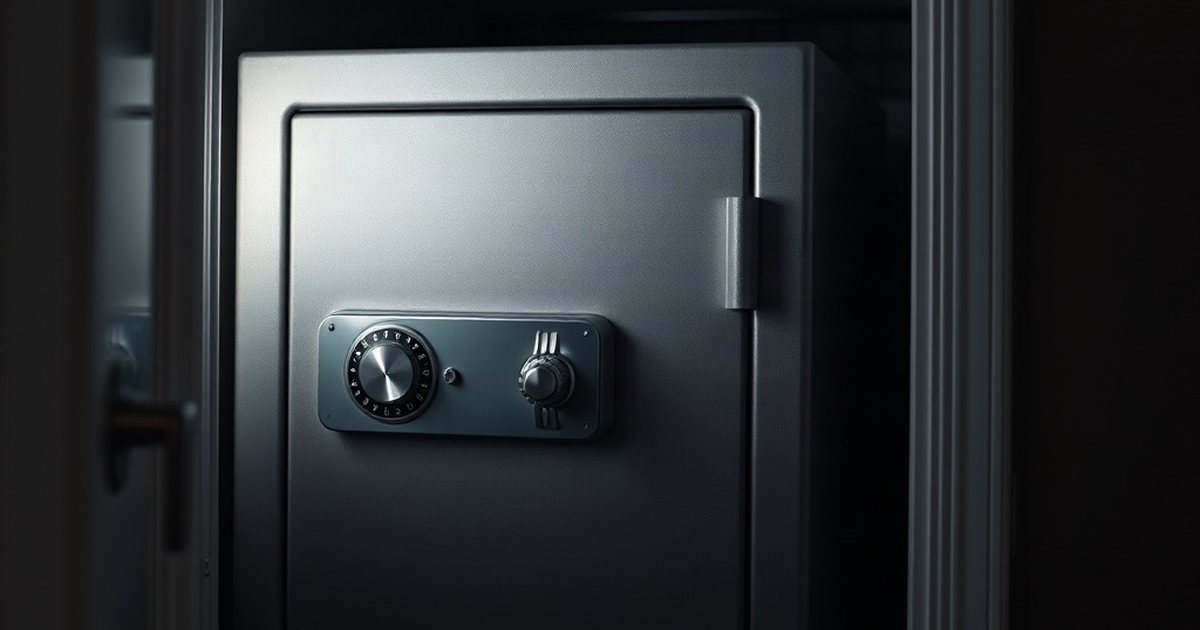
Liberty Safe states that temperatures in a house fire quickly soar to 1200 degrees F within the first few minutes, and says its own fire tests ramp up to that heat within ten minutes. [9] That is a manufacturer’s statement about its own testing, and the next section explains why that distinction matters. If your threat is damp air rather than flood, the fix is a humidity plan, covered in the dehumidifier guide on this site.
Read every rating as someone’s claim
Burglary and fire ratings come from different standards, and a listing can borrow the vocabulary without the testing. Ask three questions of any number on a spec sheet: who ran the test, under which standard, and does the listing name them.
Burglary. The residential security container (RSC) standard, UL 1037, was revised so that level one means a five-minute attack by one technician using common hand tools, and level two means a ten-minute attack by two technicians using more aggressive tools such as picks and high-speed carbide drills. [10] The higher TL-15 and TL-30 classes belong to a different standard and are not in UL 1037 at all. [11] Those minutes are net working time: the clock stops when tools are off the safe, so they do not equal how long a break-in would take. [12]
Fire. Liberty Safe notes that fire certification in safes is not regulated. [13] Honeywell’s FAQ draws a useful line: fireproof means tested by a third party, fire-resistant means it has not been. [14] SentrySafe’s guidance adds that some manufacturers run their own tests against internal standards and may use modified parameters that flatter the result. [15]
Here is what that looks like in practice. One 24-rifle safe’s listing says it protects contents from fires up to 1400°F for 45 minutes, but it names no laboratory or standard, so treat it as the maker’s claim. For comparison, UL 72 is the standard covering the fire-resistance classification of record protection equipment, and its procedures include a fire endurance test and an explosion test. [16] A listing that gives only a time and a temperature, without naming a test or a lab, leaves you unable to tell whether it was tested to anything like that.
Steel, bolts and locks: measure against a yardstick
Lower gauge numbers mean thicker steel. Mild steel at 12 gauge is 2.66 mm thick (0.105 in), and 14 gauge is 1.90 mm (0.075 in). [17] Gauge numbers also vary between metals, so a stainless or aluminum figure is not comparable. [17]
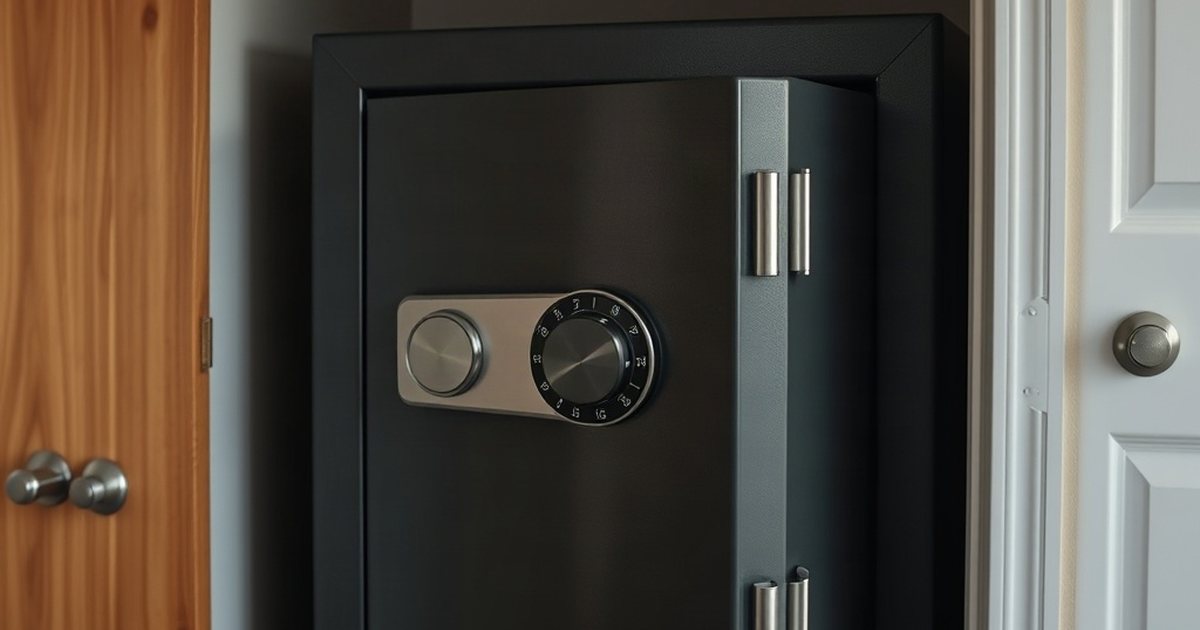
California’s gun safe standard is a handy public benchmark for what a serious safe looks like on paper, even if you do not live there. It calls for a single-walled safe with exterior walls of at least 12-gauge steel, a door of one layer of 7-gauge plate or two layers of 12-gauge, at least three steel locking bolts, and a lock with at least 10,000 possible combinations. [18]
Now compare listings. One Kaer rifle cabinet states its side and back panels are 0.7MM thick and the door 1.1MM thick. Another Kaer model lists 14-gauge cold-rolled steel with three solid locking bolts. Those are very different builds, and the thin-panel cabinet is better understood as access control than as theft protection. Neither listing names an independent burglary rating.
On locks, mechanical dials never need batteries, electronic keypads are quick, and biometric readers promise quick access but raise reliability questions, which the biometric guide here covers using recall records. Whatever you pick, keep the backup key or combination away from children and replace batteries on a schedule: Liberty suggests replacing its lock battery annually even if it seems fine. [19]
Size it for the collection you will own
Stated capacity is a ceiling, not a plan. One Steelwater listing says its safe holds up to 20 long guns maximum, with a realistic capacity of 12-16 long guns depending on the mix of scoped and unscoped rifles. Buy for the guns you own with room for growth, then check interior height against your longest scoped rifle.
Insurance is part of sizing too. American Family Insurance says a standard homeowners policy limit for theft of firearms is about $5,000, and suggests scheduling guns under itemized personal property coverage for extra protection. [20] If a collection is worth more than that, the insurer’s questions about storage may shape what you buy.
Anchor it and place it where it helps
A safe that can be carried or tipped is a weaker safe. Liberty Safe recommends always anchoring to the floor, and notes that prying the door off is typically much easier if the safe can be tipped onto its back. [21] Use the pre-drilled holes and the hardware that suits your floor, and remember that anchoring to tile is not possible. [21]
Placement is a trade-off. A closet corner hides the safe and helps bolting, but a bedroom is the first place a burglar looks. A basement or garage slab anchors well but can be damp, which brings humidity back into the picture.
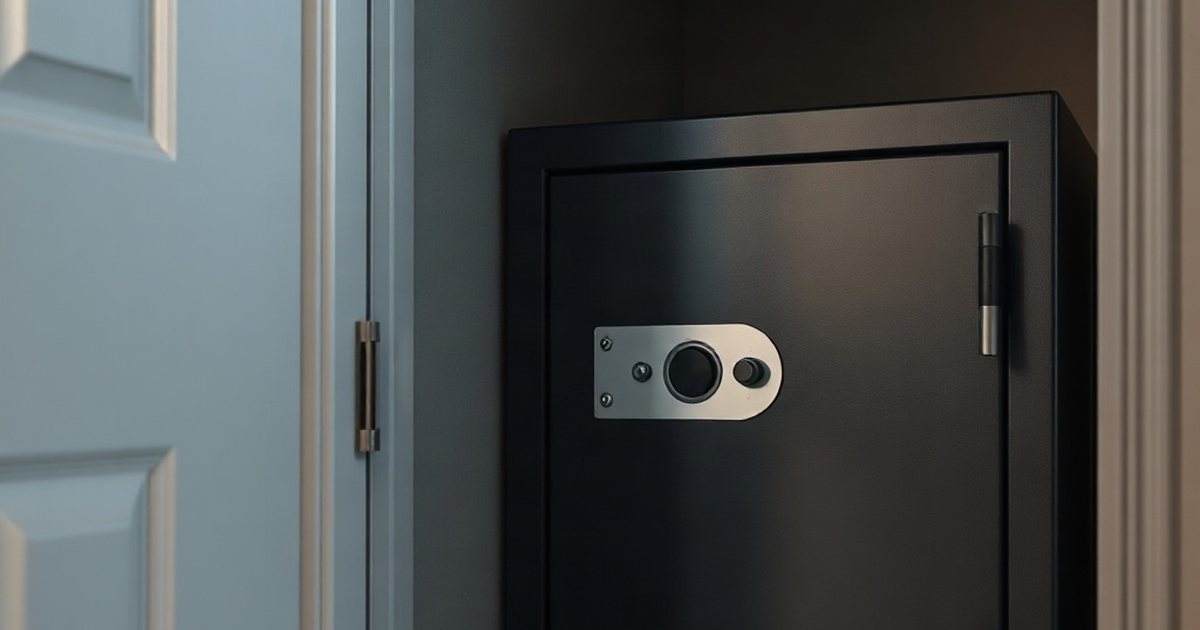
- Kids and guests only: a locked cabinet or lockbox that nobody under supervision can open. A cabinet is not theft-rated.
- Theft: bolt it down, check the steel against the yardstick above, and ask what independent burglary rating the listing actually names.
- Fire: look for a named test and lab, not just a time and temperature.
- Fast access at night: a smaller quick-access safe, with the child-access plan settled first.
FAQ
What size gun safe do I need?
Start from the guns you own, then plan on fewer than the label says. One maker’s listing says its safe holds up to 20 long guns at most, with a realistic 12-16 depending on scopes and attachments.
Is a cheap gun cabinet enough?
It depends on the threat. A cabinet can keep children and guests out when it is locked, but it is not theft-rated and will not stop a determined thief. The AAP’s guidance is about locking guns, unloaded, with ammunition locked separately. [2]
What does an RSC rating mean?
It is a residential security container classification under UL 1037. Level one is a five-minute attack by one technician with common hand tools, and level two is ten minutes by two technicians with more aggressive tools. [10] [12]
Does a fire rating mean my guns survive a fire?
No. A rating describes a lab test run by the maker or by a third party. SentrySafe notes that some manufacturers use their own modified test parameters, so ask who tested it. [15]
No safe is burglar-proof or fire-proof, and a safe does not replace supervision of children. Storage laws vary by state and change, so this is general information, not legal advice.
Sources
- Introduction to Burglar and Fire Safes. Silva Consultants, accessed 2026-10-13
- Handguns in the Home (HealthyChildren.org). American Academy of Pediatrics (HealthyChildren.org), accessed 2026-10-13
- Unintentional Firearm Injury Deaths Among Children and Adolescents Aged 0-17 Years, NVDRS 2003-2021 (MMWR, CDC). MMWR Morbidity and Mortality Weekly Report (CDC) (PubMed abstract, PMID 38096119), accessed 2026-10-13
- Parental misperceptions about children and firearms (Baxley and Miller, 2006). Archives of Pediatrics & Adolescent Medicine (PubMed abstract, PMID 16651499), accessed 2026-10-13
- Firearms Stolen during Household Burglaries and Other Property Crimes, 2005-2010 (NCJ 239436). U.S. Bureau of Justice Statistics, accessed 2026-10-13
- Residential Burglary: An Ethnographic Analysis. National Institute of Justice (NIJ), accessed 2026-10-13
- Preventing Residential Burglaries. City of Fountain Valley (CA) Police Department, accessed 2026-10-13
- Through the eyes of a burglar: study provides insights on habits and motivations. University of North Carolina at Charlotte, accessed 2026-10-13
- Fire Testing Gun Safes. Liberty Safe, accessed 2026-10-13
- Residential Security Container Standard Revised. UL Solutions, accessed 2026-10-13
- What UL Rated Actually Means on a Safe. Onur Oncer, accessed 2026-10-13
- Burglary Ratings Explained. Safe and Vault Store, accessed 2026-10-13
- Will My Gun Safe Work in a Real House Fire?. Liberty Safe, accessed 2026-10-13
- Honeywell Safes Products FAQs. Honeywell Safes, accessed 2026-10-13
- 5 Things You Need to Know About Your Safe Fire Rating. Master Lock (SentrySafe), accessed 2026-10-13
- UL 72 Fire Resistance Rating. KL Security (reproducing UL 72 scope text), accessed 2026-10-13
- Mild Steel Gauge Thickness Chart. RMFG, accessed 2026-10-13
- Cal. Code Regs. Tit. 11, 4100 – Gun Safe Standards. Cornell Legal Information Institute (California Code of Regulations), accessed 2026-10-13
- How to Change Your Gun Safe Battery: A Complete Guide. Liberty Safe, accessed 2026-10-13
- Understanding homeowners insurance and firearms. American Family Insurance, accessed 2026-10-13
- Anchoring Your Gun Safe to the Floor. Liberty Safe, accessed 2026-10-13
Fire, burglary and lock ratings are quoted as the manufacturer or testing lab states them, with the source on each page. Safe-storage and child-access laws vary by state and change; check your state's current statute. No safe or lock replaces supervision of children around firearms. We do not sell or link to firearms or ammunition. This is general information, not legal advice. As an Amazon Associate we earn from qualifying purchases.
