Hawaii’s storage rule is section 134-10.5 of the Hawaii Revised Statutes. As amended by Act 22 of 2025, it says no person shall store or leave any firearm on any premises under the person’s control unless the person secures it, stores it where a reasonable person would believe it to be secure, or carries it on the person or within close proximity. [1]
This guide covers what the Hawaii section says, where it applies, the three ways to meet it, the violation fine and the strict civil liability, a separate Hawaii crime that applies when a minor obtains a firearm, and the retail copy requirement in Act 22. It describes the section as of November 2026. This is general information, not legal advice.
- Hawaii’s section 134-10.5 says no person shall store or leave any firearm on any premises under the person’s control unless the person secures it, stores it in a location a reasonable person would believe to be secure, or carries it. [1]
- A Hawaii violation is a violation with a fine of no more than $500, and a person who violates the section is strictly liable for damages if the firearm is used to injure a person or property within two years. [1]
- Criminally negligent storage under section 707-714.5 is a misdemeanor and involves a minor under the age of eighteen years obtaining the firearm. [2]
- Act 22 of 2025 was approved on April 22, 2025, and requires retail sellers to provide a written copy of section 134-10.5 at sale or transfer. [3]
What Hawaii’s section 134-10.5 says
The Hawaii duty is written about the firearm and the premises, not about a child. No person shall store or leave any firearm on any premises under the person’s control unless the person does one of three things, which are described below. [1]
Section 134-10.5 carries the amendment note am L 2025, c 22. [1] Act 22 is H.B. 125 of the 2025 session, relating to firearms, and it was approved on April 22, 2025. [3]
Act 22 states its purpose as protecting public safety by providing for the safe and secure storage of firearms. [3] Summaries on other websites may show the section’s earlier text, so check the legislature’s own page for the current wording.
Where and to whom the Hawaii rule applies
In Hawaii’s current section, the word premises is defined so that it does not include a vehicle. [1] The section therefore addresses firearms stored or left on premises under a person’s control, and its basic duty does not turn on whether a minor lives there.
That is a different design from a child-access statute. Under Hawaii’s section 134-10.5 the duty is triggered by storing or leaving a firearm on premises under the person’s control, so the question is how the firearm was kept. [1]
Hawaii also states that the section shall not apply to a person in an exempt category identified in section 134-11(a). [1]
The three ways Hawaii lists to meet the duty
Hawaii’s text sets out three alternatives, each described in its own words. A person must do at least one of them to stay outside the rule. [1]
What the first option asks of a lock
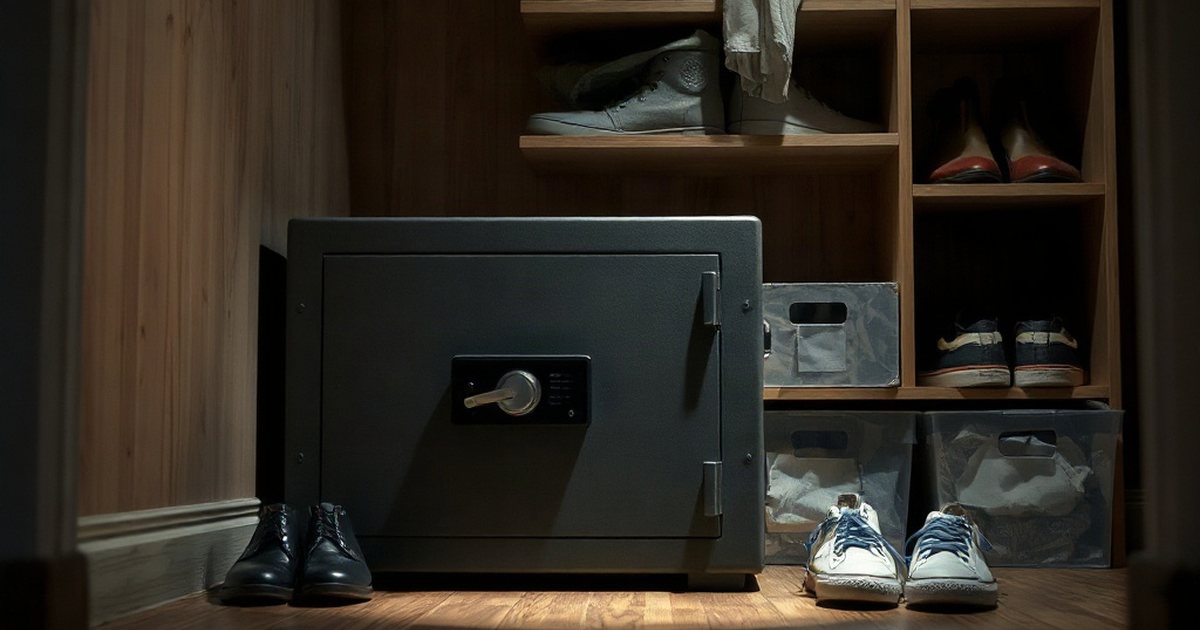
The first option names a gun safe as an example of a locked box or container. [1] It also describes a device by what it does: it must render the firearm inoperable by any person other than the owner or lawfully authorized user.
The second option is looser. A location a reasonable person would believe to be secure is a standard of reasonableness rather than a list of products. [1]
- Secure the firearm in a locked box or other container, such as a gun safe, or use a properly engaged tamper-resistant mechanical lock or other tamper-resistant safety device that renders the firearm inoperable by any person other than the owner or lawfully authorized user. [1]
- Store the firearm in a location that a reasonable person would believe to be secure. [1]
- Carry the firearm on the person or within such close proximity to the person that the person can readily retrieve and use the firearm as if it were carried on the person. [1]
Hawaii penalties and civil liability
Hawaii’s section says a person who violates it is guilty of a violation and fined no more than $500. The section adds that a person who commits the offense of criminally negligent storage of a firearm under section 707-714.5 is guilty of a misdemeanor. [1]
The civil side is separate. A person who violates the section is strictly liable for damages incurred if the firearm obtained as a result of the violation is used to injure a person or property within two years of the violation. [1]
The section also refers to an unsecured firearm obtained by a person as a result of that person entering or remaining on the premises unlawfully. [1] Read the full section for how that circumstance operates.
For a misdemeanor, Hawaii’s general misdemeanor sentencing section sets a term of imprisonment not to exceed one year, or thirty days in the case of a petty misdemeanor. [4]
Criminally negligent storage when a minor obtains a firearm
Section 707-714.5 is a different statute with a narrower trigger. It turns on two things: the person knows or reasonably should know that a minor is likely to gain access to the firearm without the permission of the parent or guardian of the minor, and a minor obtains the firearm. [2]
Hawaii defines a minor, for this section, as any person under the age of eighteen years. [2] That is the age that matters for the criminal offense, even though the storage section above does not mention a minor in its basic duty.
Hawaii states that the offense is a misdemeanor, and that the section shall not apply if the minor obtains the firearm as a result of an unlawful entry to any premises by any person. [2]
The two sections work at different levels. The storage section sets a $500 violation for unsecured storage in general, and section 707-714.5 raises the offense to a misdemeanor when the knowledge standard is met and a minor obtains the firearm. [1] [2]
The retail copy requirement
Act 22 also reaches sellers. A person engaged in the retail sale or transfer of firearms shall, at the time of sale or transfer, provide to the purchaser of a firearm a written copy of section 134-10.5. [3]
Because the current section dates from 2025, anyone relying on it should read the legislature’s text directly and ask a Hawaii lawyer about a specific situation.
Hawaii among state storage laws, and what it means for choosing storage
RAND’s list of negligent-storage states includes Hawaii, but RAND’s review is dated January 1, 2025, before Act 22 was approved on April 22, 2025, so it does not describe the current section. [5] [6] [3]
The devices Hawaii’s own text names are a locked box or other container such as a gun safe, and a tamper-resistant mechanical lock or other tamper-resistant safety device. [1] Whether a particular product fits depends on those words.
A device is only as protective as the control of its key or code. The American Academy of Pediatrics advises making sure children and teens can’t access the keys or combinations to lock boxes or gun safes. [7] Hawaii’s section asks for a device that renders the firearm inoperable by anyone other than the owner or lawfully authorized user, which is a standard about who can open it. [1]
FAQ
What is Hawaii’s gun storage law?
It is section 134-10.5 of the Hawaii Revised Statutes. As amended by Act 22 of 2025, no person shall store or leave any firearm on any premises under the person’s control unless the person secures it, stores it in a location a reasonable person would believe to be secure, or carries it on the person or within close proximity. [1]
Does Hawaii’s storage law only apply when children are present?
Section 134-10.5 states its duty about any firearm on any premises under a person’s control and does not mention a minor in that basic rule. A separate section, 707-714.5, addresses the case where a minor obtains the firearm. [1] [2]
What is the penalty under Hawaii’s storage section?
A person who violates section 134-10.5 is guilty of a violation and fined no more than $500, and is strictly liable for damages if the firearm obtained as a result of the violation is used to injure a person or property within two years. [1]
Does Hawaii’s storage rule cover a vehicle?
The current section states that premises does not include a vehicle. [1]
When was Hawaii’s storage rule changed?
Hawaii’s Act 22, H.B. 125, was approved on April 22, 2025, and the current section carries the amendment note am L 2025, c 22. [3] [1]
This is general information, not legal advice. Hawaii’s statutes can be amended and other websites may show an older version, so read the legislature’s current text of section 134-10.5 or ask a Hawaii lawyer about your own situation. A lock or container that fits a legal description does not replace supervision.
Sources
- HRS 134-10.5 (secure storage of firearms, as amended by Act 22, 2025). Hawaii State Legislature (official Hawaii Revised Statutes, current), accessed 2026-11-05
- HRS 707-714.5 (criminally negligent storage of a firearm). Hawaii State Legislature (official Hawaii Revised Statutes, current), accessed 2026-11-05
- Hawaii Act 22 (2025), H.B. 125, relating to firearms. Hawaii State Legislature (official Session Laws of Hawaii 2025), accessed 2026-11-05
- HRS 706-663 (sentence for misdemeanor). Hawaii State Legislature (official Hawaii Revised Statutes, current), accessed 2026-11-05
- The Effects of Child-Access Prevention Laws. RAND Corporation (Gun Policy in America), accessed 2026-10-13
- The Effects of Child-Access Prevention Laws (state lists). RAND Corporation (Gun Policy in America); host blocks scripted fetches (403), page loads in a browser, accessed 2026-10-13
- Handguns in the Home (HealthyChildren.org). American Academy of Pediatrics (HealthyChildren.org), accessed 2026-10-13
Fire, burglary and lock ratings are quoted as the manufacturer or testing lab states them, with the source on each page. Safe-storage and child-access laws vary by state and change; check your state's current statute. No safe or lock replaces supervision of children around firearms. We do not sell or link to firearms or ammunition. This is general information, not legal advice. As an Amazon Associate we earn from qualifying purchases.
