New Hampshire gun storage laws center on one statute, RSA 650-C:1, titled negligent storage of firearms. The New Hampshire text makes it a violation for a person to store or leave a loaded firearm on premises under that person’s control where a child is likely to gain access, if a child then gains access and the firearm is misused in one of three listed ways. [1] [2]
This guide walks through what the New Hampshire statute says, whom it reaches, which kinds of storage and which circumstances take a person outside it, how the penalty works, and where the statute sits among other states’ laws. The statutory text is described as of October 2026. This is general information, not legal advice.
- New Hampshire RSA 650-C:1 covers a loaded firearm stored or left where the person knows or reasonably should know a child is likely to gain access. [1]
- In the New Hampshire statute a child is any person under 16 years of age. [1]
- The offense is a violation, with a fine of not more than $1,000. [1]
- The text lists exceptions, including a locked box, gun safe or trigger lock, illegal entry, and lawful self-defense. [1] [2]
What RSA 650-C:1 says
The New Hampshire statute is built around a single kind of person. It covers any person who stores or leaves on premises under that person’s control a loaded firearm, and who knows or reasonably should know that a child is likely to gain access to the firearm without the permission of the child’s parent or guardian. [1]
Knowing or reasonably should know is a two-part standard. It reaches a person who is actually aware of the risk, and it also reaches a person who, on the facts, ought to have been aware. The statute then adds a condition on the outcome: the person is guilty of a violation if a child gains access to a firearm and one of three things follows. [2]
Those three outcomes are that the firearm is used in a reckless or threatening manner, that it is used during the commission of any misdemeanor or felony, or that it is negligently or recklessly discharged. [2] In plain terms, New Hampshire law attaches the offense to what happens after a child reaches the firearm, not to the storage alone.
The statute carries a session-law note: 2000, 267:1, effective January 1, 2001. [2] That note identifies when the provision took effect.
Who and what the New Hampshire law covers
The statute’s definition section fixes the age line. As used in the section, child, juvenile or youth means any person under 16 years of age. [1] A New Hampshire teenager who is 16 or older is therefore outside the word child as the section defines it.
The firearm must be loaded. The statute refers to a loaded firearm in the first clause, and the offense is described in terms of a loaded firearm stored or left on premises under the person’s control. [1]
The statute also has a rule for parents and guardians of a child hurt in an accidental shooting. A parent or guardian of a child who is injured or who dies of an accidental shooting is prosecuted under the section only in those instances in which the parent or guardian behaved in a grossly negligent manner. [2] That gross-negligence standard is stated separately from the reasonably-should-know standard and applies only to the accidental-shooting situation the sentence describes.
The dealer warning
The same statute reaches licensees who sell firearms. Licensees shall conspicuously post at each purchase counter a warning in bold type not less than one inch in height, and a licensee failing to display this warning to the purchaser of a firearm is guilty of a violation. [1] [2]
That duty belongs to New Hampshire licensees and is separate from the storage offense. The statute does not say that a posted warning changes what the storage offense covers.
Storage methods and exceptions in the statute
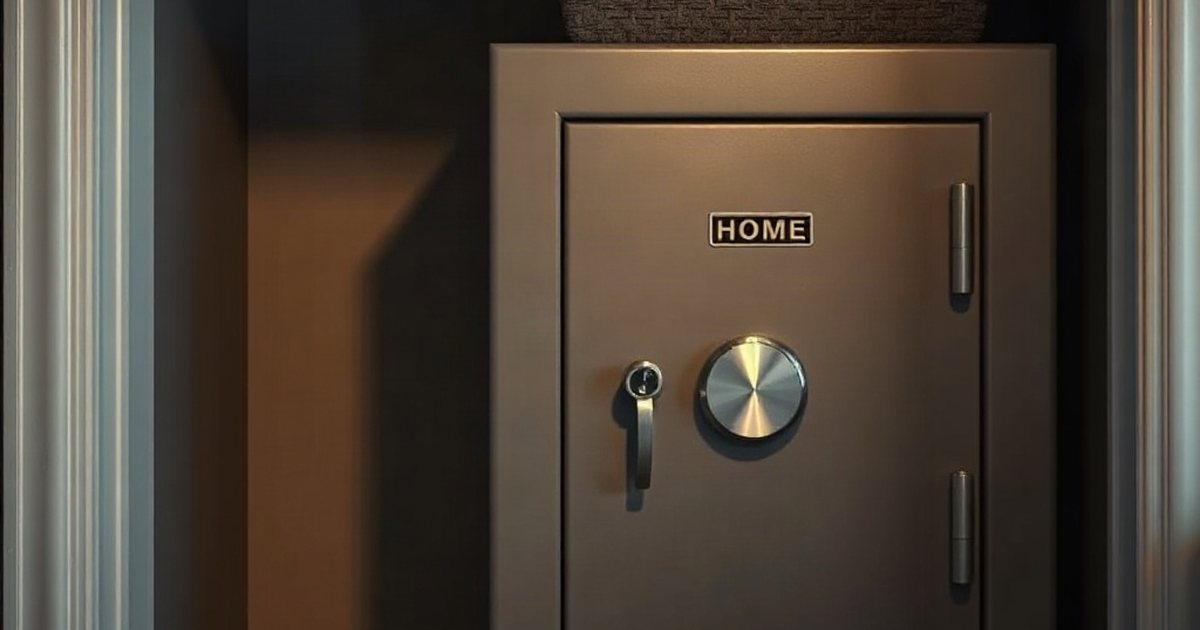
RSA 650-C:1 names storage methods that take a firearm outside the offense. The text says the firearm is kept secured in a locked box, gun safe, or other secure locked space, or in a location which a reasonable person would believe to be secure, or is secured with a trigger lock or similar device that prevents the firearm from discharging. [1]
That list has three branches joined by the word or. A locked box, a gun safe or another secure locked space is one. A location a reasonable person would believe to be secure is another, and it is judged by an objective standard. A trigger lock or similar device that prevents discharge is the third.
The statute lists further exceptions that do not turn on how the firearm was stored. One applies where the child has completed firearm safety instructions by a certified firearms safety instructor or has successfully completed a certified hunter safety course. [2] Another applies where a person has no reasonable expectation, based on objective facts and circumstances, that a child is likely to be present on the premises. [2]
Two more exceptions concern how the child came to have the firearm. The first covers a child who obtains it as a result of an illegal entry of any premises by any person or an illegal taking of the firearm from the premises of the owner without permission of the owner. The second covers a child who obtains or obtains and discharges the firearm in a lawful act of self-defense or defense of another person. [2]
Penalties under New Hampshire law
New Hampshire classifies this offense as a violation. The statute says any person who violates the relevant paragraph shall be fined not more than $1,000. [1]
A second New Hampshire statute, RSA 651:2, governs the sentences available for a violation. Under it, a person convicted of a violation may be sentenced to conditional or unconditional discharge, or a fine. [3] The same section sets fine limits for an individual: the amount may not exceed $4,000 for a felony, $2,000 for a class A misdemeanor, $1,200 for a class B misdemeanor, and $1,000 for a violation. [3]
A New Hampshire violation of this kind leads to a fine or a discharge.
How New Hampshire courts have applied the statute
This guide does not cover a reported New Hampshire appellate decision applying RSA 650-C:1, or a prosecutor’s release about a charge under it, so it describes no case. It does not infer how a court would read the phrases likely to gain access or reasonable person.
Without a sourced case, the statutory words carry the weight. A reader who needs to know how a specific set of facts would be treated in New Hampshire should read the statute itself and consult a New Hampshire lawyer, since the text uses objective standards that depend on circumstances.
Choosing storage with the statute’s own terms in mind
The statute’s own list of storage methods names a locked box, a gun safe, another secure locked space, a location a reasonable person would believe to be secure, and a trigger lock or similar device. [1] Those are the categories the New Hampshire legislature chose to write down, so they are the vocabulary a reader will meet in the text.
There is a gap between the statute’s wording and household reality. The statutory age line is under 16, but the practical question for a household is often whether a determined teenager can open a given device. A trigger lock, a lockbox and a gun safe differ in how they are opened and in who holds the key or code, and the statute does not rank them. Whether a particular arrangement meets the statute is a question about the text and the facts, not about a product label.
Context from outside New Hampshire is limited to one point. RAND describes child-access prevention and safe storage laws as laws that allow prosecutors to bring charges against adults who intentionally or carelessly allow children to have unsupervised access to firearms, and RAND’s list of states and the District of Columbia with negligent-storage laws includes New Hampshire. [4] [5]
FAQ
Is negligent storage a crime in New Hampshire?
RSA 650-C:1 labels it a violation, and a person who violates the relevant paragraph is fined not more than $1,000 under the statute. [1] RSA 651:2 says a person convicted of a violation may be sentenced to discharge or a fine. [3]
How old is a child under the New Hampshire statute?
The section defines child, juvenile or youth as any person under 16 years of age. [1]
Does New Hampshire law treat a child who took a firearm in a burglary differently?
The statute lists an exception where the child obtains the firearm as a result of an illegal entry of any premises by any person or an illegal taking of the firearm from the premises of the owner without permission of the owner. [2]
Does the New Hampshire statute say how a trigger lock must work?
The statute refers to a trigger lock or similar device that prevents the firearm from discharging. [1]
This is general information, not legal advice. It describes statutory text as of October 2026, and statutes can be amended; read RSA 650-C:1 and RSA 651:2 directly or ask a New Hampshire lawyer about a specific situation.
Sources
- N.H. RSA 650-C:1 – negligent storage of firearms. New Hampshire General Court, accessed 2026-10-13
- RSA 650-C:1 (negligent storage of firearms). New Hampshire General Court, accessed 2026-10-13
- RSA 651:2 (sentences; fine limits for violations and misdemeanors). New Hampshire General Court, accessed 2026-10-13
- The Effects of Child-Access Prevention Laws. RAND Corporation (Gun Policy in America), accessed 2026-10-13
- The Effects of Child-Access Prevention Laws (state lists). RAND Corporation (Gun Policy in America); host blocks scripted fetches (403), page loads in a browser, accessed 2026-10-13
Fire, burglary and lock ratings are quoted as the manufacturer or testing lab states them, with the source on each page. Safe-storage and child-access laws vary by state and change; check your state's current statute. No safe or lock replaces supervision of children around firearms. We do not sell or link to firearms or ammunition. This is general information, not legal advice. As an Amazon Associate we earn from qualifying purchases.
