North Carolina gun storage laws are found mainly in Chapter 14 of the General Statutes. Section 14-315.1, titled storage of firearms to protect minors, makes it a Class 1 misdemeanor in North Carolina for a person who lives with a minor to store or leave a firearm in a way that lets an unsupervised minor reach it, if the minor then misuses it in one of four listed ways. [1] [2]
This guide covers what the North Carolina text says, who it reaches, what the statute says about carrying a firearm and about unlawful entry, the penalty provisions, the sale and transfer warning in G.S. 14-315.2, and a civil case from the North Carolina Supreme Court. This is general information, not legal advice.
- The North Carolina storage section is a Class 1 misdemeanor and applies to a person who resides in the same premises as a minor. [1]
- In that section a minor is a person under 18 who is not emancipated. [2]
- The section does not apply if the minor obtained the firearm as a result of an unlawful entry by any person. [1]
- Bridges v. Parrish (2013) is a civil case in which the North Carolina Supreme Court held parents not liable for the criminal conduct of their 52-year-old son. [3]
What G.S. 14-315.1 says
The North Carolina statute begins with a description of the person it targets. Any person who resides in the same premises as a minor, owns or possesses a firearm, and stores or leaves the firearm in a condition that the firearm can be discharged and in a manner that the person knew or should have known that an unsupervised minor would be able to gain access to the firearm is guilty of a Class 1 misdemeanor, if further conditions are met. [1]
The further conditions are about the minor. The minor must gain access to the firearm without the lawful permission of the minor’s parents or a person having charge of the minor. The minor must also do one of four things with it. [2]
The four listed acts are possessing the firearm in violation of G.S. 14-269.2(b), exhibiting it in a public place in a careless, angry, or threatening manner, causing personal injury or death with it not in self defense, and using it in the commission of a crime. [1]
The statute includes a history note: 1993, c. 558, s. 2, and 1994, Ex. Sess., c. 14, s. 11. [1] This guide describes the text as of October 2026.
Who the North Carolina law covers
In this section, minor means a person under 18 years of age who is not emancipated. [2] The North Carolina age line is therefore 18, and the definition leaves out a person under 18 who has been emancipated.
The statute also ties the duty to a living arrangement. It speaks of a person who resides in the same premises as a minor. [1] A North Carolina gun owner who does not share a residence with a minor does not fit the opening description in the statute.
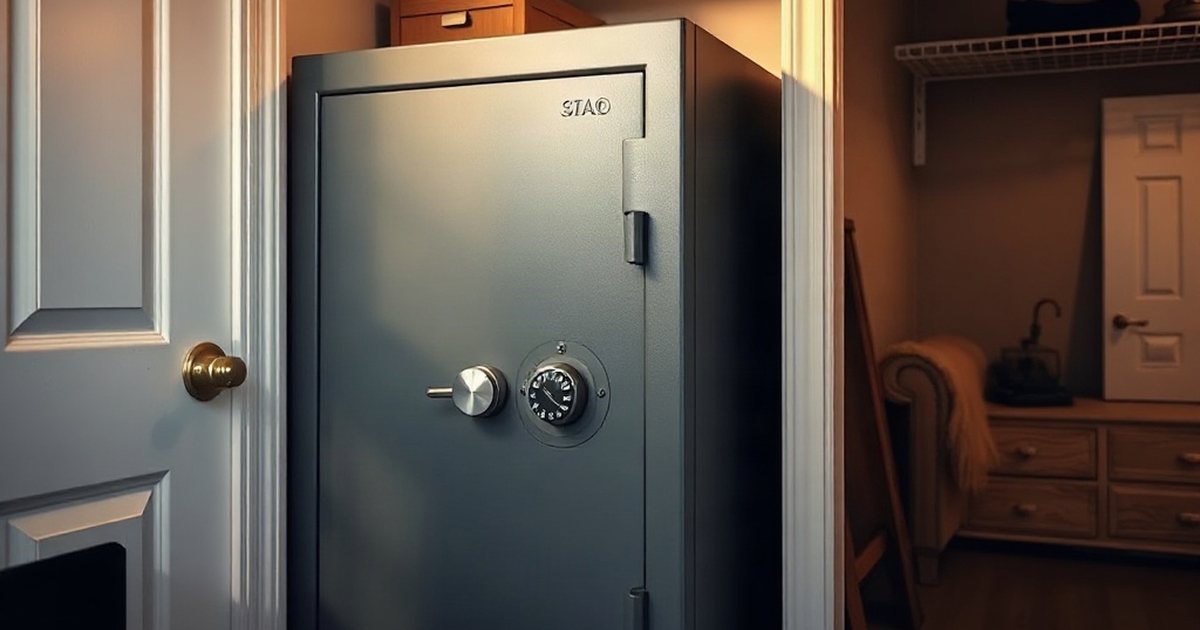
The statute covers a firearm in a condition that it can be discharged. The statute’s own phrase is a condition that the firearm can be discharged, not the word loaded. [1] The knowledge standard is knew or should have known that an unsupervised minor would be able to gain access, which reaches both actual awareness and what a person ought to have recognized.
Carrying, proximity and the unlawful-entry exception
The North Carolina section states a rule about carrying. Nothing in the section shall prohibit a person from carrying a firearm on his or her body, or placed in such close proximity that it can be used as easily and quickly as if carried on the body. [2]
That sentence describes a case in which the firearm is under the person’s immediate control. It is not a description of storage in a locked place.
The statute also contains an exception tied to how the minor got the firearm. The section does not apply if the minor obtained the firearm as a result of an unlawful entry by any person. [1] In plain terms, North Carolina law does not apply the section where the minor got the firearm through an unlawful entry.
Penalties and the sale warning
A violation of the storage section is a Class 1 misdemeanor in North Carolina. [2] G.S. 15A-1340.23 sets punishment limits for each class of offense, and it says the amount of the fine for a Class 1 misdemeanor and a Class A1 misdemeanor is in the discretion of the court. [4]
That section also includes a punishment chart. For Class 1, the chart row lists ranges of 1 to 45 days and 1 to 120 days, with the applicable range depending on the offender’s prior conviction level in that chart. [4]
G.S. 14-315.2 concerns sales. Upon the retail commercial sale or transfer of any firearm, the seller or transferor shall deliver a written copy of G.S. 14-315.1 to the purchaser or transferee. [5]
That section also requires retail outlets to post a warning in block letters not less than one inch in height at each purchase counter, and the warning begins with the phrase that it is unlawful to store or leave a firearm that can be discharged in a manner that a reasonable person should know is accessible to a minor. [5] A violation of the delivery or posting duty is also a Class 1 misdemeanor. [5]
Bridges v. Parrish and what it does and does not show
The only North Carolina case discussed in this guide is Bridges v. Parrish, decided by the Supreme Court of North Carolina in 2013 and reported at 366 N.C. 539. It is a civil case, not a criminal prosecution. [3]
The decision says that a dissenting judge below would have reversed the trial court’s decision and allowed the plaintiff to proceed with a claim for negligent storage of a firearm. [3] The Supreme Court’s holding, in its own words, is that the parents in the case are not liable for the criminal conduct of their 52-year-old son. [3]
Two limits matter for reading the case. The son in the holding was 52, an adult, so the case does not involve a minor under the statute’s definition. And this guide does not treat the decision as an interpretation of G.S. 14-315.1. This guide does not cover a reported North Carolina appellate decision applying G.S. 14-315.1 itself.
Choosing storage with the statute’s wording in mind
The North Carolina storage section describes the condition of the firearm and the manner of storage: whether it can be discharged, and whether a person knew or should have known an unsupervised minor could reach it. [1]
The statute’s test turns on whether the arrangement left a minor able to gain access. A device that a teenager can open easily may not change that picture, and a device that a teenager cannot open is a different picture. The statute does not rank devices, and no device is guaranteed to meet it.
For context, RAND describes child-access prevention laws as laws that allow prosecutors to bring charges against adults who intentionally or carelessly allow children to have unsupervised access to firearms, and RAND’s list of states with negligent-storage laws includes North Carolina. [6] [7]
FAQ
What class of crime is unsafe storage around minors in North Carolina?
The storage section makes it a Class 1 misdemeanor when the listed conditions are met. [2] The punishment-limits statute leaves the fine for a Class 1 misdemeanor to the discretion of the court. [4]
Who is a minor under the North Carolina storage statute?
The section defines minor as a person under 18 years of age who is not emancipated. [2]
Does North Carolina law require a seller to hand over the statute?
G.S. 14-315.2 says that upon the retail commercial sale or transfer of any firearm, the seller or transferor shall deliver a written copy of G.S. 14-315.1 to the purchaser or transferee. [5]
What did the North Carolina Supreme Court hold in Bridges v. Parrish?
The court held that the parents in the case are not liable for the criminal conduct of their 52-year-old son. It was a civil case, not a criminal prosecution. [3]
This is general information, not legal advice. It describes statutory text and one court decision as of October 2026, and laws can change; read G.S. 14-315.1 directly or ask a North Carolina lawyer about a specific situation.
Sources
- N.C. Gen. Stat. 14-315.1 (storage of firearms to protect minors). North Carolina General Assembly, accessed 2026-10-13
- N.C. Gen. Stat. 14-315.1 – storage of firearms to protect minors. North Carolina General Assembly, accessed 2026-10-13
- Bridges v. Parrish, North Carolina Supreme Court (2013), 366 N.C. 539. Supreme Court of North Carolina, accessed 2026-10-13
- N.C. Gen. Stat. 15A-1340.23 (punishment limits for each class of offense). North Carolina General Assembly, accessed 2026-10-13
- N.C. Gen. Stat. 14-315.2 (warning upon sale or transfer of firearm to protect minor). North Carolina General Assembly, accessed 2026-10-13
- The Effects of Child-Access Prevention Laws. RAND Corporation (Gun Policy in America), accessed 2026-10-13
- The Effects of Child-Access Prevention Laws (state lists). RAND Corporation (Gun Policy in America); host blocks scripted fetches (403), page loads in a browser, accessed 2026-10-13
Fire, burglary and lock ratings are quoted as the manufacturer or testing lab states them, with the source on each page. Safe-storage and child-access laws vary by state and change; check your state's current statute. No safe or lock replaces supervision of children around firearms. We do not sell or link to firearms or ammunition. This is general information, not legal advice. As an Amazon Associate we earn from qualifying purchases.
