Maryland gun storage laws center on one criminal statute, Section 4-104 of the Criminal Law Article. It bars a person from storing or leaving a loaded firearm in a location where the person knew or should have known that an unsupervised minor has access to it. [1]
This guide covers what the Maryland text says, the kinds of firearm it reaches, the exceptions written into it, the penalty, and what it leaves open about storage devices. It describes the statutory text as current in October 2026. This is general information, not legal advice.
- Maryland Criminal Law Section 4-104 bars storing or leaving a loaded firearm where the person knew or should have known an unsupervised minor has access. [1]
- Maryland’s quoted exceptions include supervised access by an individual at least 18 years old, unlawful entry, a law enforcement officer on official duties and a minor holding a firearm and hunter safety certificate. [1] [2]
- A Maryland violation is a misdemeanor with a fine not exceeding $1,000. [1]
- RAND’s list of states with negligent-storage laws includes Maryland.
What the Maryland storage statute says
The Maryland rule is a prohibition on a person. Under the statute, a person may not store or leave a loaded firearm in a location where the person knew or should have known that an unsupervised minor has access to the firearm. [1] The statute is found in the Maryland General Assembly’s online statute text for the Criminal Law Article, Section 4-104. [2]
Three ideas carry the sentence. The firearm must be loaded. The location is where the firearm is stored or left. The knowledge element is stated in two parts, knew or should have known, so Maryland law reaches a person who did not actually realize a minor had access if a person in that position should have realized it. [1]
The definitions of the word minor and the word loaded sit in the full Maryland text, which a reader can open on the legislature’s website.
Which firearms and which people Maryland covers
Maryland defines the firearm broadly. The definition says a firearm means a handgun, rifle, shotgun, short-barreled rifle, or short-barreled shotgun, as those terms are defined in Section 4-201 of the title, or any other firearm. [2] A rifle in a closet and a handgun in a nightstand therefore sit inside the same Maryland definition.
The same text carves out one category. In Maryland, the definition of firearm does not include an antique firearm as defined in Section 4-201 of the title. [2]
On the people side, the duty runs to the person who stores or leaves the firearm, and it is triggered by the access of an unsupervised minor. [1] A minor who is supervised by an adult is treated differently, as the next section explains.
Exceptions written into the Maryland statute
Maryland’s text lists situations in which the prohibition does not apply. One is supervised access: the statute refers to a situation where the minor’s access to a firearm is supervised by an individual at least 18 years old. [1] That exception is built on supervision by an adult, not on the type of container.
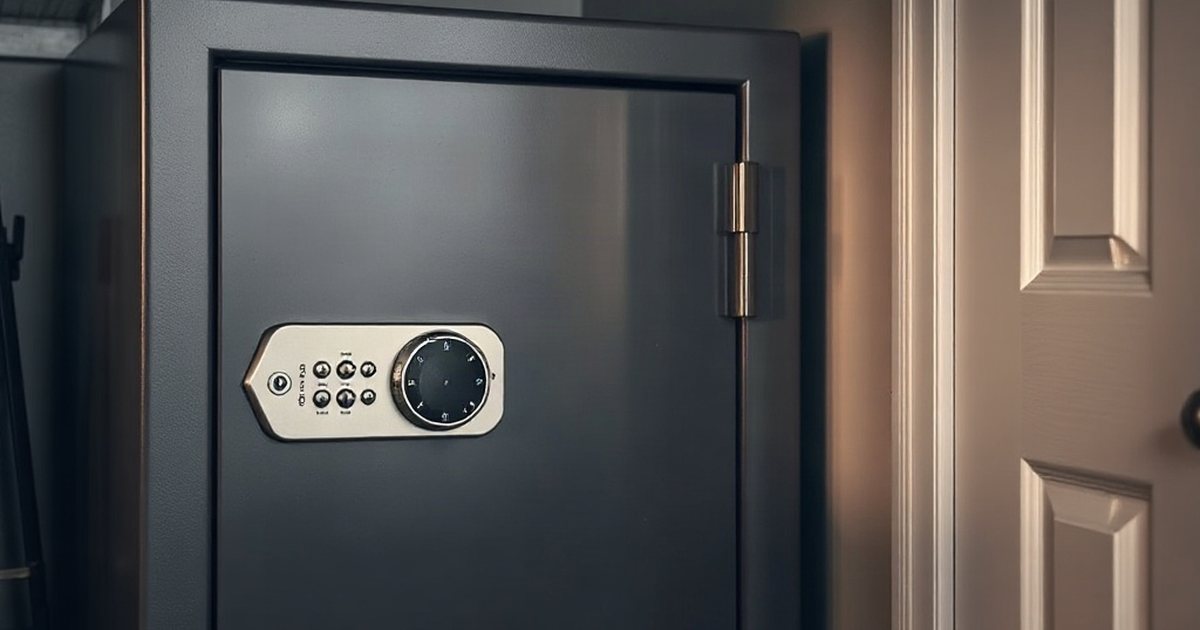
Another exception covers unlawful entry. The statute refers to a case where the minor’s access to a firearm was obtained as a result of an unlawful entry. [2] A third applies when the firearm is in the possession or control of a law enforcement officer while the officer is engaged in official duties. [2]
A fourth exception concerns the minor. It applies where the minor has a certificate of firearm and hunter safety issued under Section 10-301.1 of the Natural Resources Article. [2]
Maryland penalties and civil effect
A person who violates Section 4-104 is guilty of a misdemeanor in Maryland and, on conviction, is subject to a fine not exceeding $1,000. [1]
The statute also speaks to civil cases. The statute says a violation of the section may not be considered evidence of negligence, may not be considered evidence of contributory negligence, and may not limit liability of a party or an insurer. [2]
Put together, the Maryland text sets a criminal penalty for the storage conduct and then says a violation may not be considered evidence of negligence or contributory negligence in civil cases. That describes how the statute is written, not a prediction about any particular lawsuit.
How Maryland courts have applied the statute
This guide does not cover a reported Maryland appellate decision interpreting Section 4-104, or a prosecutor’s release about a charge under it, so it describes no case.
Phrases such as knew or should have known and unsupervised are the kind of words a court would apply to particular facts. A reader with a real question about those phrases would need to look for current Maryland decisions or ask a Maryland lawyer.
Where Maryland sits among state storage laws
RAND describes child-access prevention and safe storage laws as laws that allow prosecutors to bring charges against adults who intentionally or carelessly allow children to have unsupervised access to firearms. [3] RAND’s list of states and the District of Columbia that have implemented negligent-storage laws includes Maryland. [4]
RAND also notes that state laws vary on whether criminal penalties are classed as misdemeanors or felonies, and on the age threshold for being a minor. [3] The Maryland rules in this guide are Maryland’s alone, and a rule that holds in Maryland should not be assumed to hold in another state.
On outcomes, one study found that unintentional shooting deaths were reduced by 23% during the years covered by laws holding gun owners responsible for storing firearms inaccessibly to children, in the 12 states it examined from 1990 through 1994. [5] That is an association for an earlier period and a particular group of states, and it does not measure the Maryland statute as it reads today.
What this means for choosing storage
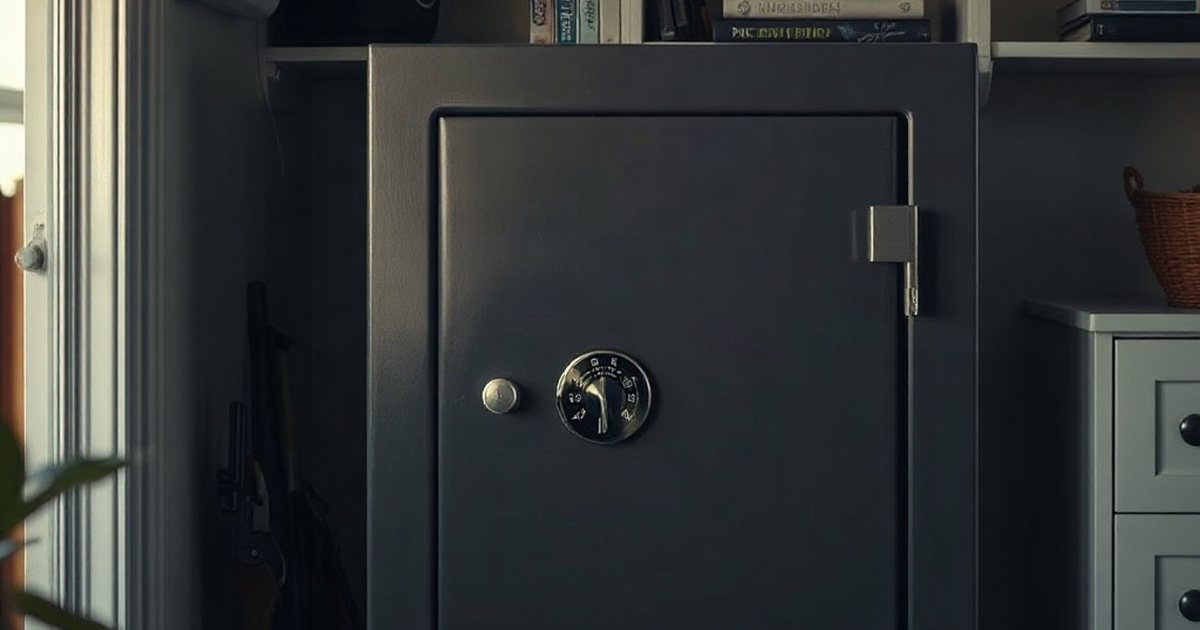
The Maryland statute names no lockbox, gun safe, cable lock or trigger lock. Its operative question is whether a loaded firearm sits where an unsupervised minor has access. [1] No storage product can be said to satisfy the statute by itself, because the statute asks about access in a given location, not about a brand or a feature list.
That framing leaves a practical gap between meeting the wording of a statute and keeping a determined teenager out. The Harvard Means Matter project states that access to firearms is a risk factor for suicide and that firearms used in youth suicide usually belong to a parent. [6] Who knows a combination, where keys are kept and whether the firearm is stored loaded are the details that decide access in practice.
FAQ
What is Maryland’s main gun storage law?
It is Section 4-104 of the Criminal Law Article. The statute bars storing or leaving a loaded firearm in a location where the person knew or should have known that an unsupervised minor has access. [1]
What is the penalty under the Maryland storage statute?
The statute says a person who violates the section is guilty of a misdemeanor and, on conviction, is subject to a fine not exceeding $1,000. [1]
Does the Maryland law apply if a minor gets in through a break-in?
The Maryland text lists an exception where the minor’s access to a firearm was obtained as a result of an unlawful entry. [2]
Does Maryland treat supervised minors differently?
Yes. The exception refers to a minor whose access to a firearm is supervised by an individual at least 18 years old. [1]
Can a Maryland violation be used as proof of negligence in a civil case?
The statute says a violation of the section may not be considered evidence of negligence or of contributory negligence. [2]
This is general information, not legal advice. Statutes change and facts matter, so read the current text of Maryland Criminal Law Section 4-104 or ask a Maryland lawyer about your own situation. A lock or container limits access but does not replace supervision.
Sources
- Maryland Criminal Law 4-104 – storing a loaded firearm accessible to an unsupervised minor. Maryland General Assembly (Department of Legislative Services), accessed 2026-10-13
- Maryland Criminal Law 4-104 (storing a loaded firearm where a minor has access). Maryland General Assembly, Department of Legislative Services, accessed 2026-10-13
- The Effects of Child-Access Prevention Laws. RAND Corporation (Gun Policy in America), accessed 2026-10-13
- The Effects of Child-Access Prevention Laws (state lists). RAND Corporation (Gun Policy in America); host blocks scripted fetches (403), page loads in a browser, accessed 2026-10-13
- State gun safe storage laws and child mortality due to firearms (Cummings et al., 1997). JAMA (PubMed abstract, PMID 9315767), accessed 2026-10-13
- Safe Storage (Means Matter). Harvard T.H. Chan School of Public Health, Means Matter, accessed 2026-10-13
Fire, burglary and lock ratings are quoted as the manufacturer or testing lab states them, with the source on each page. Safe-storage and child-access laws vary by state and change; check your state's current statute. No safe or lock replaces supervision of children around firearms. We do not sell or link to firearms or ammunition. This is general information, not legal advice. As an Amazon Associate we earn from qualifying purchases.
