Nevada’s main gun storage provision is NRS 202.300, titled use or possession of firearm by child, with a separate offense for unlawfully storing or leaving a firearm. In Nevada, the statute says a person is guilty of a misdemeanor who negligently stores or leaves a firearm at a location under his or her control and knows or has reason to know that there is a substantial risk that a child may obtain it. [1]
This guide covers what the Nevada statute says, who it applies to, which storage methods and circumstances it recognizes, how the penalties work, and how court decisions fit in. It describes the legislative text as of October 2026, and no effective date is stated here. This is general information, not legal advice.
- Nevada’s NRS 202.300 sets the child threshold at under 18 years and makes it a misdemeanor to negligently store or leave a firearm where a child may obtain it, when the person knows or has reason to know of a substantial risk. [1]
- The Nevada text recognizes a securely locked container or a location a reasonable person would have believed to be secure. [2]
- A Nevada misdemeanor carries not more than 6 months in county jail, a fine of not more than $1,000, or both. [3]
- This guide does not cover a reported Nevada court decision applying NRS 202.300.
What NRS 202.300 says
The statute has two linked parts. The first sets a rule about children and firearms: a child under the age of 18 years shall not handle or have in his or her possession or under his or her control any firearm of any kind, except while accompanied by or under the immediate charge of a parent, guardian, or an adult person authorized by the parent or guardian. [1]
The second part is the storage offense. Unless a greater penalty is provided by law, a person in Nevada is guilty of a misdemeanor who negligently stores or leaves a firearm at a location under his or her control and knows or has reason to know that there is a substantial risk that a child prohibited under the section may obtain the firearm. [1]
A third thread is aiding or knowingly permitting. A person who aids or knowingly permits a child to violate the first rule is subject to graded penalties, and the first offense is a misdemeanor unless a higher tier applies. [1]
Who the Nevada law covers
The child threshold in Nevada is 18. The statute speaks of a child under the age of 18 years, and the possession rule applies to firearms of any kind. [2]
The storage offense is not strict liability. Nevada’s text requires that the person negligently stores or leaves the firearm at a location under his or her control, and that the person knows or has reason to know of a substantial risk that a prohibited child may obtain it. [2] Both pieces are part of the wording.
The Nevada statute also contains a carve-out for older children with long guns, in certain listed circumstances. It says a child who is 14 years of age or older may handle or have in possession or under control a rifle or shotgun that is not a fully automatic firearm, if the child is not otherwise prohibited by law from possessing it, without being accompanied by a parent or guardian. [1]
What counts as secure storage, and the defenses
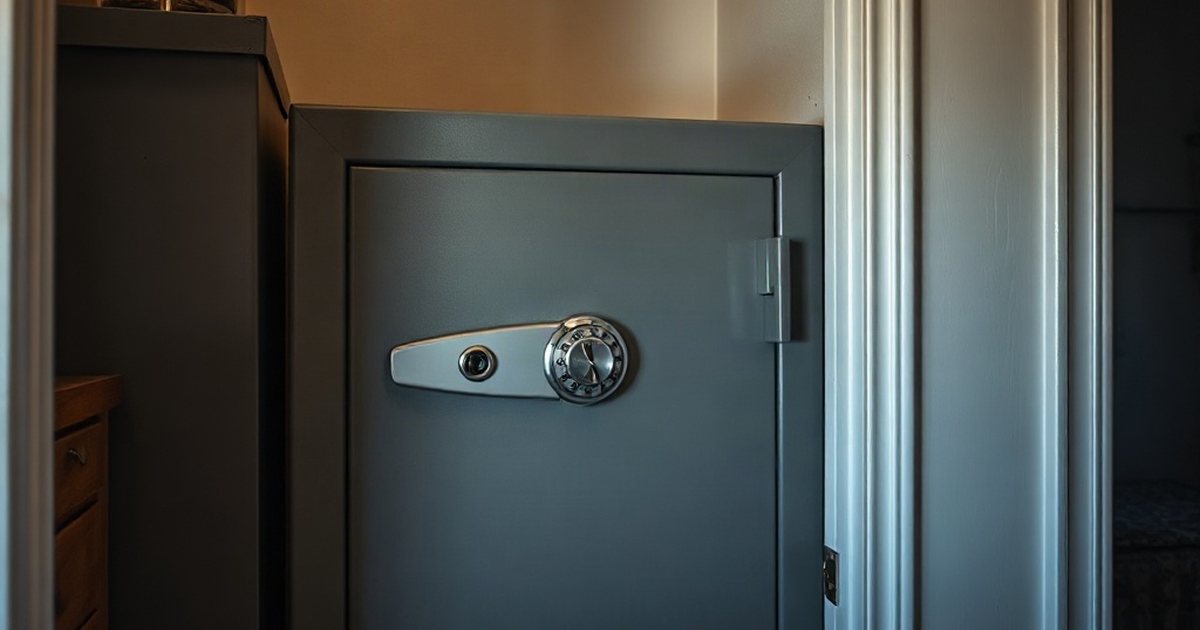
On the storage side, the Nevada text lists circumstances in which a person does not aid or knowingly permit a child to violate the possession rule. The first is that the firearm was stored in a securely locked container or at a location which a reasonable person would have believed to be secure. [1]
The words “a location which a reasonable person would have believed to be secure” refer to what a reasonable person would have believed. The Nevada text does not list particular products. [2]
The statute lists other circumstances too. One is that the child obtained the firearm as a result of an unlawful entry by any person in or upon the premises where the firearm was stored. [1] Another is that the injury or death resulted from an accident which was incident to target shooting, sport shooting or hunting. [1]
Penalties in Nevada
Nevada’s penalties come from two places. The aiding-or-permitting provision sets the tier, and the general punishment statutes give the sentence range. Under NRS 193.150, every person convicted of a misdemeanor shall be punished by imprisonment in the county jail for not more than 6 months, or by a fine of not more than $1,000, or by both. [3]
A higher tier applies in some first offenses. If the person knows or has reason to know that there is a substantial risk that the child will use the firearm to commit a violent act, the first offense is a category C felony punished as provided in NRS 193.130. [1]
That section describes a category C felony as one for which the court shall sentence a convicted person to a prison term with a minimum of not less than 1 year and a maximum of not more than 5 years, and the court may add a fine of not more than $10,000. [3]
A note on the category B range
The general definition of a category B felony allows a maximum term of not more than 20 years, as provided by specific statute. [3] For this firearm provision, the specific statute sets the maximum at 6 years. [1] The general ceiling is not the figure the specific provision sets.
- Negligently storing or leaving a firearm where a child may obtain it: a misdemeanor, which under NRS 193.150 carries not more than 6 months in county jail, a fine of not more than $1,000, or both. [1] [3]
- First offense of aiding or knowingly permitting, with a known substantial risk of a violent act: a category C felony, 1 to 5 years in state prison and a possible fine of not more than $10,000. [1] [3]
- Second or subsequent offense of aiding or knowingly permitting: a category B felony, a minimum term of not less than 1 year and a maximum of not more than 6 years, and possibly a fine of not more than $5,000. [1]
Courts and prosecutors in Nevada
This guide does not cover a reported Nevada appellate decision applying NRS 202.300, or a prosecutor release about a Nevada storage case, so it describes no court case. It makes no prediction about how Nevada courts would read the statute’s reasonable-person language.
Nevada also appears in national summaries. RAND describes child-access prevention and safe storage laws as laws that allow prosecutors to bring charges against adults who intentionally or carelessly allow children to have unsupervised access to firearms. [4] RAND’s list of states and the District of Columbia with negligent-storage laws includes Nevada. [5]
RAND also notes that state laws vary on whether criminal penalties are classed as misdemeanors or felonies, and on the age threshold for being a minor. [4] Nevada’s details in this guide belong to Nevada alone.
What this means for choosing storage
The Nevada wording points to two ideas: a securely locked container, or a location that a reasonable person would have believed to be secure. [2] The statute does not name a brand, a product line or a price, and no product can be said to satisfy it by itself.
There is a gap between meeting that wording and keeping a teenager out. The Nevada rule on possession reaches a child under the age of 18 years, so the households it describes include older teenagers who may be able to find a key or a code. [2] Who knows where the key is kept, or the combination, is the practical question the wording leaves open.
The section also treats unlawful entry as a separate circumstance. In Nevada, a child’s obtaining a firearm as a result of an unlawful entry by any person in or upon the premises where it was stored is one listed circumstance in which the aiding-or-permitting provision does not apply. [1] A lock or container reduces access but does not replace supervision.
FAQ
What is the Nevada gun storage law?
It is NRS 202.300, covering use or possession of a firearm by a child and the unlawful storing or leaving of a firearm. The statute creates a misdemeanor for negligent storage where there is a known or reasonably known substantial risk that a child may obtain the firearm. [1]
How old is a child under the Nevada statute?
The statute speaks of a child under the age of 18 years. In certain listed circumstances, a child who is 14 or older may possess a rifle or shotgun that is not a fully automatic firearm without being accompanied, if not otherwise prohibited by law. [1]
What does Nevada say about locked storage?
A person does not aid or knowingly permit a child to violate the possession rule if the firearm was stored in a securely locked container or at a location which a reasonable person would have believed to be secure. [1]
What are the felony penalties in Nevada?
For a first offense with a known substantial risk of a violent act, the statute provides a category C felony, with a prison term of 1 to 5 years and a possible fine of not more than $10,000. A second or later offense is a category B felony with a maximum term of not more than 6 years. [1] [3]
This is general information, not legal advice. Statutes change, so read the current text of NRS 202.300 or ask a Nevada lawyer about your own situation. A lock or container reduces access but does not replace supervision.
Sources
- NRS 202.300 (use or possession of firearm by child; unlawful to store or leave firearm). Nevada Legislature (NRS Chapter 202), accessed 2026-10-13
- NRS 202.300 – firearm possession by a child; storing or leaving a firearm. Public.Law (Open Law Library) reproduction of the statute (Nevada.Public.Law), accessed 2026-10-13
- NRS 193.150 and 193.130 (misdemeanor and category B/C felony punishment). Nevada Legislature (NRS Chapter 193), accessed 2026-10-13
- The Effects of Child-Access Prevention Laws. RAND Corporation (Gun Policy in America), accessed 2026-10-13
- The Effects of Child-Access Prevention Laws (state lists). RAND Corporation (Gun Policy in America); host blocks scripted fetches (403), page loads in a browser, accessed 2026-10-13
Fire, burglary and lock ratings are quoted as the manufacturer or testing lab states them, with the source on each page. Safe-storage and child-access laws vary by state and change; check your state's current statute. No safe or lock replaces supervision of children around firearms. We do not sell or link to firearms or ammunition. This is general information, not legal advice. As an Amazon Associate we earn from qualifying purchases.
