Rhode Island’s gun storage law is R.I. Gen. Laws 11-47-60.1, a section titled safe storage and unsafe storage of a firearm. The Rhode Island text sorts storage failures into tiers: civil infractions for first and second violations, then criminal storage in the second degree and in the first degree when a child or a prohibited person gets access to the firearm. [1]
This guide covers what the Rhode Island section says, who it reaches, what the statute treats as secure storage, how the penalties are laid out, and how court decisions fit in. It describes the statute as of October 2026, and the text itself carries a notation of an effective date of June 13, 2024. [1] This is general information, not legal advice.
- Rhode Island’s section 11-47-60.1 covers safe and unsafe storage, with civil infractions for first and second violations and criminal tiers beyond that. [1]
- The Rhode Island text treats a firearm as secured when it is in a locked container or equipped with a tamper-resistant mechanical lock or other safety device. [2]
- For a first offense, Rhode Island’s civil infraction fine is not more than $250, and for a second offense not more than $1,000. [1]
- This guide does not cover a reported Rhode Island court decision applying the section.
What the Rhode Island statute says
Section 11-47-60.1 is the part of the Rhode Island general laws on safe storage and unsafe storage of a firearm. Its rule is built around a locked container or a safety device. In Rhode Island, the section speaks of a firearm that is secured in a locked container or equipped with a tamper-resistant mechanical lock or other safety device. [2]
The section is not a single offense. The section describes a basic storage violation handled as a civil infraction, and then two criminal offenses named criminal storage of a firearm in the second degree and in the first degree. [1]
The Rhode Island statute carries the notation effective June 13, 2024, and the penalty figures below come from that text. [1]
Who the Rhode Island section covers
The two criminal offenses turn on who obtains the firearm. Under the Rhode Island text, a person is guilty of criminal storage of a firearm in the second degree if a child or a person who is prohibited, under state or federal law, from purchasing or possessing firearms obtains access to the firearm. [1]
Rhode Island’s section defines a child as any person who has not attained the age of eighteen (18) years. [2]
The first degree is the more serious tier. Rhode Island’s text says a person is guilty of criminal storage of a firearm in the first degree if they commit the second-degree offense and the firearm obtained by a child or a prohibited person is used by that person in the commission of a crime or to cause injury to himself or herself or any other person. [1]
The authorized-user proximity exception
The Rhode Island section also contains a carve-out for a firearm that stays with its user. The section says it does not apply to a firearm that is being carried by or can be readily carried by a lawfully authorized user who is in proximity to the firearm. [2]
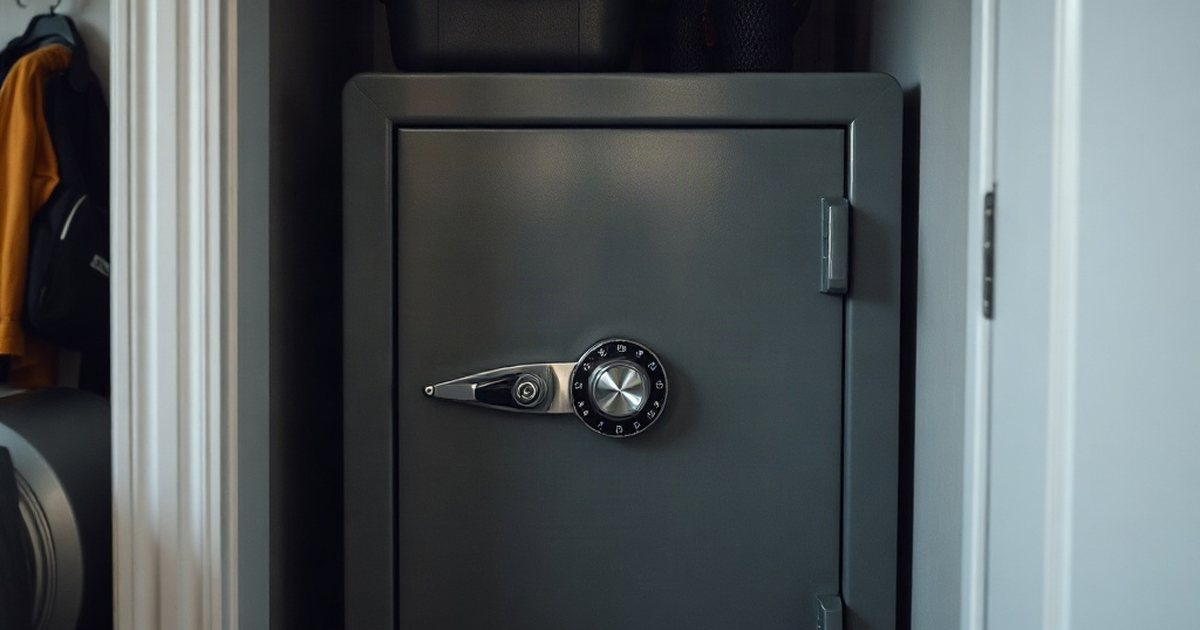
That wording is about the firearm and the authorized user together. It does not describe an unattended firearm.
What counts as secure storage, and the defenses
On the storage methods themselves, the Rhode Island text names two. A firearm is outside the unsafe-storage language when it is secured in a locked container, or when it is equipped with a tamper-resistant mechanical lock or other safety device. [2]
Rhode Island’s section also lists situations that are treated differently because of how the firearm was obtained. One is where the child or prohibited person obtains the firearm as a result of an illegal entry of any premises by any person, or an illegal taking of the firearm from the premises of the owner without permission of the owner. [1]
Another is where the person obtains, or obtains and discharges, the firearm in a lawful act of self-defense or defense of another person. [1] Both of these exceptions concern how the firearm was obtained, which makes them different in kind from the storage methods.
Penalties in Rhode Island
The civil tiers come first. For a first offense, the Rhode Island text provides a civil infraction punishable by a fine of not more than two hundred fifty dollars ($250), and for a second offense a civil infraction punishable by a fine of not more than one thousand dollars ($1,000). [1]
A third or subsequent violation of that subsection is treated as a criminal matter. Upon conviction, it is punished by imprisonment for no more than six (6) months, or a fine of not more than five hundred dollars ($500), or both. [1]
The five-year penalty sentence
The Rhode Island text also provides that any violation of a subsection shall, upon conviction, be punishable by imprisonment for not more than five (5) years, or a fine of not more than five thousand dollars ($5,000), or both. [1]
The statute text itself is the place to confirm which penalty attaches to which offense.
- First offense in Rhode Island: civil infraction, fine of not more than $250. [1]
- Second offense: civil infraction, fine of not more than $1,000. [1]
- Third or subsequent violation: imprisonment for no more than six months, or a fine of not more than $500, or both, upon conviction. [1]
Intent, courts, and the dealer trigger lock rule
The Rhode Island statute includes a statement of legislative intent about prosecutions. It says the general assembly intends that a parent or guardian of a child who is injured or who dies of an accidental shooting shall be prosecuted only in those instances in which the parent or guardian behaved in a grossly negligent manner. [1]
This guide does not cover a reported Rhode Island appellate decision applying section 11-47-60.1, or a prosecutor release for Rhode Island, so it describes no court case. It does not guess at how Rhode Island courts read the section.
A separate rule for licensed dealers
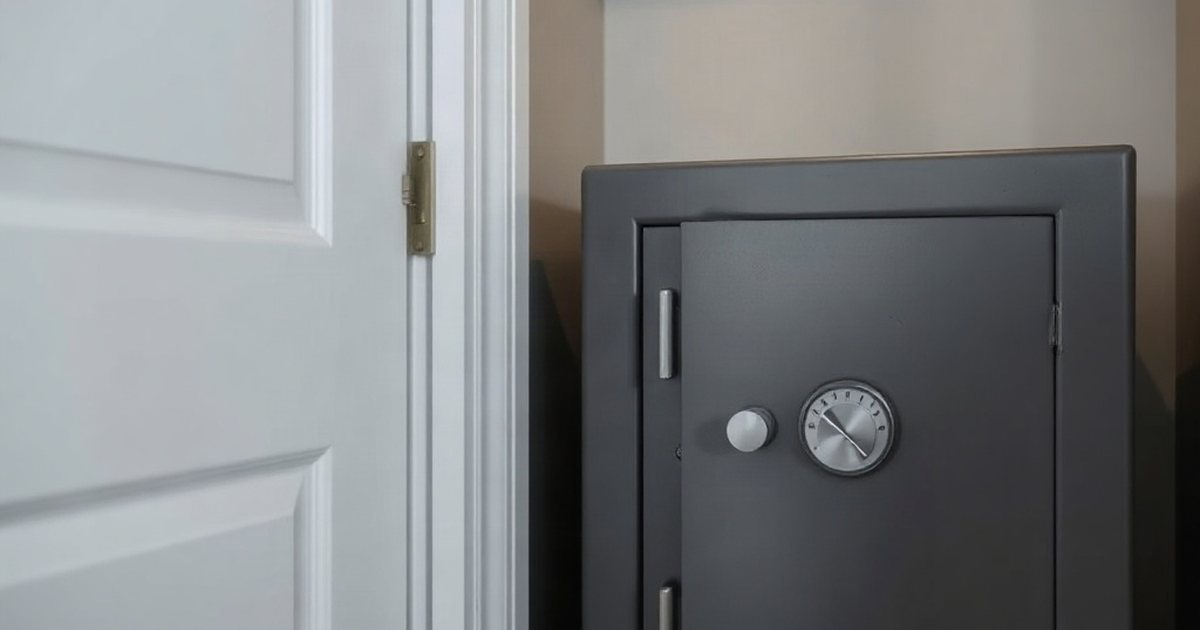
A neighboring section, 11-47-60.3, covers retail sales rather than home storage. It says no licensed retail dealer shall deliver any pistol, rifle, or shotgun to any purchaser without providing a trigger lock or other safety device designed to prevent an unauthorized user from operating the firearm. [3]
That is a duty placed on the dealer at the point of sale. It is not a description of what a household must keep at home, and it does not change the storage section above.
Rhode Island among state storage laws
RAND describes child-access prevention and safe storage laws as laws that allow prosecutors to bring charges against adults who intentionally or carelessly allow children to have unsupervised access to firearms. [4] RAND’s list of states and the District of Columbia with negligent-storage laws includes Rhode Island. [5]
RAND also notes that state laws vary on whether criminal penalties are classed as misdemeanors or felonies, and on the age threshold for being a minor. [4] The details in this guide belong to Rhode Island only.
What this means for choosing storage
The Rhode Island text names two kinds of arrangement: a locked container, and a firearm equipped with a tamper-resistant mechanical lock or other safety device. [2] It does not name a brand, a product line or a price, and no single product can be said to satisfy the statute on its own.
There is also a gap between the statute’s wording and keeping a determined teenager out. The Rhode Island definition reaches anyone who has not attained the age of eighteen years, which includes older teenagers who can work out a simple lock. [2] Because the Rhode Island criminal tiers depend on whether a child or prohibited person obtains access, who knows or can reach the key, code or combination is the practical question.
The second and first degree offenses also point at consequences, not only at the storage method. In Rhode Island, the first-degree tier applies when the firearm is used in a crime or to cause injury. [1] A lock or container reduces access but does not replace supervision.
FAQ
What is the main Rhode Island gun storage law?
It is R.I. Gen. Laws 11-47-60.1, titled safe storage and unsafe storage of a firearm. The statute carries a notation of an effective date of June 13, 2024. [1]
What are the penalties for unsafe storage in Rhode Island?
Under the Rhode Island statute, a first offense is a civil infraction with a fine of not more than $250 and a second is a civil infraction with a fine of not more than $1,000. A third or subsequent violation can bring up to six months or a fine of not more than $500, or both, upon conviction. [1]
Does Rhode Island law say a gun lock counts as secure storage?
The Rhode Island statute refers to a firearm secured in a locked container or equipped with a tamper-resistant mechanical lock or other safety device. [2]
Does Rhode Island require a trigger lock at sale?
Section 11-47-60.3 says no licensed retail dealer shall deliver a pistol, rifle, or shotgun to a purchaser without providing a trigger lock or other safety device designed to prevent an unauthorized user from operating the firearm. [3]
This is general information, not legal advice. Statutes change, so read the current text of R.I. Gen. Laws 11-47-60.1 or ask a Rhode Island lawyer about your own situation. A lock or container reduces access but does not replace supervision.
Sources
- R.I. Gen. Laws 11-47-60.1 (safe storage; unsafe storage of a firearm). Rhode Island General Assembly, accessed 2026-10-13
- R.I. Gen. Laws 11-47-60.1 – safe storage; unsafe storage of a firearm. Rhode Island General Assembly, accessed 2026-10-13
- R.I. Gen. Laws 11-47-60.3 (trigger lock required at retail sale). Rhode Island General Assembly, accessed 2026-10-13
- The Effects of Child-Access Prevention Laws. RAND Corporation (Gun Policy in America), accessed 2026-10-13
- The Effects of Child-Access Prevention Laws (state lists). RAND Corporation (Gun Policy in America); host blocks scripted fetches (403), page loads in a browser, accessed 2026-10-13
Fire, burglary and lock ratings are quoted as the manufacturer or testing lab states them, with the source on each page. Safe-storage and child-access laws vary by state and change; check your state's current statute. No safe or lock replaces supervision of children around firearms. We do not sell or link to firearms or ammunition. This is general information, not legal advice. As an Amazon Associate we earn from qualifying purchases.
