Delaware gun storage laws sit in Title 11 of the Delaware Code, section 1456, titled unsafe storage of a firearm or projectile weapon. The section has two offenses: unsafe storage of a loaded firearm that an unauthorized person obtains, and unsafe storage of a firearm left unattended in a vehicle. [1]
This guide covers what the Delaware text says, who counts as an unauthorized person, what stored safely means in the statute, the vehicle rules, and the penalties set by section 4206. It describes the statutory text as current in October 2026. This is general information, not legal advice.
- Delaware Title 11 section 1456 makes it unsafe storage when a person intentionally or recklessly leaves a loaded firearm within reach of an unauthorized person who obtains it and the listed safeguards are missing. [1]
- Delaware defines the unauthorized person as a child or person prohibited by state or federal law from owning or possessing a firearm or projectile weapon. [2]
- Delaware separately addresses vehicles: a firearm left unattended must be in a locked box or container, a locked rack on the vehicle, or locked in the trunk. [1]
- Delaware unsafe storage is a class B misdemeanor, or a class A misdemeanor in listed cases; class A allows up to 1 year at Level V and a fine up to $2,300. [2] [3]
What the Delaware storage statute says
In Delaware, a person is guilty of unsafe storage of a firearm or projectile weapon when the person intentionally or recklessly stores or leaves a loaded firearm or projectile weapon in a place other than a vehicle within the reach or easy access of an unauthorized person, the unauthorized person obtains it, and all of several listed conditions apply. [1]
Two features set the Delaware structure apart. The mental state is intentional or reckless, not negligence. And the offense needs an outcome: the unauthorized person must actually obtain the firearm. Leaving a firearm within reach, without that outcome, does not fit the statute. [1]
The listed conditions are cumulative. The statute says all of the following applies, so each one must be present for the first offense to be made out, and the section reads as a set of tests that all have to line up.
Who the unauthorized person is
Delaware defines the unauthorized person in a way that goes beyond children. The definition says it means a child or person prohibited by state or federal law from owning or possessing a firearm or projectile weapon. [2]
The wider category matters in its own right, because the Delaware definition reaches an adult who is legally barred from possessing firearms as well as a young person.
The statute also covers projectile weapons alongside firearms, and its text names both throughout. [1] One exclusion appears in the statute: it is not an offense under the section if the firearm was manufactured in or before the year 1899, or is a replica of such a firearm that is not designed or redesigned for using rimfire or conventional centerfire fixed ammunition. [1]
What counts as secure in Delaware, and the exceptions
The Delaware conditions are written as negatives, which means each describes a missing safeguard. The firearm was not stored in a locked box or container. [2] It was not disabled with a tamper-resistant trigger lock which was properly engaged so as to render it inoperable by a person other than the owner or other lawfully-authorized user. [1]
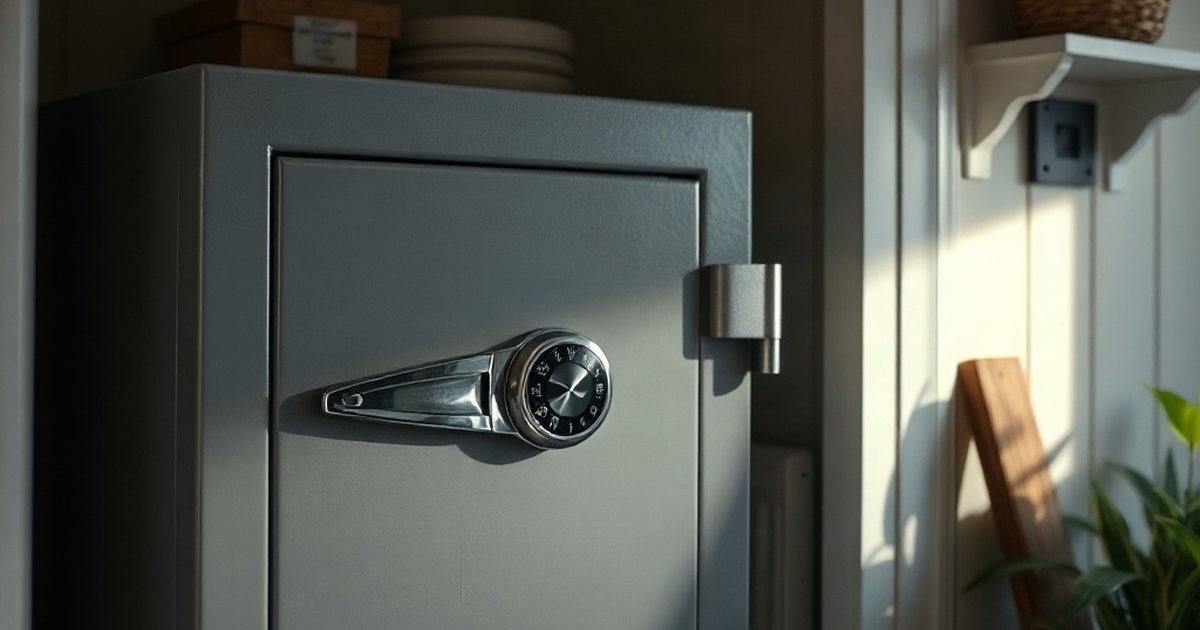
A third missing safeguard is location. The firearm was not stored in a location that a reasonable person would have believed to be secure from access by an unauthorized person. [1] A fourth condition is that the unauthorized person did not obtain the firearm as the result of an unlawful entry by any person. [1]
Read together, Delaware law points to three safeguards, a locked box or container, an engaged tamper-resistant trigger lock, and a location a reasonable person would believe secure. The unlawful-entry condition works as a carve-out for break-ins.
The locked container definition
Delaware describes a locked container as a secure container that is fully enclosed and locked by a padlock, keylock, combination lock, or similar locking device. [2] The definition names the locking methods and requires full enclosure.
The same section says the locked container definition does not include the glove compartment of a motor vehicle, unless the glove compartment can be manually locked to render the firearm inaccessible by any individual other than the owner or an authorized person. [1] The section also says that storing or leaving a firearm does not mean when the firearm is carried by or under the control of the owner or other lawfully-authorized user. [1]
Firearms left in a vehicle
Delaware adds a second, separate offense for vehicles. A person is guilty of unsafe storage of a firearm in a vehicle when the person knowingly leaves a firearm unattended in a vehicle and the firearm is not stored in one of three ways: in a locked box or container, in a locked firearms rack that is on a motor vehicle, or locked in the trunk of the vehicle. [1]
The mental state here is knowingly, and no unauthorized person has to obtain the firearm. The offense turns on leaving the firearm unattended without one of the three listed storage methods. The same section says it is not a defense to the vehicle offense that the defendant has been issued an otherwise valid license to carry a concealed deadly weapon. [1]
Delaware penalties
Delaware grades unsafe storage in two tiers. The statute says unsafe storage of a firearm or projectile weapon is a class B misdemeanor if the paragraphs for the higher grade do not apply. [2] It is a class A misdemeanor if the unauthorized person commits or attempts to commit a crime with the firearm or projectile weapon. [1]
The class A paragraph begins with the unauthorized person doing any of several listed things, and the first is committing or attempting a crime with the firearm or projectile weapon.
The sentence ranges come from a separate Delaware section, 4206. A class A misdemeanor may include up to 1 year incarceration at Level V and a fine up to $2,300. [3] A class B misdemeanor may include up to 6 months incarceration at Level V and a fine up to $1,150. [3] The word may signals a ceiling rather than a fixed sentence.
How Delaware courts have applied the statute
This guide does not cover a reported Delaware appellate decision under section 1456, or a prosecutor’s release about a charge under it, so it describes no case.
The phrases a court would have to apply to particular facts include within the reach or easy access, a location that a reasonable person would have believed to be secure, and properly engaged. For their meaning in a real situation, a reader would need current Delaware decisions or a Delaware lawyer.
Where Delaware sits and what it means for choosing storage
RAND describes child-access prevention and safe storage laws as laws that allow prosecutors to bring charges against adults who intentionally or carelessly allow children to have unsupervised access to firearms. [4] RAND’s list of states and the District of Columbia with negligent-storage laws includes Delaware. [5] RAND also notes that state laws vary on penalty class and on the age threshold for being a minor. [4]
Delaware’s text names devices. The statute refers to a locked box or container, a tamper-resistant trigger lock and a locked firearms rack on a motor vehicle. [1] Even so, it names categories of device and not products, so no storage product can be said to satisfy the statute on its own. How a device is used and who can open it still matters.
A gap remains between meeting the wording of a statute and keeping a determined teenager out. The Harvard Means Matter project states that access to firearms is a risk factor for suicide and that firearms used in youth suicide usually belong to a parent. [6] Who knows a combination and where keys are kept are practical details beyond the statute’s wording.
FAQ
What is Delaware’s main gun storage law?
It is Title 11 of the Delaware Code, section 1456, unsafe storage of a firearm or projectile weapon. It covers a loaded firearm within reach of an unauthorized person who obtains it, and a firearm left unattended in a vehicle. [1]
What counts as a locked container in Delaware?
The definition is a secure container that is fully enclosed and locked by a padlock, keylock, combination lock, or similar locking device. [2]
What are the Delaware penalties for unsafe storage?
Unsafe storage is a class B misdemeanor, or a class A misdemeanor in listed cases such as the unauthorized person committing or attempting a crime. A class A sentence may include up to 1 year at Level V and a fine up to $2,300; class B up to 6 months and $1,150. [2] [3]
Does a concealed carry license excuse an unattended firearm in a Delaware vehicle?
The statute says it is not a defense to the vehicle offense that the defendant has been issued an otherwise valid license to carry a concealed deadly weapon. [1]
This is general information, not legal advice. Statutes change and facts matter, so read the current text of Delaware Code Title 11 sections 1456 and 4206 or ask a Delaware lawyer about your own situation. A lock or container limits access but does not replace supervision.
Sources
- 11 Del. C. 1456 (unsafe storage of a firearm or projectile weapon). Delaware General Assembly (Delaware Code Online), accessed 2026-10-13
- Delaware Code Title 11 section 1456 – unsafe storage of a firearm. Delaware General Assembly (delcode.delaware.gov), accessed 2026-10-13
- 11 Del. C. 4206 (sentence for misdemeanors, class A and class B). Delaware General Assembly (Delaware Code Online), accessed 2026-10-13
- The Effects of Child-Access Prevention Laws. RAND Corporation (Gun Policy in America), accessed 2026-10-13
- The Effects of Child-Access Prevention Laws (state lists). RAND Corporation (Gun Policy in America); host blocks scripted fetches (403), page loads in a browser, accessed 2026-10-13
- Safe Storage (Means Matter). Harvard T.H. Chan School of Public Health, Means Matter, accessed 2026-10-13
Fire, burglary and lock ratings are quoted as the manufacturer or testing lab states them, with the source on each page. Safe-storage and child-access laws vary by state and change; check your state's current statute. No safe or lock replaces supervision of children around firearms. We do not sell or link to firearms or ammunition. This is general information, not legal advice. As an Amazon Associate we earn from qualifying purchases.
