New York gun storage laws sit in two sections of the Penal Law. Section 265.45 covers failure to safely store rifles, shotguns and firearms in the first degree, and Section 265.46 covers the same offense in the second degree. [1] [2]
This guide explains what each New York section says, which households and situations they reach, what the text treats as locked storage, how the penalties differ, and what a New York court said about firearm storage in a 2002 opinion. It describes the statutory text as of October 2026, and no effective date is stated here. This is general information, not legal advice.
- New York Penal Law Section 265.45 covers an owner or custodian who resides with someone under eighteen, and failure to safely store in the first degree is a class A misdemeanor. [1]
- New York Section 265.46 applies when the owner knows or has reason to know a person under sixteen is likely to gain access, and it is a violation punishable only by a fine of not more than two hundred fifty dollars. [2]
- Both New York sections recognize a locked safe storage depository or a gun locking device appropriate to the weapon. [1]
- The sourced New York court opinion, People v. Heber (2002), was written when New York had no child access prevention law, and it denied a motion to dismiss homicide and reckless endangerment counts. [3]
What the New York safe storage sections say
New York writes the duty as a prohibition on leaving a weapon out of immediate possession or control without securing it. Under Section 265.45, a person covered by the section shall not store or otherwise leave a rifle, shotgun or firearm out of his or her immediate possession or control without having first securely locked it in an appropriate safe storage depository, or rendered it incapable of being fired by use of a gun locking device appropriate to that weapon. [1]
Section 265.46 uses nearly the same words with a different trigger. It applies to a person who owns or is custodian of a rifle, shotgun or firearm and knows, or has reason to know, that a person less than sixteen years of age is likely to gain access to it. [2] That person shall not leave the weapon out of immediate possession or control without first locking it in an appropriate safe storage depository or rendering it incapable of being fired with an appropriate gun locking device. [2]
So New York has a two-tier structure. The first-degree section is built around who lives in the home, and the second-degree section is built around what the owner knows about access by someone under sixteen. [1] [2]
Who New York’s storage sections cover
Section 265.45 begins with a person who owns or is custodian of a rifle, shotgun or firearm and who resides with an individual who is under eighteen years of age. [1] The weapon types are named in the text: rifle, shotgun or firearm. The statute does not limit the duty to a loaded weapon.
The same section reaches a second kind of household. It applies where the owner or custodian resides with an individual whom the person knows or has reason to know is prohibited from possessing a rifle, shotgun or firearm, and one basis the statute names is a conviction for a felony or a serious offense. [1] That is a different trigger from age: the under-eighteen clause turns on residence alone, while the knowledge phrase appears in the clause about prohibited persons.
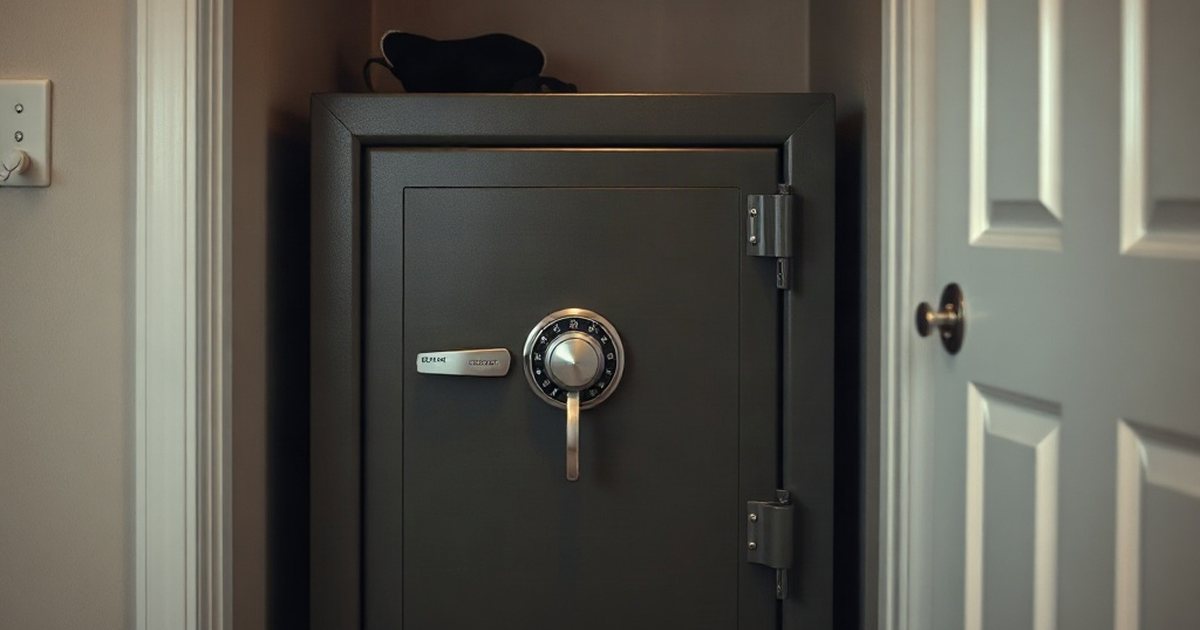
Section 265.46 turns on knowledge instead of residence. The section applies to an owner or custodian who knows, or has reason to know, that a person less than sixteen years of age is likely to gain access. [2] This guide does not describe other categories of covered households.
Vehicles
Section 265.45 also contains a separate vehicle rule. It says no person shall store or otherwise leave a rifle, shotgun or firearm out of that person’s immediate possession or control inside a vehicle without first removing the ammunition and securely locking the weapon in an appropriate safe storage depository out of sight from outside of the vehicle. [1]
For purposes of that vehicle rule, the text says a glove compartment or glove box shall not be considered an appropriate safe storage depository. [1] No penalty specific to the vehicle rule is stated here.
What counts as secure storage in New York
The New York text offers two methods: an appropriate safe storage depository, or a gun locking device appropriate to that weapon. [1] The first locks the weapon away. The second renders the weapon incapable of being fired.
The statutory text quoted in this guide does not define the phrase “safe storage depository.” A secondary summary from the Giffords Law Center, a gun-violence-prevention organization, describes New York law as requiring a safe storage depository, defined as a container that is incapable of being unlocked without a key or combination lock, or use of a trigger lock. [4] That is a summary and not the statute, so a reader who needs the definition should read the Penal Law itself.
The same summary says firearms dealers in New York are required to transfer a locking device with each firearm. [4] That statement is a secondary description of a dealer duty, and this guide does not rely on it for anything about the household storage sections.
Both sections use the words “securely locked” or “incapable of being fired,” and neither quoted section ties the answer to a brand or a product class. [1] [2]
Penalties under the two New York sections
The penalty differs by degree. New York law says failure to safely store rifles, shotguns and firearms in the first degree is a class A misdemeanor. [1]
The second-degree offense is lighter. Section 265.46 says it is a violation punishable only by a fine of not more than two hundred fifty dollars. [2] The word “only” in the section matters: the second-degree offense carries a fine and nothing else.

How a New York court discussed firearm storage
The sourced New York decision is People v. Heber, an opinion of the New York Supreme Court, (2002), 192 Misc. 2d 412. [3] The opinion says in its own words that New York currently did not have a child access prevention law, although CAP bills were introduced before the State Assembly and Senate the prior year. [3]
The opinion explains what CAP laws are. It says most such statutes generally make it a crime for a gun owner to store a loaded firearm in a manner in which he knows or reasonably should know a child may gain access to the weapon. [3]
The question before the court was a defense motion to dismiss counts. The opinion recites the storage fact at issue as a loaded, operable handgun left under a chair cushion directly in front of a television. [3] The court held that the defendant’s motion to dismiss the homicide and reckless endangerment counts was denied in its entirety. [3]
Two limits apply. The Heber opinion does not apply Section 265.45 or Section 265.46, and a denied motion to dismiss means the counts could proceed, not that the defendant was convicted.
Where New York sits among state storage laws
RAND describes child-access prevention and safe storage laws as laws that allow prosecutors to bring charges against adults who intentionally or carelessly allow children to have unsupervised access to firearms. [5] RAND’s list of states and the District of Columbia with negligent-storage laws includes New York. [6]
RAND also notes that state laws vary on whether penalties are classed as misdemeanors or felonies and on the age threshold for being a minor. [5] New York’s two-tier structure, with an age line at eighteen for residents and sixteen for the knowledge-based section, is New York’s alone and should not be assumed to hold in any other state. [1] [2]
On outcomes, one study found that unintentional shooting deaths among children were reduced by 23% during the years covered by laws holding gun owners responsible for storing firearms inaccessibly to children, in the 12 states it examined from 1990 through 1994. [7] That is an association from an earlier period and different laws, and it does not measure New York’s current sections.
What this means for choosing storage
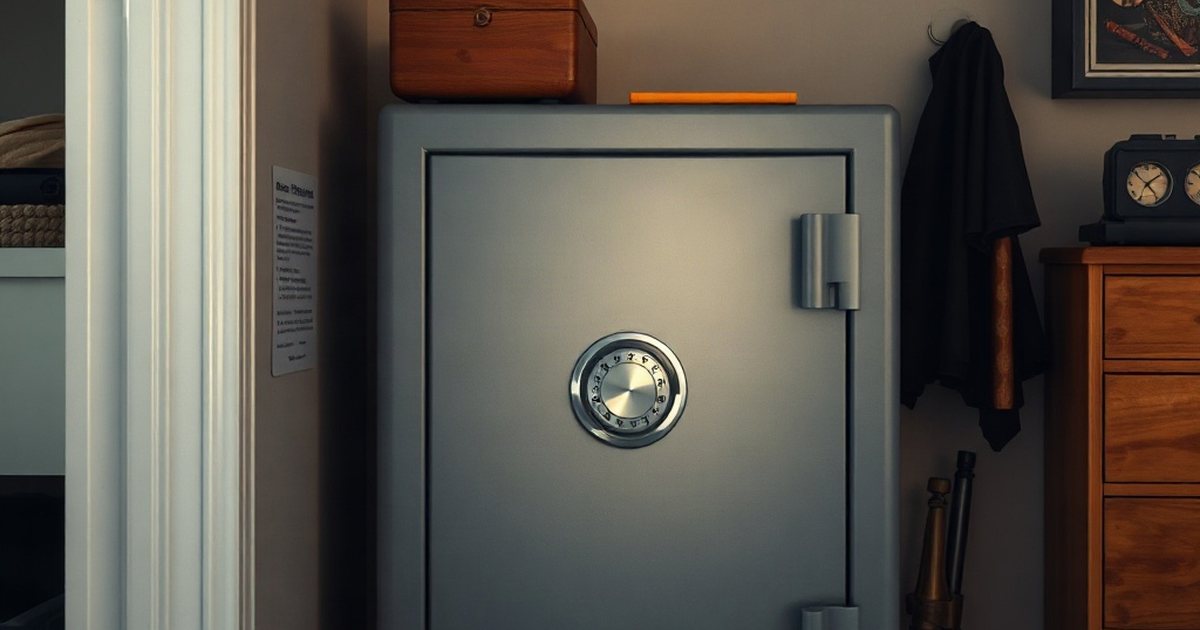
New York’s text names two families of method: a locked safe storage depository, and a gun locking device that renders the weapon incapable of being fired. [1] The statute does not name a brand, a model or a lock technology, and no product can be said to satisfy it on its own. Whether an arrangement fits turns on how it is used and who can open it.
There is a gap between meeting the wording and keeping a determined teenager out. New York’s first-degree section draws its line at eighteen, so the households it describes include teenagers living in the home. [1] The Harvard Means Matter project states that access to firearms is a risk factor for suicide and that firearms used in youth suicide usually belong to a parent. [8]
Key and combination handling is therefore the practical center. A depository whose code is known to a minor, or whose key sits in an unlocked drawer, offers little regardless of what the label says. The statute does not rank one kind of device above another.
FAQ
What are New York’s gun storage laws?
They are Penal Law Sections 265.45 and 265.46, which cover failure to safely store rifles, shotguns and firearms in the first and second degree. Each prohibits leaving the weapon out of immediate possession or control unless it has first been securely locked in an appropriate safe storage depository or rendered incapable of being fired by a gun locking device. [1] [2]
What is the penalty for unsafe storage in New York?
First degree is a class A misdemeanor under Section 265.45. Second degree is a violation punishable only by a fine of not more than two hundred fifty dollars under Section 265.46. [1] [2]
Does New York’s law apply to a firearm left in a car?
Section 265.45 says no person shall leave a rifle, shotgun or firearm out of immediate possession or control inside a vehicle without removing the ammunition and locking it in an appropriate safe storage depository out of sight from outside the vehicle. A glove box does not count. [1]
Is a glove compartment a safe storage depository in New York?
For the vehicle rule in Section 265.45, the text says a glove compartment or glove box shall not be considered an appropriate safe storage depository. [1]
Did a New York court apply these sections in People v. Heber?
No. The 2002 opinion says New York did not then have a child access prevention law, and it denied a motion to dismiss homicide and reckless endangerment counts. [3]
This is general information, not legal advice. Statutes change and facts matter, so read the current text of New York Penal Law Sections 265.45 and 265.46 or ask a New York lawyer about your own situation. A lock or container limits access but does not replace supervision.
Sources
- N.Y. Penal Law 265.45 Failure to safely store rifles, shotguns, and firearms in the first degree. New York Penal Law (NewYork.Public.Law mirror of the official Consolidated Laws), accessed 2026-10-13
- N.Y. Penal Law 265.46 – failure to safely store rifles, shotguns and firearms in the second degree. Public.Law (Open Law Library) reproduction of the statute (NewYork.Public.Law), accessed 2026-10-13
- People v. Heber, New York Supreme Court (2002), 192 Misc. 2d 412. New York Supreme Court, accessed 2026-10-13
- Child Access Prevention & Safe Storage in New York (Giffords Law Center). Giffords Law Center to Prevent Gun Violence, accessed 2026-10-13
- The Effects of Child-Access Prevention Laws. RAND Corporation (Gun Policy in America), accessed 2026-10-13
- The Effects of Child-Access Prevention Laws (state lists). RAND Corporation (Gun Policy in America); host blocks scripted fetches (403), page loads in a browser, accessed 2026-10-13
- State gun safe storage laws and child mortality due to firearms (Cummings et al., 1997). JAMA (PubMed abstract, PMID 9315767), accessed 2026-10-13
- Safe Storage (Means Matter). Harvard T.H. Chan School of Public Health, Means Matter, accessed 2026-10-13
Fire, burglary and lock ratings are quoted as the manufacturer or testing lab states them, with the source on each page. Safe-storage and child-access laws vary by state and change; check your state's current statute. No safe or lock replaces supervision of children around firearms. We do not sell or link to firearms or ammunition. This is general information, not legal advice. As an Amazon Associate we earn from qualifying purchases.
