‘Fireproof’ is a sales word, not a measurement. What you can measure is how long a safe holds its interior below a stated temperature while the outside is heated, and who ran that test. The right safe for your passport and deeds is not the right safe for family photographs or a backup drive, because those items fail at very different temperatures.
This guide starts from the fire itself, then matches ratings to what you are storing, explains whose claim each rating is (an independent lab, a verification mark, or the maker), and reads a set of real listings through that lens. Fire resistance and burglary resistance are different properties, and one consulting source says safes are usually designed for one or the other, not both.
- Match the class to the contents: Class 350 for paper, 150 for film and photographs, 125 for magnetic media and drives [1].
- Ask whose claim it is: a lab classification, a verification mark that checks the maker’s own requirement, or the maker’s own test.
- A paper-rated safe can still destroy photographs and hard drives in a shorter fire.
- Check the label on the product; listings that give a big temperature and no lab, duration or class are making an unverified claim.
Start with the fire
Liberty Safe cites FEMA estimates of over 354,000 residential building fires per year in the US, resulting in around 4,000 deaths, and says the heat from a house fire can reach over 1100 degrees Fahrenheit in only minutes [2]. Another source says most structure fires in homes burn between 1,100°F and 1,300°F, peaking for 15 to 30 minutes in a given area [3].
The fire science gives the same picture from a different angle. Flashover is the transition phase in which surfaces exposed to thermal radiation from fire gases in excess of 600 degrees C (approximately 1100 degrees F) reach ignition temperature almost simultaneously, and fire spreads rapidly through the space [4]. After that point everything in the room is exposed to the fire’s heat.
So a fire safe has to do more than hold a temperature: the test procedures described below also include a drop test and, for some safes, an explosion test. A rating tells you what a given safe was shown to do under a stated procedure, and a missing rating tells you nobody showed it.
Match the rating to what you are storing
The standard fire classes are by what the contents are. Class 350 is for paper, Class 150 for microfilm and photographic film, and Class 125 for magnetic media and hard drives [1]. The number is the maximum interior temperature in degrees Fahrenheit. One distributor’s description gives a 150°F limit with an 85% humidity restriction for one media class and, for diskettes, 125°F with an 80% humidity restriction [5].
Why the different limits? Paper ignites around 451 degrees Fahrenheit, photographs warp at around 150 degrees and hard drives fail above 125 degrees [6]. A safe built to keep paper below 350 degrees therefore protects paper while leaving photographs and drives exposed. One explainer spells out the consequence: a gun safe rated for 30 minutes with a 350-degree interior limit will protect paper documents, but will destroy photographs and hard drives in a fire that lasts less than half that time [7].
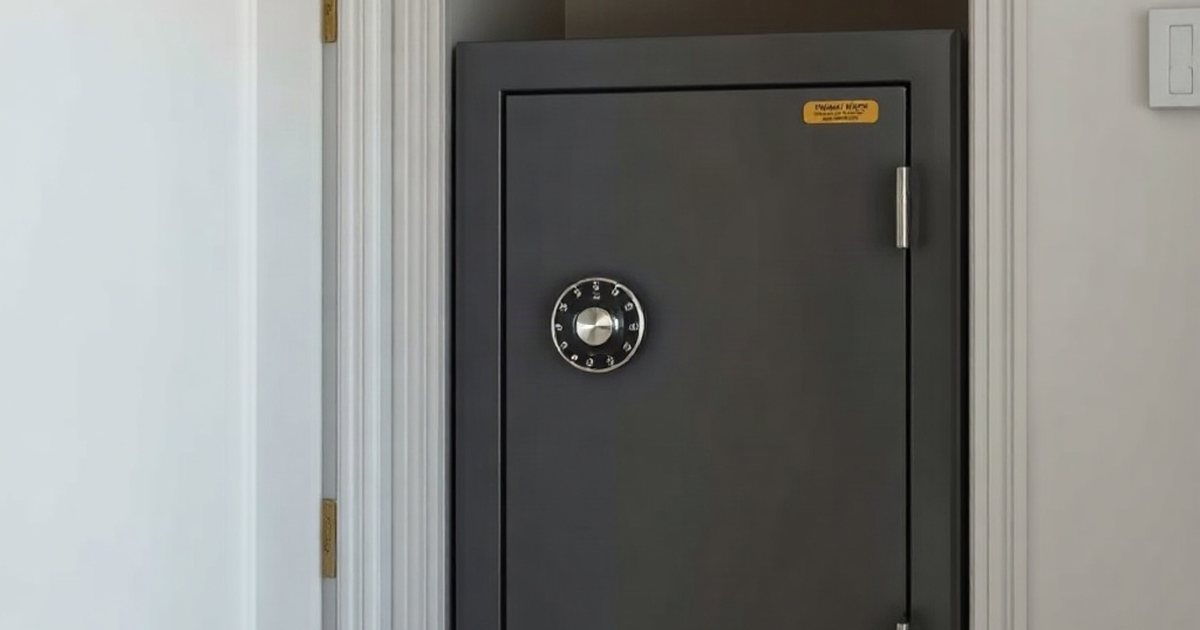
Humidity is part of why the media classes are harder. Humidity is not measured in a Class 350 test, because paper tolerates the steam that comes off insulation during a fire and a tape reel does not [8]. If your valuables are digital, a document-rated safe is not an automatic answer; look for a listing that names a media class, and consider keeping an off-site backup as well.
For paper, the practical rule from one trade source is a safe with an independently tested and verified rating of at least 30 minutes, since paper starts to ignite around 450 degrees Fahrenheit [9].
Whose claim is the rating?
Three different kinds of statement hide behind the same word. The first is an independent classification, where a lab tests a sample to a published procedure and the product carries the lab’s label. A trade source puts the practical test this way: only safes marketed with a UL-verified logo or ETL fire testing logo, and safes carrying an actual UL label applied to the safe body, have been independently tested by a lab rather than by the manufacturer [9]. Check the label on the product.
The second is a verification mark. Master Lock’s own explainer says ETL Verified is a product verification mark issued by Intertek and used to ensure that manufacturers meet their own internal test requirements, and that organizations seek ETL verification for specific claims such as water testing [10]. On that description it is a different thing from a lab running the maker’s product through a fixed procedure, though it is not worthless: the maker set the requirement, and a third party checked that the product met it. The trade source above refers to an ‘ETL Fire testing logo’ separately, so read the exact wording on the label.
The third is the maker’s own testing. The same explainer says some manufacturers do their own testing and give ratings based on their internal standards, and that they often use modified parameters, including a lower overall temperature, a shorter test time or a slower rise in temperature [10]. Honeywell’s FAQ makes the vocabulary explicit: fireproof means tested by a third party, while fire-resistant means the safe can withstand high temperatures but has not been tested by a third party [11]. Not every maker uses those words that way, so check the listing for a named lab.
What a lab test actually does
The time and temperature ladder for independent fire-endurance tests, per one trade source: a half-hour test at 1,550 degrees F, a one-hour test at 1,700 degrees F and a two-hour test at 1,850 degrees F, with the interior held below 350 degrees Fahrenheit for the paper class [9]. The test fires are hotter than a typical house fire peak: another source says test curves reach 1,700 to 1,850°F quickly, well above the roughly 1,200°F of a typical house fire [3].
Two further tests exist for some classes. In the impact test, a safe is baked in a furnace and then dropped. Safe and Vault Store gives the drop as 30 feet, simulating a two- to three-story fall, while Master Lock’s explainer gives 15 feet, so check which drop a label claims. Some fire safes also face an explosion test, in which a safe is placed in a cold furnace that is rapidly heated to fire-test temperatures [3].
Reading real listings
The listings below come from the product records on file, with prices in October 2026. Any lab classification or verification mark named below is the listing’s statement; confirm the label on the product before relying on it.
SentrySafe 1-Hour Fireproof Safe STW123GDC
Listed at $286.99, this 1.23 cubic foot safe is described as UL Classified to endure 1 hour at 1700°F, ETL Verified to withstand a 15 foot fall during a fire and remain closed, and ETL Verified for 24 hours in water up to 8 inches deep. It has four live-locking bolts, bolt down hardware, and an 86.69 pound weight. The fire claim names a classification, the fall and water claims name a verification mark, and the three are different statements. The listing does not name a paper class, but one source calls a Class 350 one-hour safe an entirely appropriate place for deeds, passports and a will [8].

SentrySafe fireproof file box HD4100
At $68.00, this key-lock file box lists UL Classified protection for up to thirty minutes, ETL Verified water protection, and room for hanging file folders. It matches the paper-documents case and is described as portable enough to relocate; for anything media-based you cannot confirm a match, because the listing names no media class.
SentrySafe fireproof chest 1210
Listed at $38.53, this small chest is described as UL Classified to endure 1/2 hour at 1550°F and ETL Verified to protect CDs, DVDs and USBs, with a flat key lock to keep the lid closed in a fire. The listing gives a placement instruction: store it closed and locked, with the feet down and the key plate facing out. The listing ties performance in a fire to that placement, so follow it.
Honeywell 1102 fire and waterproof chest
At $89.99, this molded ABS chest lists a 30 minute UL fire protection rating up to 1550°F and a 24 hour waterproof seal. The listing says UL but not Classified, so check the label before treating it as an independent classification.
DocSafe 5200°F fireproof document organizer
At $28.20, this soft-sided organizer headlines a 5200°F figure and says its main material has passed the 5VA flame retardant test. A flame retardant test is not a fire-endurance classification. The listing gives no duration, no interior temperature limit and no lab, so the 5200°F is a number with no named test behind it.
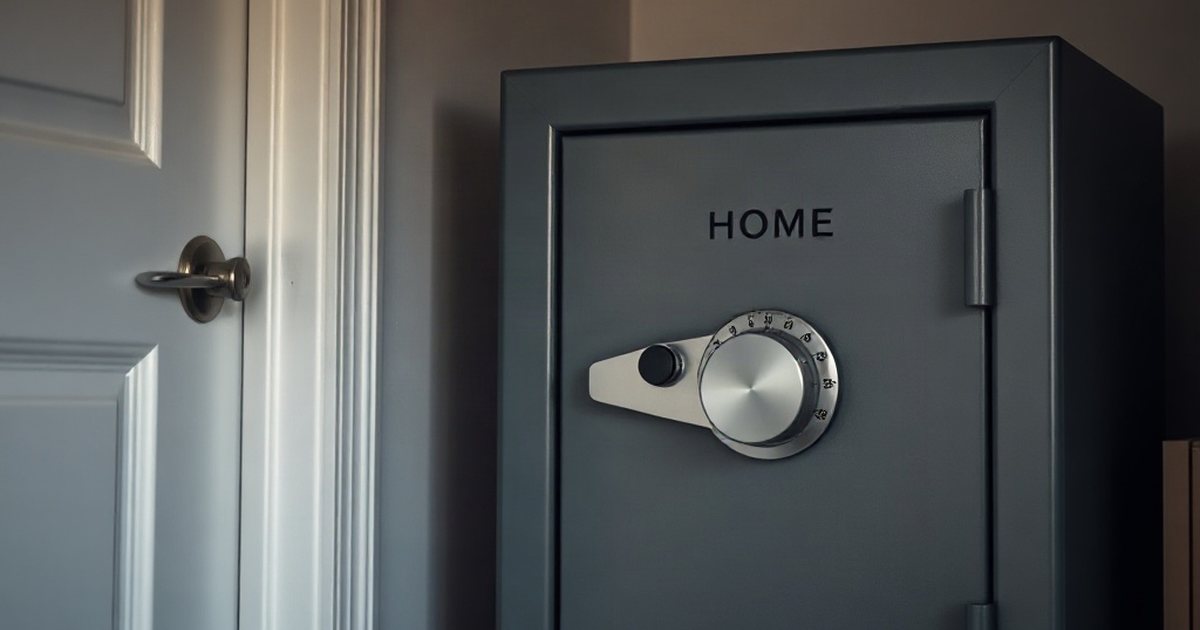
Kaer Fireproof Security Safe 60/90
Listed from $179.90 to $269.90, this safe’s technical line says Fire Rating: 30-min protection, and the listing separately describes a UL-certified fireproof and waterproof document pouch that withstands 30 mins at 1550°F. The independent-sounding claim is attached to the pouch, and the safe’s own fire rating names no lab, so for the safe itself this is the maker’s claim.
Gun safes sold as fireproof
Large gun safes often headline fire numbers too. A Kaer 18-20 gun safe at $1,249.00 lists 40min/1200°F fire protection, and an XPEDITION 24 gun safe at $829.99 lists protection from fires up to 1400°F for 45 minutes. Neither listing names a lab. Both temperatures are below the independent test curves above, which fits the Master Lock explainer’s note that some maker tests use lower temperatures, and is another reason to treat them as maker figures.
Fire is not burglary, and sealed means damp
Burglary resistance and fire resistance are typically evaluated under different standards and labels [12]. Silva Consultants puts it more bluntly: what protects against forced entry is not necessarily what protects against fire, so safes are usually designed for one or the other, not both [13]. A fire chest that carries by a handle is, by design, easy to carry away. A fire-rated safe with no burglary rating is not theft-rated and will not stop a determined thief. If theft is also a concern, anchor it and choose with a burglary rating in mind.
Fire safes seal, and sealed boxes hold moisture. SentrySafe says its water-protected safes are airtight, so moisture can be trapped inside when closed, and recommends opening the safe at least once a month and replacing a desiccant bag every 6 months, or sooner in a humid space [14]. Check batteries too: SentrySafe recommends name-branded alkaline AAA batteries for the STW123GDC listing. A fire safe you cannot open because the batteries died is not doing its job.
FAQ
What does a 1-hour fire rating mean?
For an independently tested safe, it means the exterior is held to a stated temperature for an hour while the interior stays below a limit. One trade source lists a one-hour test at 1,700 degrees F, with the paper class holding the interior below 350 degrees Fahrenheit [9].
Is ETL Verified the same as UL Classified?
No. Master Lock’s explainer describes ETL Verified as a verification mark used to ensure manufacturers meet their own internal test requirements [10]. A lab classification is a different statement. Read the listing for which one is claimed.
Will a fireproof safe protect a hard drive or photos?
Only if it is rated for that class. Hard drives fail above 125 degrees and photographs warp at around 150 degrees [6], while a paper-rated safe allows an interior up to 350 degrees Fahrenheit [9].
Are fireproof bags and document boxes as good as a safe?
They are different products. A soft organizer listing may state a high outside temperature, but without a named lab, duration and interior limit, it is an unverified claim.
Ratings describe laboratory or maker tests, not every real fire; a fire safe is no substitute for smoke alarms, an evacuation plan or off-site backups. If a fire safe also holds a firearm, keep it locked and away from children and never treat it as a substitute for supervision. This is general information, not legal advice.
Sources
- Safe. Wikipedia, accessed 2026-10-13
- Fire Protection: A Primary Reason to Own a Good Safe. Liberty Safe, accessed 2026-10-13
- Fire Ratings Explained: What Safe Owners Need to Know. Safe and Vault Store, accessed 2026-10-13
- New Comparison of Natural and Synthetic Home Furnishings. UL Research Institutes Fire Safety Research Institute (FSRI), accessed 2026-10-13
- UL Fire Rating (UL 72 test description). KL Security (FireKing distributor), accessed 2026-10-13
- Burn Temperature for Common Materials: A Fireproof Safe Guide. Safe and Vault Store, accessed 2026-10-13
- Safe Fire Ratings Explained: What the Numbers Mean. The Safe Market, accessed 2026-10-13
- What UL Rated Actually Means on a Safe. Onur Oncer, accessed 2026-10-13
- The Value of Fire-Rated Safes. Locksmith Ledger, accessed 2026-10-13
- 5 Things You Need to Know About Your Safe Fire Rating. Master Lock (SentrySafe), accessed 2026-10-13
- Honeywell Safes Products FAQs. Honeywell Safes, accessed 2026-10-13
- Why UL Ratings & Testing Matter: How to Read Safe Labels. Liberty Safe, accessed 2026-10-13
- Introduction to Burglar and Fire Safes. Silva Consultants, accessed 2026-10-13
- SentrySafe Approved Desiccant (two 40 gram packs). SentrySafe (Master Lock), accessed 2026-10-13
Fire, burglary and lock ratings are quoted as the manufacturer or testing lab states them, with the source on each page. Safe-storage and child-access laws vary by state and change; check your state's current statute. No safe or lock replaces supervision of children around firearms. We do not sell or link to firearms or ammunition. This is general information, not legal advice. As an Amazon Associate we earn from qualifying purchases.