Children are the first concern for most households. The American Academy of Pediatrics advises that all guns in a home be locked and unloaded, with ammunition locked separately, and that children and teens can’t access the keys or combinations to lock boxes or gun safes. [1] A safe does not replace supervision.
Where a gun safe sits affects how quickly you can reach it, how damp it gets and how hard it is to move. A safe in the garage may be damp and far from the bedroom. A safe in a bedroom closet is close and quick, but a child, guest or burglar may look there first. The right spot depends on the threat you are weighing: children finding the guns, a burglar working through the house, or an emergency at night. The rest of this guide compares the closet, the garage and the basement on those terms.
- In one study, children often knew where household guns were, so rely on the lock and code, not a hiding place. [2]
- A closet gives speed; a garage gives space; a basement gives concrete but adds weight and damp.
- Anchoring matters wherever the safe sits. [3]
- Keep humidity in the range Liberty cites, and plan the move before delivery. [4]
Start with what the placement can and cannot do
Hiding a safe is not the same as securing it. In one study that compared parents’ reports with their children’s, children younger than 10 were as likely as older children to report knowing where household guns were stored, 73% versus 79%, and 36% in each group reported having handled a household gun. [2] A location a parent thinks is secret may not be a secret at all, so the lock and the code matter more than the closet.
The same study found that thirty-nine percent of parents who reported that their children did not know the storage location of household guns were contradicted by their children’s reports. [2] The practical lesson: treat location as a convenience and the lock as the protection.
Storage practice nationally is mixed. A 2015 survey estimated that approximately 7% of US children (4.6 million) live in homes in which at least one firearm is stored loaded and unlocked, and found that three in ten gun-owning households with children store all guns in the safest manner, unloaded and locked. [5]
Bedroom or hall closet
A closet near where people sleep is one option for a quick-access safe. It keeps the safe close to a household member who might respond to a problem, which is the point if you have chosen quick access over deep security. The Bureau of Justice Statistics estimated that about 3.7 million household burglaries occurred each year on average from 2003 to 2007, and that in about 28% of them a household member was present. [6]
In 7% of all household burglaries, a household member experienced some form of violent victimization, and about 12% of households violently burglarized while someone was home faced an offender armed with a firearm. [6] Those are national estimates for 2003 to 2007 and describe a minority of cases; some owners cite figures like these when they decide to keep a safe within reach at night rather than in the basement.
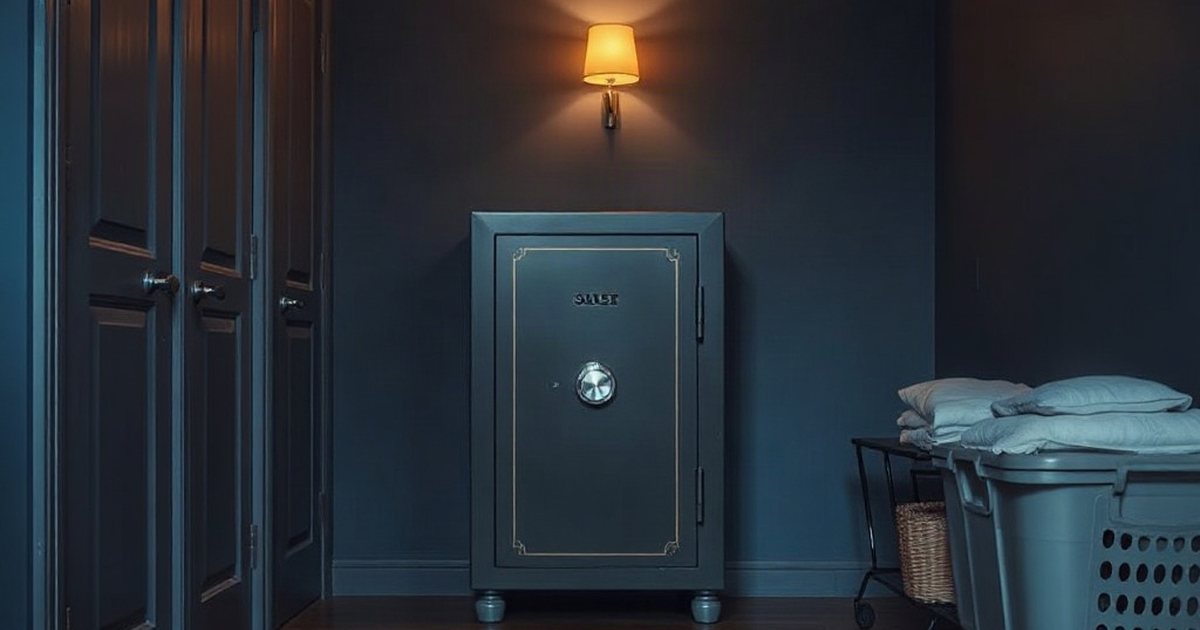
The limits are physical [3].
A closet limits how wide a door can swing, so check the safe’s footprint and door clearance before buying. A tall long gun cabinet is also easy to tip. Liberty advises anchoring to the floor and notes that prying the door off a safe is typically much easier if you can tip it over on its back. [3]
Garage
A garage often has room for a big safe and many have concrete floors. Liberty Safe’s guide describes drilling a hole at each of four anchoring locations with a 3/8 concrete drill bit. [3] Garage delivery is sometimes possible: one large Steelwater listing is curbside only, but notes that garage delivery may be possible as long as the driveway is paved, fairly level and relatively short.
The drawbacks can be moisture, temperature and distance from the bedroom. Experts cited by Liberty say the ideal relative humidity inside a gun safe should be between 40% and 50%, and that excess moisture can corrode casings and degrade gunpowder. [4] A garage that sees damp air or open doors makes that harder. Consider theft too: a loose safe can be carried out of any room, so anchor it wherever it goes.
A moisture plan helps wherever the safe sits. Liberty’s guides describe using a hygrometer to monitor the level, and note that fire-resistant safes often have seals that, while excellent for fire protection, also create an airtight environment that can trap moisture more effectively. [4]
Basement
Many basements are cool and out of the way and have a concrete floor. A basement is also where weight, stairs and water can collide. A loaded gun safe can weigh well over a thousand pounds, and in many cases 2 or 3 thousand pounds. [7] Liberty’s first recommendation for moving one on your own is not to, and it warns that some floors and stairs aren’t built to handle that weight. [7]
Moisture is the other issue. Liberty cites the NRA as recommending a humidity level between 30% and 50% in a vault room or gun safe, and a temperature around 60-70 degrees Fahrenheit if possible. [8] A basement that runs damp needs a dehumidifier plan or a different room. Even a mid-size 20 long gun Steelwater safe lists 408 lbs and curbside delivery, which would need a clear, stair-safe route to a basement.
Matching safe weight to the spot
Small cabinets suit closets. One Kaer 2-3 rifle cabinet lists 52 inches in height, a width of 9.85 inches, and a weight of 47.07 lbs, with pre-drilled holes for the floor or wall. A cabinet like that is easy to place, and light enough for a person to carry off if it is not anchored.
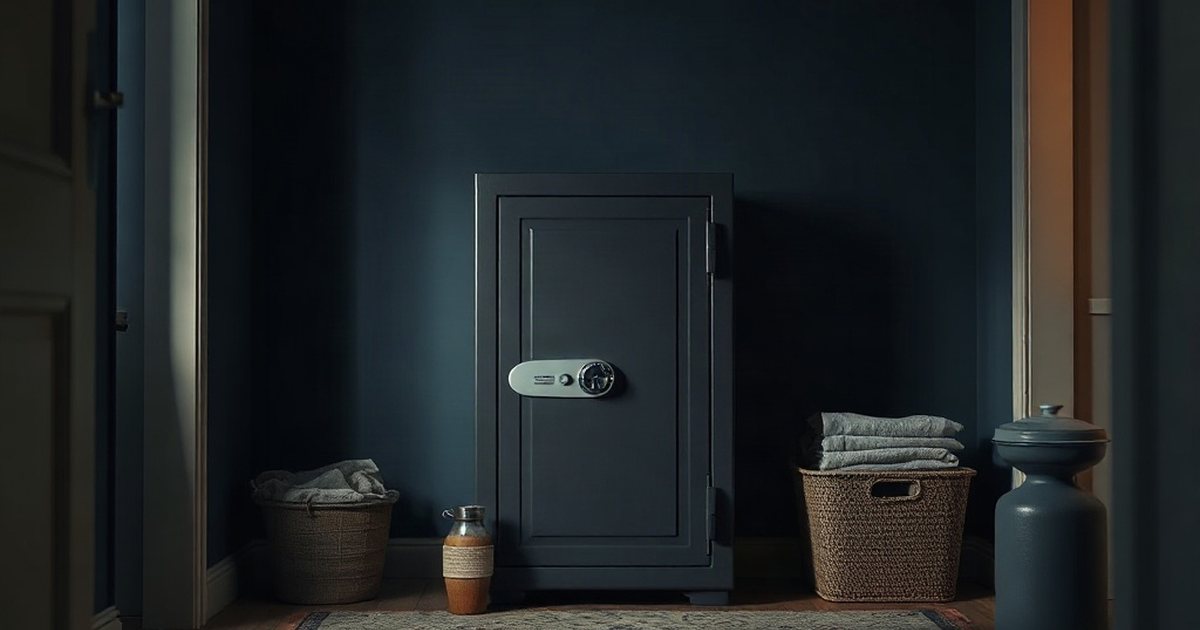
A heavy safe needs a floor and a delivery route that can handle it.
A light cabinet is basic access control for children and guests, and the listing cited here states no theft rating. If theft is the main worry, spend on weight, steel and anchoring, not on a prettier cabinet.
Before you commit to a spot
None of these choices is universally right. A household with a young child and a teen might prioritize a strong lock and a code only adults know. A household with adults only might put speed first. Write down the threat, then choose the spot.
- Check the door swing and the route from delivery to final position, including stairs and tight turns.
- Plan the anchoring before the safe arrives, and confirm the surface can take bolts. Tile cannot be anchored, according to Liberty’s guide. [3]
- Decide who knows the code, and keep keys out of children’s and teens’ reach. [1]
- Check CPSC recall records for the specific model you buy. A recalled fireproof safe, for example, had mechanical internal locking plates that can fail to align and allow unauthorized users to open the safe. [9]
FAQ
Is a closet a good place for a gun safe?
It can be, if the safe is anchored and the lock is solid. A closet keeps access quick, but children may still find it: in one study, children younger than 10 were as likely as older children to report knowing where household guns were stored. [2]
Can I put a gun safe in a garage?
Yes, with moisture in mind. Liberty’s guide says the ideal humidity inside a gun safe is between 40% and 50%, which a damp garage makes harder to hold. [4]
How heavy are gun safes?
A loaded gun safe can weigh well over a thousand pounds, and some models up to 3,100 pounds, according to Liberty’s moving guide. [7]
What does the AAP recommend for storage?
All guns in your home should be locked and unloaded, with ammunition locked separately, and children and teens should not be able to reach keys or combinations. [1]
Where a safe sits is one part of safe storage, not a substitute for supervision. Storage laws vary by state and change, so check your own state’s rules before deciding; this is general information, not legal advice.
Sources
- Handguns in the Home (HealthyChildren.org). American Academy of Pediatrics (HealthyChildren.org), accessed 2026-10-13
- Parental misperceptions about children and firearms (Baxley and Miller, 2006). Archives of Pediatrics & Adolescent Medicine (PubMed abstract, PMID 16651499), accessed 2026-10-13
- Anchoring Your Gun Safe to the Floor. Liberty Safe, accessed 2026-10-13
- Protect Your Investment: A Complete Guide to Preventing Firearm Rust and Humidity Damage. Liberty Safe, accessed 2026-10-13
- Firearm Storage in Gun-Owning Households with Children: Results of a 2015 National Survey (Azrael et al., 2018). Journal of Urban Health (PubMed abstract, PMID 29748766), accessed 2026-10-13
- Victimization During Household Burglary (NCJ 227379). U.S. Bureau of Justice Statistics, accessed 2026-10-13
- Tips for Moving a Gun Safe on Your Own. Liberty Safe, accessed 2026-10-13
- How to Keep Moisture Out of Your Gun Safe. Liberty Safe, accessed 2026-10-13
- Academy Sports + Outdoors Redfield 12- and 18-Gun Fireproof Safes recall, Dec 2024. U.S. Consumer Product Safety Commission (recall record via SaferProducts.gov API), accessed 2026-10-13
Fire, burglary and lock ratings are quoted as the manufacturer or testing lab states them, with the source on each page. Safe-storage and child-access laws vary by state and change; check your state's current statute. No safe or lock replaces supervision of children around firearms. We do not sell or link to firearms or ammunition. This is general information, not legal advice. As an Amazon Associate we earn from qualifying purchases.
