DC gun storage laws are set out in D.C. Code section 7-2507.02, titled responsibilities regarding storage of firearms. In the District of Columbia, the section bars a person from storing or keeping a firearm on premises under his or her control when the person knows or reasonably should know that a minor is likely to gain access, unless the person uses one of the methods the section lists. [1]
This guide covers what the District of Columbia text says, who counts as a minor, the two ways the section lets a person comply, the policy statement at the start, the two penalty tiers, and the exception for unlawful entry or burglary. It describes the code as of October 2026. This is general information, not legal advice.
- D.C. Code 7-2507.02 applies where a person knows or reasonably should know a minor is likely to gain access to a firearm on premises under the person’s control. [1]
- In the District of Columbia a minor is a person under the age of 18 years. [1]
- The base penalty is a fine of not more than $1,000, up to 180 days, or both; the tier for injury or death is up to $5,000, 5 years, or both. [1]
- The penalties do not apply if the minor obtains the firearm through an unlawful entry or burglary. [2]
What D.C. Code 7-2507.02 says
The District of Columbia text opens with a prohibition. No person shall store or keep any firearm on any premises under his control if he knows or reasonably should know that a minor is likely to gain access to the firearm without the permission of the parent or guardian of the minor, unless the person uses one of the listed methods. [1]
The District’s section also states a policy. It shall be the policy of the District of Columbia that each registrant should keep any firearm in his or her possession unloaded and either disassembled or secured by a trigger lock, gun safe, locked box, or other secure device. [2]
The policy sentence uses the word should and is addressed to registrants. The prohibition uses the word shall. The policy sentence also lists devices by name: a trigger lock, a gun safe, a locked box, and any other secure device.
The section’s history note says D.C. Law 17-372 rewrote the section. [2]
Who counts as a minor and what is covered
The age line is stated in the section’s definition: minor shall mean a person under the age of 18 years. [1] The District of Columbia therefore draws its line at 18.
The covered object is any firearm, with no qualifier for loaded or unloaded in the prohibition. [1] The covered place is any premises under the person’s control. The knowledge element is knows or reasonably should know, which reaches both actual awareness and what a person ought to recognize from the facts.
The District’s text does not frame the duty around a household member. It speaks of a person with control of the premises.
The two ways to comply
Subsection (b) allows two routes. The first is that the person keeps the firearm in a securely locked box, secured container, or in a location which a reasonable person would believe to be secure. [1]
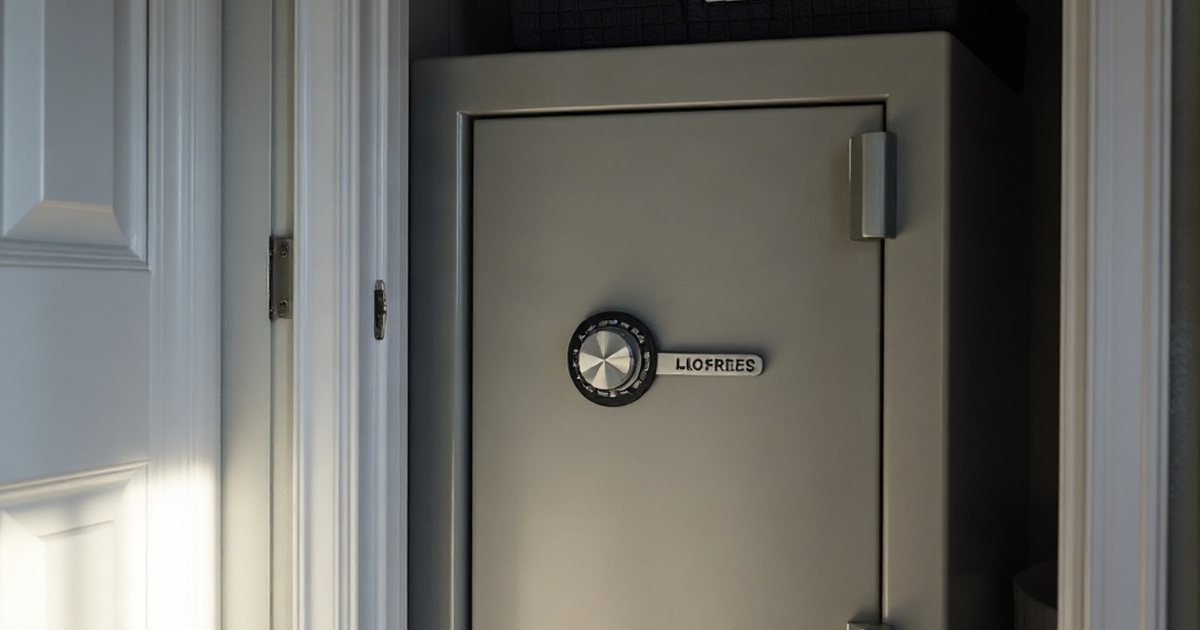
The second is that the person carries the firearm on his person or within such close proximity that he can readily retrieve and use it as if he carried it on his person. [2] That route describes a firearm under the person’s immediate control rather than one stored away.
The first route has an objective catch-all. A location which a reasonable person would believe to be secure is judged by a reasonable-person standard, which depends on the circumstances. The words securely locked apply to the box, and the word secured applies to the container.
Penalties and the burglary exception
A person who violates the section is guilty of criminally negligent storage of a firearm. Except as otherwise provided, the person shall be fined not more than $1,000, imprisoned not more than 180 days, or both. [1]
There is a higher tier. A person who violates subsection (b) and the minor causes injury or death to himself or another shall be fined not more than $5,000, imprisoned not more than 5 years, or both. [1] The District of Columbia text therefore ties the heavier penalty to an outcome, and the base penalty applies without one.
The penalties have an exception. They shall not apply if the minor obtains the firearm as a result of an unlawful entry or burglary. [2]
Another subsection says the provisions of section 7-2507.06 shall not apply to this section. [2]
Cases and prosecutions
This guide does not cover a reported District of Columbia appellate decision applying the storage section, or a prosecutor’s release about a charge under it, so it describes no case.
Without a sourced case, the statutory words have to carry the weight. Phrases such as is likely to gain access and a location which a reasonable person would believe to be secure are objective standards. A reader who needs to know how they apply to a given set of facts should read the code text and consult a lawyer admitted in the District.
Choosing storage with the code’s own terms in mind
The code names a securely locked box, a secured container and a location a reasonable person would believe secure, and its policy sentence names a trigger lock, a gun safe, a locked box, and an other secure device. [1] [2] Those are the words the District Council chose to write.
There is a gap between meeting that wording and keeping a teenager out. The District’s age line is 18, so the group the section protects includes older teens, who can be resourceful. Devices differ in how they open and in who knows the code or holds the key, and the section does not rank them.
For context, RAND describes child-access prevention and safe storage laws as laws that allow prosecutors to bring charges against adults who intentionally or carelessly allow children to have unsupervised access to firearms, and its list of negligent-storage jurisdictions includes the District of Columbia. [3] [4]
FAQ
How old is a minor under the District of Columbia storage section?
The section says minor shall mean a person under the age of 18 years. [1]
What is the penalty for criminally negligent storage in the District of Columbia?
The base penalty is a fine of not more than $1,000, imprisonment of not more than 180 days, or both. If the minor causes injury or death to himself or another, the text provides a fine of not more than $5,000, imprisonment of not more than 5 years, or both. [1]
Does the District of Columbia section list a gun safe?
The policy sentence lists a trigger lock, gun safe, locked box, or other secure device. [2] The operative compliance route in subsection (b) speaks of a securely locked box, secured container, or a location a reasonable person would believe to be secure. [1]
Does a burglary change the outcome under the D.C. section?
The penalties shall not apply if the minor obtains the firearm as a result of an unlawful entry or burglary. [2]
This is general information, not legal advice. It describes District of Columbia Code text as of October 2026, and laws can change; read D.C. Code 7-2507.02 directly or ask a lawyer admitted in the District about a specific situation.
Sources
- D.C. Code 7-2507.02 – responsibilities regarding storage of firearms. Open Law Library (code.dccouncil.gov, D.C. Council’s code site), accessed 2026-10-13
- D.C. Code 7-2507.02 (responsibilities regarding storage of firearms; penalties). Council of the District of Columbia (D.C. Law Library), accessed 2026-10-13
- The Effects of Child-Access Prevention Laws. RAND Corporation (Gun Policy in America), accessed 2026-10-13
- The Effects of Child-Access Prevention Laws (state lists). RAND Corporation (Gun Policy in America); host blocks scripted fetches (403), page loads in a browser, accessed 2026-10-13
Fire, burglary and lock ratings are quoted as the manufacturer or testing lab states them, with the source on each page. Safe-storage and child-access laws vary by state and change; check your state's current statute. No safe or lock replaces supervision of children around firearms. We do not sell or link to firearms or ammunition. This is general information, not legal advice. As an Amazon Associate we earn from qualifying purchases.
