A gun safe dehumidifier does one job: it keeps the air inside the safe dry enough that steel does not rust and casings do not corrode. Liberty Safe says experts agree the ideal relative humidity inside a gun safe is between 40% and 50%, and warns that excess moisture can corrode casings and degrade gunpowder. [1] The same guide says you need a hygrometer to know where you stand.
The choice is between a plug-in heating rod, a rechargeable desiccant canister or pack, and fan-assisted electric units. Each fits a different safe, outlet situation and tolerance for upkeep. This guide compares them using manufacturer instructions and the listings for specific products.
- Liberty Safe says the ideal humidity inside a gun safe is between 40% and 50%, and a hygrometer tells you where you are. [1]
- Rods, canisters and fan units all work differently; follow each product’s own recharge or mounting instructions.
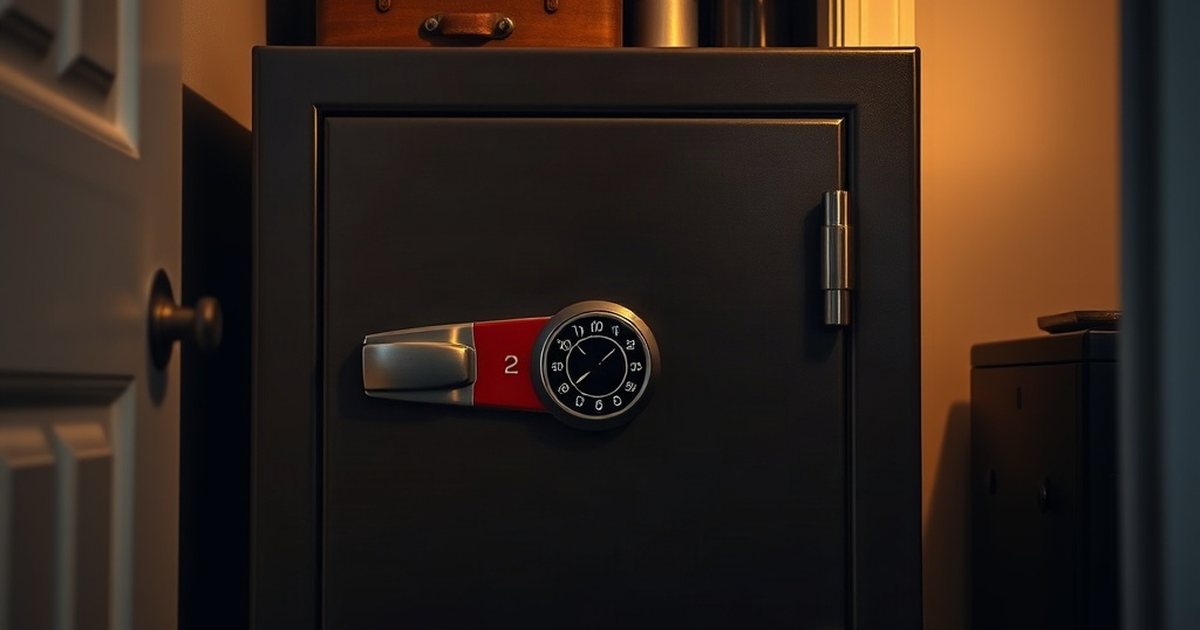
- Sealed fire-rated and water-resistant safes trap moisture, so plan on active control and a monthly airing.
- Keep heat sources away from ammunition packaging and keep guns locked away from children whatever you add.
Why a safe gets damp
A closed steel box swings in temperature with the room, and moist air gets in each time the door opens. Liberty Safe notes that most safes are not airtight unless their heat-activated door seals have expanded in a fire, and that some airflow is essential to prevent mold, mildew and condensation. [2] The same article cites the NRA’s recommendation of 30% to 50% humidity and a temperature around 60-70 degrees Fahrenheit if possible, and observes that most of the US population lives in areas with above 50% average humidity. [2]
Fire-rated and water-resistant designs complicate this. Liberty says fire-resistant safes often have seals that create an airtight environment that can trap moisture more effectively. [1] SentrySafe says its water-protected products are airtight for the same reason, so moisture can be trapped when you close the safe, and advises opening the safe at least once a month to air it out. [3] If your safe has an expanding seal, plan on active moisture control.
Three kinds of gun safe dehumidifier
Electric rods warm the air slightly so it holds moisture rather than dropping it on cold steel. Desiccants absorb moisture and have to be recharged or replaced. Fan-assisted units add air movement to the heat. None of them is a substitute for checking the humidity reading, and rods and fan units give off heat, so keep them away from ammunition packaging: SAAMI recommends keeping ammunition in a cool, dry location away from heat sources. [4]
Liberty Dry Rod and MAXSafes Dry Rod
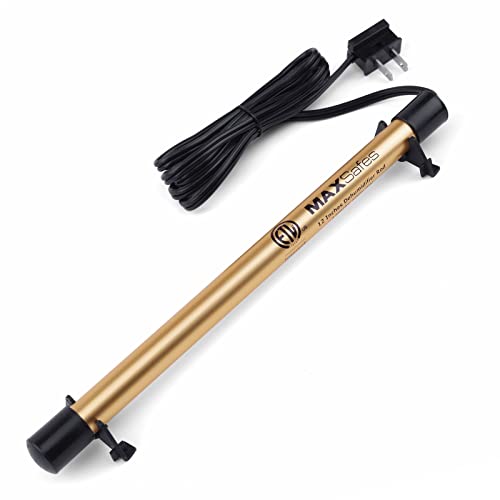
Liberty’s Dry Rod runs at a surface temperature of approximately 100-120 degrees Fahrenheit and generates natural convection. Liberty recommends mounting it horizontally at the bottom of the safe, though it can also go against a wall, and says that if you see no decrease in humidity after a few weeks you should consider a longer unit [5].
It also recommends its Electrical Outlet Kit to power it. [5]
A 12 in MAXSafes Dry Rod is listed as an always-connected heating rod that raises the temperature slightly above ambient, mountable vertically or horizontally, and its listing says ‘ETL Approved’. It also says not to touch it after plugging it in. Ask the safe’s maker before drilling a hole for a cord, since that is a modification to the safe.
Hornady rechargeable dehumidifiers
Hornady’s canister dehumidifier needs no batteries and has unlimited recharges. Hornady’s support page says to recharge it in a 300°F oven until the granules turn blue, which can take up to 4 hours, and that the crystals change color when it needs recharging. [6]
A different Hornady model, the 95900, is listed as effective in spaces up to 333 cubic feet, with crystals that change from blue to pink and a drying cycle by plugging into a 110V outlet. The two models recharge differently, so follow the instructions for the one you own.
SafeNDry XL, DryTote and Eva-Dry E-333
The SafeNDry XL holds 450 g of silica gel and says it protects up to 60 cubic feet; its instructions recharge it in an oven at 240 degrees Fahrenheit for 3 hours. DryTote’s gun safe set of five 100 g packs is listed with a blue-to-pink indicator. The Eva-Dry E-333 is a cordless mini unit rated for up to 333 cubic feet and stated to last 20-30 days before recharging.
SentrySafe’s guidance for its own approved desiccant is different: it says to replace the bag every 6 months, or sooner in high humidity, and describes reactivating a pack in an oven at 245°F for 16 hours. [3] Recharge instructions differ by product, so follow the one that came with yours and check any color indicator rather than relying on the calendar alone.
Fan-assisted electric units
One plug-in unit with a built-in fan is listed for gun safes of 3.5-11 cu ft, and the listing says the fan helps push moist air out through door gaps. That is the maker’s description, and the listing suggests drilling a hole for the cord if the safe lacks one; ask the safe’s maker first, since a hole modifies the safe. Liberty’s note that some airflow is essential matters here: a sealed safe may not let that air escape. [2]
Matching the type to your safe
Match the dehumidifier to the volume and the outlet situation. A small cabinet with no outlet nearby works with a canister or pack, and a larger safe near an outlet can run a rod continuously. Desiccant ratings are not directly comparable: one listing says 450 g of gel protects up to 60 cubic feet, while a mini unit says up to 333 cubic feet but needs recharging every 20-30 days.
Rated volume is the maker’s claim, and a hygrometer inside the safe shows whether it is enough.
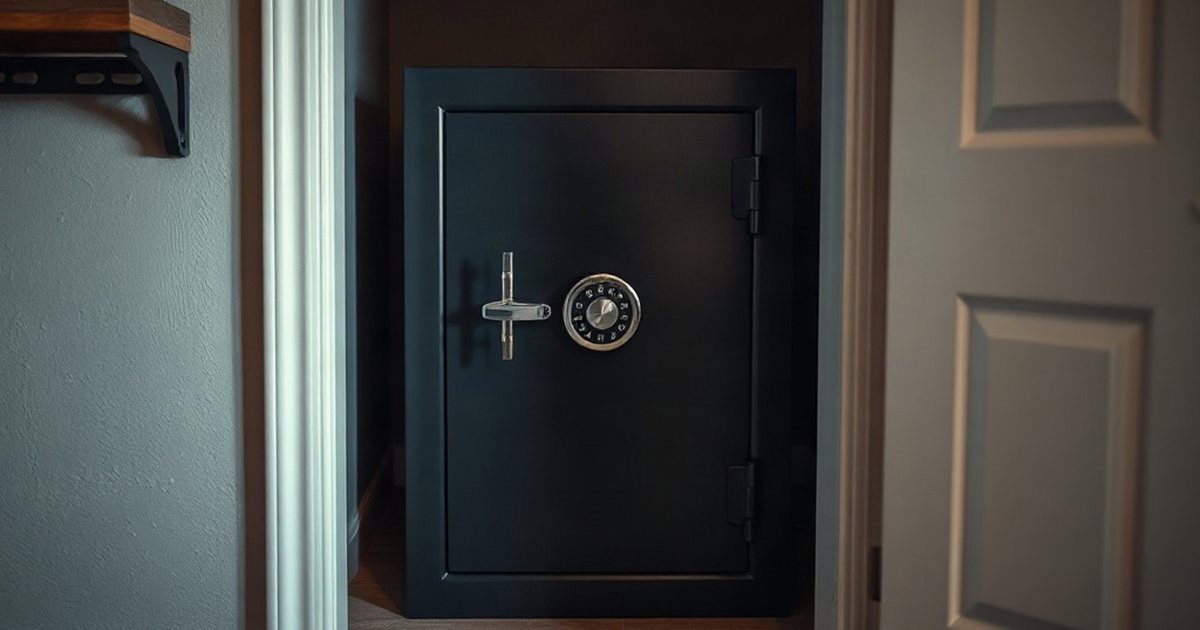
A desiccant needs no power, which suits a safe with no outlet nearby. A rod or fan unit needs a power path, such as the outlet kit Liberty recommends for its rod, which the safe’s maker should approve. In a safe in a damp garage or basement, continuous heat reduces the chore of recharging, but the reading still decides whether it is working.
Upkeep people skip
Many dehumidifier problems come down to maintenance. A saturated desiccant pack does nothing, and a rod nobody checks can sit unplugged for months after a power strip is moved. Put the check on a calendar, tied to something you already do, such as the monthly airing SentrySafe recommends. [3]
Packaging claims about safety should be read as claims. Hornady’s listing says its unit contains no harmful chemicals and is child, pet and home safe, and the Eva-Dry listing says its unit is non-toxic. That does not change the rule for households with children: the safe is locked, and loose packs and canisters are kept in the safe, not left where a child can reach them.
Finally, wipe down and inspect stored guns when you check the reading. A dehumidifier lowers the risk of corrosion; it does not tell you whether a surface has already started to rust. The goal is a dry safe with steady readings, not a one-time purchase.
Measure, then adjust
A hygrometer is the only way to know. Liberty’s guide recommends one, and the target band they cite is 40% to 50%. [1] Check it weekly for the first month, then monthly. If readings stay high, add capacity before changing brands: more desiccant, a longer rod, or a second unit.
If the damp is a house problem, such as a basement with water intrusion or a closet with mold, treating the safe will not fix the room. For that, the MoldActionPlan site covers mold and moisture in the home.
FAQ
What humidity should a gun safe have?
Liberty Safe says experts agree on 40% to 50% relative humidity inside a gun safe. [1] The NRA is cited as recommending 30% to 50%. [2]
Do I need a hygrometer?
Yes. Liberty’s guide says you need a hygrometer to monitor the levels, and you cannot judge relative humidity by looking inside. [1]
How often should I recharge or replace desiccant?
It depends on the product. SentrySafe says to replace its bag every 6 months, or sooner in high humidity, and the Eva-Dry E-333 listing says 20-30 days between recharges. [3]
Does a dehumidifier rod get hot?
Liberty’s Dry Rod runs at a surface temperature of approximately 100-120 degrees Fahrenheit. [5] Keep ammunition packaging and anything that can melt away from it.
A dehumidifier controls moisture, not theft, fire or access by children. A safe still needs to be locked and a child’s access plan still comes first. Do not modify a safe’s walls or door seal for a cord without asking the maker.
Sources
- Protect Your Investment: A Complete Guide to Preventing Firearm Rust and Humidity Damage. Liberty Safe, accessed 2026-10-13
- How to Keep Moisture Out of Your Gun Safe. Liberty Safe, accessed 2026-10-13
- SentrySafe Approved Desiccant (two 40 gram packs). SentrySafe (Master Lock), accessed 2026-10-13
- Recommendations for Safe Ammunition Storage and Handling. Sporting Arms and Ammunition Manufacturers’ Institute (SAAMI), accessed 2026-10-13
- Dry Rod Dehumidifier. Liberty Safe, accessed 2026-10-13
- Hornady Canister Dehumidifier (95902). Hornady Security (safe-storage product support), accessed 2026-10-13
Fire, burglary and lock ratings are quoted as the manufacturer or testing lab states them, with the source on each page. Safe-storage and child-access laws vary by state and change; check your state's current statute. No safe or lock replaces supervision of children around firearms. We do not sell or link to firearms or ammunition. This is general information, not legal advice. As an Amazon Associate we earn from qualifying purchases.
