Safe storage laws differ widely by state: some require a lock or locked container in set terms, some only apply when a child is likely to reach the gun, and some use a reasonableness test. RAND counts 35 states and the District of Columbia with child-access prevention laws as of January 1, 2025, and says twenty-six states and the District of Columbia have implemented laws concerning negligent storage [1].
This guide is a state-by-state map of how the statutes cited here are written, what each says counts as secure storage, and where federal rules and California’s gun safe standards fit. It describes the statutory text. It does not tell you what the law requires of you personally, because that depends on your state, your household and the current version of the statute.
- RAND counts 35 states and DC with child-access prevention laws as of January 1, 2025 [1].
- States differ on the trigger: a storage standard, a likely-child-access test or a prohibited person; ages range from under 16 in Florida to under 18 in Illinois and Minnesota [2] [3].
- California’s gun safe regulation is a construction standard, not a burglary or fire rating [4].
- Read the current statute for your state; this guide describes text, not what applies to you.
Three ways states write the rule
RAND’s summary is a good starting point because it groups the laws by strength. Thirty-five states and the District of Columbia have child-access prevention laws, and RAND says nine other states impose criminal liability only for intentional, knowing or reckless provision of firearms to children, a weaker form of child access prevention [1]. It also notes that state laws vary on whether criminal penalties are classed as misdemeanors or felonies, as well as the age threshold for being a minor [1].
Reading the statutes cited in this guide, three drafting styles show up. Some set a storage standard that applies regardless of who is in the home. Some attach liability when a minor is likely to gain access. Some focus on a prohibited person gaining access. Many blend two of these.
States with a direct storage standard
Massachusetts is one of the more prescriptive. Its statute says it is unlawful to store or keep any firearm in any place unless the firearm is secured in a locked container or equipped with a tamper-resistant mechanical lock or other safety device, properly engaged so as to render the firearm inoperable by any person other than the owner or other lawfully authorized user [5]. For a firearm that is not a large capacity firearm or machine gun, a violation is punished by a fine of not less than $1000 nor more than $7,500 or by imprisonment. The penalty rises to a fine of not less than $2,500 nor more than $15,000 or imprisonment where the firearm was stored or kept in a place where a person younger than 18 years of age who does not possess a valid firearm identification card may have access without committing an unforeseeable trespass [6].
Colorado’s statute makes it unlawful storage of a firearm when a person fails to responsibly and securely store a firearm upon any premises the person owns or controls and knows or reasonably should know that a juvenile can gain access without the permission of the juvenile’s parent or guardian, or that a resident of the premises is ineligible to possess a firearm under state or federal law. A firearm kept in a locked gun safe or other secure container, or in a manner a reasonable person would believe to be secure, counts as securely stored only if a juvenile or ineligible resident does not have access to the key, combination or other unlocking mechanism, and unlawful storage is a class 2 misdemeanor [7]. Connecticut’s text likewise refers to a securely locked box or other container, or a manner a reasonable person would believe to be secure, and it also recognizes a firearm carried on the person or kept within such close proximity that the person can readily retrieve it as if carried [8].
Oregon’s statute lists three ways to secure a firearm: an engaged trigger or cable lock, a locked container, or a gun room [9]. A firearm is not secured if a key or combination to the lock or container is readily available to a person the owner or possessor has not authorized to carry or control the firearm [10]. New York’s Penal Law applies to an owner or custodian of a rifle, shotgun or firearm who resides with an individual who is under eighteen years of age (it also reaches a resident the owner knows or has reason to know is prohibited from possessing firearms, for example based on a felony or serious-offense conviction). That person must not leave the weapon out of his or her immediate possession or control without first securely locking it in an appropriate safe storage depository or rendering it incapable of being fired by a gun locking device appropriate to that weapon, and failure to safely store in the first degree is a class A misdemeanor [11].
States that tie the duty to a child or minor
Florida’s safe storage statute is built around a minor’s access to a loaded firearm. It applies to a person who stores or leaves a loaded firearm on a premise under his or her control and who knows or reasonably should know that a minor is likely to gain access without the lawful permission of the minor’s parent or the person having charge of the minor, or without the supervision required by law. That person must keep the firearm in a securely locked box or container, in a location a reasonable person would believe to be secure, or secured with a trigger lock, unless the person is carrying it on his or her body or close enough to retrieve and use it as easily and quickly as if carried. The text defines the protected minor as any person under the age of 16. The offense is a misdemeanor of the second degree, and it takes more than a storage lapse: as a result of it a minor must gain access and possess or exhibit the firearm, without the supervision required by law, in a public place or in a rude, careless, angry or threatening manner [2]. A separate Florida provision requires sellers to deliver a written warning about leaving a firearm within reach of a minor under 18 [12].
Illinois makes it unlawful to store or leave a firearm within premises under a person’s control if the person knows or has reason to believe that a minor under 18 who does not have a Firearm Owners Identification Card is likely to gain access without the lawful permission of the minor’s parent, guardian or person in charge, and the minor causes death or great bodily harm with the firearm. The statute excepts a firearm secured by a device designed to render it temporarily inoperable, or placed in a securely locked box or container. A violation is a Class C misdemeanor with a fine of not less than $1,000, and a second or subsequent violation is a Class A misdemeanor [3].
Minnesota makes it a gross misdemeanor to negligently store or leave a loaded firearm where the person knows or reasonably should know a child is likely to gain access, unless reasonable action is taken to secure it; the statute defines the child as a person under 18 [13]. Texas defines a child as a person younger than 17. Its offense occurs when a child gains access to a readily dischargeable firearm (one loaded with ammunition, whether or not a round is in the chamber) and the person, with criminal negligence, failed to secure the firearm or left it in a place to which the person knew or should have known the child would gain access. The base offense is a Class C misdemeanor, and it is a Class A misdemeanor if the child discharges the firearm and causes death or serious bodily injury to himself or another person [14]. Securing the firearm means taking the steps a reasonable person would take, including a locked container or trigger lock [15].
California’s criminal storage statute, operative January 1, 2026, uses degrees. The first-degree offense requires that the child obtains access to the firearm and thereby causes death or great bodily injury to the child or any other person, and the third-degree offense reaches a person who negligently stores or leaves a firearm in a location where the person knows, or reasonably should know, that a child is likely to gain access without the permission of the child’s parent or legal guardian [16]. Michigan’s 2023 public act on safe storage around minors applies to an individual who stores or leaves a firearm unattended and who knows or reasonably should know that a minor is, or is likely to be, present on the premises. The firearm must be in a locked box or container, or unloaded and locked with a properly engaged locking device. The misdemeanor tier, punishable by imprisonment for not more than 93 days or a fine of not more than $500.00, or both, applies when a minor obtains the firearm and either possesses or exhibits it in a public place or does so in the presence of another person in a careless, reckless or threatening manner. Where the minor instead discharges the firearm and injures someone, the act makes it a felony, with higher tiers for serious impairment of a body function and for death [17].
States that focus on prohibited persons
Washington’s statute covers a person who stores or leaves a firearm in a location where the person knows, or reasonably should know, that a prohibited person may gain access to it, and it defines a prohibited person as a person who is prohibited from possessing a firearm under state or federal law. The exception for a prohibited person who is prohibited on the basis of age, where access has the lawful permission of the parent or guardian and is supervised by an adult, shows that a minor can be one. The crime is community endangerment due to unsafe storage, and it requires that the prohibited person obtain access and possession. If the prohibited person causes personal injury or death with the firearm, it is first degree and a class C felony; second degree, for a discharge, an alarming or intimidating display in a public place, or use in a crime, is a gross misdemeanor. The section does not apply if the firearm was in secure gun storage or secured with a trigger lock or similar device designed to prevent unauthorized use or discharge, and it states that nothing in it mandates how or where a firearm must be stored [18]. This framing differs from age-based laws because the person at risk of gaining access is defined by legal status, not only by age.
What counts as a secure device, federally and in California
Federal law defines a secure gun storage or safety device as a safe, gun safe, gun case, lock box or other device designed to be unlocked only by a key, a combination or similar means, or a device built into the firearm that prevents operation by anyone without access to it [19]. A federal provision makes it unlawful for a licensed importer, manufacturer or dealer to sell, deliver or transfer a handgun to an unlicensed person unless the transferee is provided with a secure gun storage or safety device for that handgun [20]. The same section gives a person who has lawful possession and control of a handgun and who uses such a device with the handgun immunity from a qualified civil liability action, meaning a civil action for damages from criminal or unlawful misuse of the handgun by a third party where the handgun was accessed by another person without the owner’s permission [20]. That does not extend to actions for negligent entrustment or negligence per se [21]. An ATF final rule requires licensees to certify that devices will be available wherever firearms are sold and that they are compatible with the firearms offered [22].
California goes further on the device itself. Its regulation requires, among other points, exterior walls of a minimum 12-gauge steel for a single-walled safe, doors of at least one layer of 7-gauge steel plate or at least two layers of 12-gauge, a minimum of three steel locking bolts, and a lock with at least 10,000 possible combinations [23]. The same regulation recognizes a safe certified or listed as meeting UL residential security container standards by a nationally recognized testing laboratory [23]. Dean Safe and Locksmith Ledger both stress that the state gun safe standards are a construction standard, not burglary or fire rating standards [4] [24]. Giffords says that beginning January 1, 2026, a firearm will be considered securely stored when maintained within, locked by or disabled using a California Department of Justice-certified firearm safety device or a secure gun safe [25].
Using this map
Use the statute, not a summary, for the final word. Legislatures amend these sections, and California’s definition of secure storage changed beginning January 1, 2026 according to Giffords [25]. The official legislature website for your state is the source of record.
For safety, the legal minimum is not the goal. Evidence on storage differs by the population studied. In Grossman and colleagues’ comparison of households with a youth suicide attempt or unintentional shooting against control households, the guns involved in the shootings were less likely to have been stored locked [26]. Brent and colleagues, studying adolescent suicide victims, attempters and psychiatric controls, found no difference in storage methods among the groups, so even guns stored locked were associated with suicide by firearms [27]. Both are observational studies of specific groups, and neither shows what a lock alone does. A lock does not replace supervision of children or care for anyone at risk.
FAQ
Which states have safe storage laws?
RAND counts 35 states and the District of Columbia with child-access prevention laws as of January 1, 2025, with twenty-six states and DC implementing negligent storage laws [1]. Which category a state falls in is a question for its current statute.
What counts as secure storage?
It depends on the state. Massachusetts refers to a locked container or a tamper-resistant lock [5], Oregon to a trigger or cable lock, a locked container or a gun room [9], and Colorado to a locked gun safe or other secure container [28].
Does a state require a gun safe?
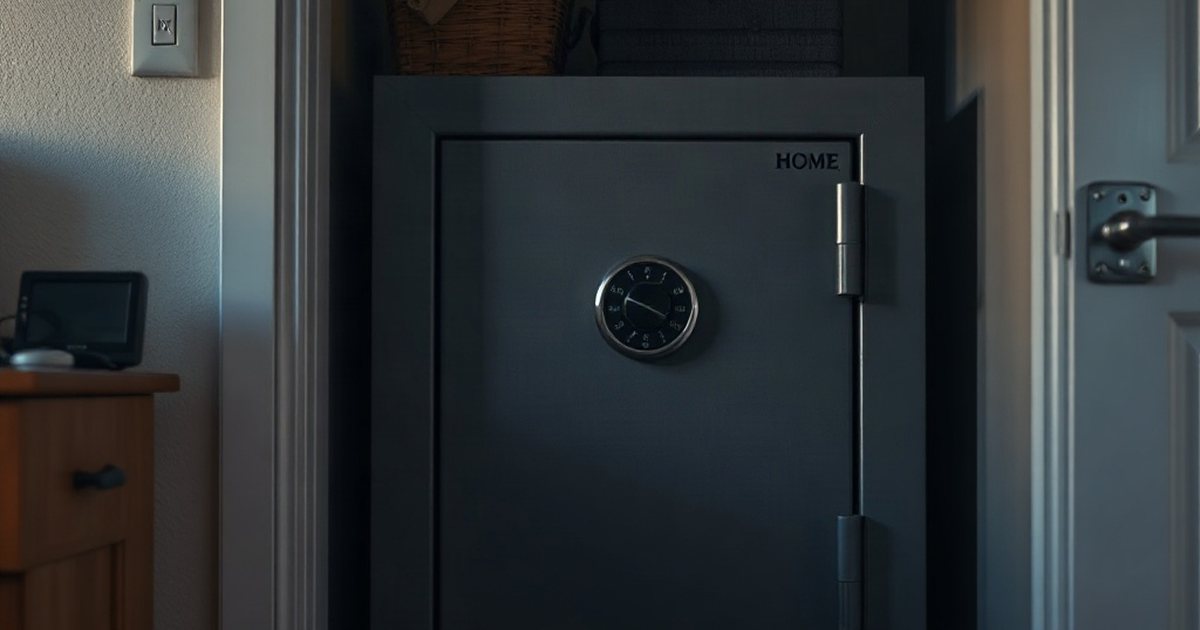
The statutes cited here mostly accept several kinds of device, including locked boxes and locks, rather than naming a safe. California is stricter about what a gun safe must be if a safe is the chosen method [23].
Do federal rules cover storage?
Federal law defines secure gun storage devices and addresses dealer transfers of handguns [19] [21]. Owner storage duties are mostly set by states.
This is general information, not legal advice. Storage statutes change and local rules can apply, so confirm the current text for your state or ask a qualified attorney. Legal compliance is a floor, not a guarantee of safety, and nothing here replaces supervision of children.
Sources
- The Effects of Child-Access Prevention Laws. RAND Corporation (Gun Policy in America), accessed 2026-10-13
- Fla. Stat. 790.174 Safe storage of firearms required (full text). Florida Legislature, Online Sunshine, accessed 2026-10-13
- 720 ILCS 5/24-9 Firearms; Child Protection (full text). Illinois General Assembly, accessed 2026-10-13
- California Firearms: Safety Device vs. Gun Safe. Dean Safe, accessed 2026-10-13
- Massachusetts General Laws c.140 s.131L – Storage of firearms. Massachusetts Legislature, accessed 2026-10-13
- M.G.L. c.140 s.131L Weapons stored or kept by owner (full text of penalty subsections). Massachusetts Legislature, accessed 2026-10-13
- C.R.S. 18-12-114 Secure firearm storage required (full text). Colorado Revised Statutes (Colorado.Public.Law mirror of the official text), accessed 2026-10-13
- Connecticut General Statutes 29-37i – Responsibilities re storage of firearms. Connecticut General Assembly, accessed 2026-10-13
- ORS 166.395 – Securing firearms; penalties; civil liability. Oregon Legislature, accessed 2026-10-13
- ORS 166.395 Securing firearms; penalties; civil liability (subsections 1 to 3). Oregon Legislature, accessed 2026-10-13
- N.Y. Penal Law 265.45 Failure to safely store rifles, shotguns, and firearms in the first degree. New York Penal Law (NewYork.Public.Law mirror of the official Consolidated Laws), accessed 2026-10-13
- Florida Statutes 790.175 – Transfer or sale of firearms; required warnings. Florida Senate (Florida Statutes), accessed 2026-10-13
- Minnesota Statutes 609.666 – Negligent storage of firearms. Minnesota Office of the Revisor of Statutes, accessed 2026-10-13
- Tex. Penal Code 46.13 Making a Firearm Accessible to a Child (full text). Texas Penal Code (Texas.Public.Law mirror of the official text), accessed 2026-10-13
- Texas Penal Code 46.13 – Making a Firearm Accessible to a Child (statute text via Texas.Public.Law mirror). Texas.Public.Law (mirror of the Texas Penal Code), accessed 2026-10-13
- Cal. Penal Code 25100 Criminal storage of a firearm (operative January 1, 2026). California Penal Code (FindLaw), accessed 2026-10-13
- Michigan Public Act 17 of 2023, section 9 (safe storage around minors), full text. Michigan Legislature, accessed 2026-10-13
- RCW 9.41.360 Unsafe storage of a firearm (full text). Washington State Legislature, accessed 2026-10-13
- 18 U.S. Code 921(a)(34) – definition of secure gun storage or safety device. Cornell Legal Information Institute (U.S. Code), accessed 2026-10-13
- 18 U.S.C. 922(z) Secure gun storage or safety device (full text of paragraphs 1 and 3). Legal Information Institute, Cornell Law School (U.S. Code), accessed 2026-10-13
- 18 U.S. Code 922(z) – Secure gun storage or safety device. Cornell Legal Information Institute (U.S. Code), accessed 2026-10-13
- Secure Gun Storage and Definition of Antique Firearm (final rule). Federal Register (ATF / DOJ), accessed 2026-10-13
- Cal. Code Regs. Tit. 11, 4100 – Gun Safe Standards. Cornell Legal Information Institute (California Code of Regulations), accessed 2026-10-13
- Guide To California DOJ Gun Safe Requirements. Locksmith Ledger, accessed 2026-10-13
- Child Access Prevention and Safe Storage in California. Giffords Law Center, accessed 2026-10-13
- Gun storage practices and risk of youth suicide and unintentional firearm injuries (Grossman et al., 2005). JAMA (PubMed abstract, PMID 15701912), accessed 2026-10-13
- The presence and accessibility of firearms in the homes of adolescent suicides (Brent et al., 1991). JAMA (PubMed abstract, PMID 1820470), accessed 2026-10-13
- C.R.S. 18-12-114 – Secure firearm storage required (text via Colorado.Public.Law). Colorado.Public.Law (mirror of the Colorado Revised Statutes), accessed 2026-10-13
Fire, burglary and lock ratings are quoted as the manufacturer or testing lab states them, with the source on each page. Safe-storage and child-access laws vary by state and change; check your state's current statute. No safe or lock replaces supervision of children around firearms. We do not sell or link to firearms or ammunition. This is general information, not legal advice. As an Amazon Associate we earn from qualifying purchases.
