Kentucky gun storage laws are handgun laws about minors. KRS 527.100 makes it an offense for a person under 18 to possess, manufacture or transport a handgun, and KRS 527.110 makes it a felony to provide a handgun to a juvenile or permit a juvenile to possess one in the situations the section describes. [1] [2]
This guide covers what the sections say, the penalty classes, and the federal dealer rule, as of November 2026. This is general information, not legal advice.
- Under KRS 527.100, a person under the age of 18 who possesses, manufactures or transports a handgun commits an offense, with permission-based exceptions. [1]
- Possession of a handgun by a minor in Kentucky is a Class A misdemeanor first and a Class D felony after. [1]
- KRS 527.110 makes unlawfully providing a handgun to a juvenile or permitting a juvenile to possess one a Class D felony. [2]
- KRS 527.100 treats a handgun as loaded if there is a cartridge in the chamber, or in the cylinder of a revolver. [1]
Does Kentucky have a safe-storage law?
RAND’s list places Kentucky among nine states whose laws impose criminal liability only for intentional, knowing or reckless provision of firearms to children. RAND describes that as a weaker form of child-access prevention than a negligent-storage law. [3] [4]
The Kentucky sections read the same way. They address a minor’s own possession and the act of providing a handgun, not an owner who leaves a handgun unsecured. RAND’s list is dated, so the statute text controls. [1] [2]
KRS 527.100: possession of a handgun by a minor
KRS 527.100 says a person is guilty of possession of a handgun by a minor when, being under the age of 18 years, he possesses, manufactures or transports a handgun as defined by KRS 527.010, except in listed situations. [1]
KRS 527.100 lists exceptions. One covers a minor on real property which is under the control of an adult and has the permission of that adult and the minor’s parent or legal guardian to possess a handgun. [1]
Another covers a minor at his residence who, with the permission of his parent or legal guardian, possesses a handgun. [1]
The section also defines loaded in Kentucky terms: a handgun is loaded if there is a cartridge in the chamber, or a cartridge in the cylinder if the handgun is a revolver. [1]
KRS 527.110: providing a handgun to a juvenile
KRS 527.110 is titled unlawfully providing a handgun to a juvenile or permitting a juvenile to possess a handgun. One clause covers a person who provides a handgun, with or without remuneration, in violation of KRS 527.040, 527.100 or 600.020 to any person he knows or has reason to believe is under the age of 18 years. [2]
A further clause covers permitting a juvenile to possess a handgun while knowing that there is a substantial risk that the juvenile will use a handgun to commit a felony offense. The section’s title also speaks of permitting a juvenile to possess a handgun. [2]
The knowledge terms are important. The provider clause turns on a person who knows or has reason to believe a juvenile is under 18, and the permitting clause turns on knowing of a substantial felony risk. [2]
Because the first clause covers providing a handgun with or without remuneration, a gift or loan to a person the provider knows or has reason to believe is under 18 is within its words, not only a sale. [2]
KRS 527.110 reaches the person who provides the handgun, not the minor. The minor’s own possession is addressed separately by KRS 527.100, which the provider clause itself names as one of the sections whose violation triggers it. [2]
Penalties under the Kentucky sections
For a minor’s possession, KRS 527.100 provides a Class A misdemeanor for the first offense and a Class D felony for each subsequent offense. [1]
For providing a handgun to a juvenile or permitting a juvenile to possess one, KRS 527.110 states the offense is a Class D felony. [2]
Kentucky’s sentencing sections give the ranges. For a Class A misdemeanor the term shall not exceed twelve months, and for a Class D felony the term is not less than one year nor more than five years. [5] [6]
The two sections escalate differently. A minor’s possession steps up from a Class A misdemeanor to a Class D felony on a later offense, while providing a handgun to a juvenile or permitting possession is stated as a Class D felony from the start. [1] [2]
The federal rule that applies in Kentucky and every state
Federal law adds a dealer rule in Kentucky as in every state. Under 18 U.S.C. 922(z), a handgun may not be sold, delivered or transferred by a licensed importer, manufacturer or dealer to an unlicensed person without a secure gun storage or safety device. [7]
An owner who uses such a device with a handgun is entitled to immunity from a qualified civil liability action, but not against negligent entrustment or negligence per se actions. The device duty falls on licensed sellers. [8] [7]
What this means for choosing storage in Kentucky
The Kentucky sections name no lockbox, safe or lock, so the text gives no list of devices that satisfy them. They are framed around age, permission, knowledge and the act of providing, and they apply to handguns. [1] [2]
The permission exceptions are about who may possess a handgun and where, not about how a handgun is kept. A minor with parental permission at his residence, or on property under an adult’s control with permission, fits an exception, and nothing in these sections tells a household how to store a handgun. [1]
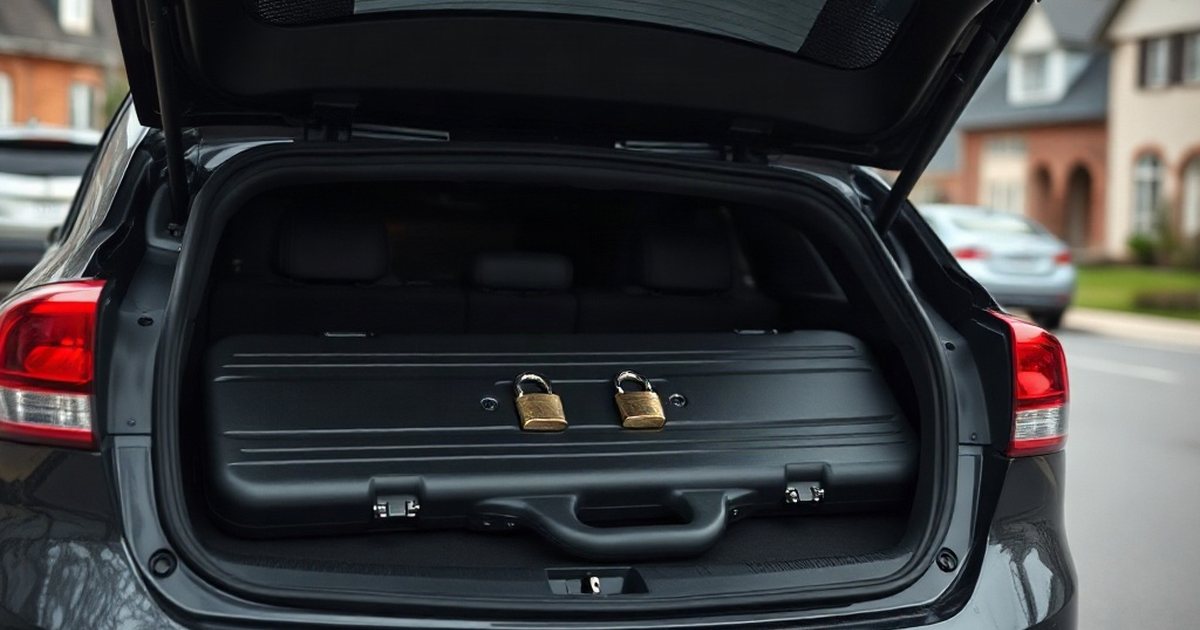
The American Academy of Pediatrics advises that children and teens not be able to reach the keys or combinations to lock boxes or gun safes, and that loaded, unlocked guns not be kept in the car or elsewhere on the property. [9]
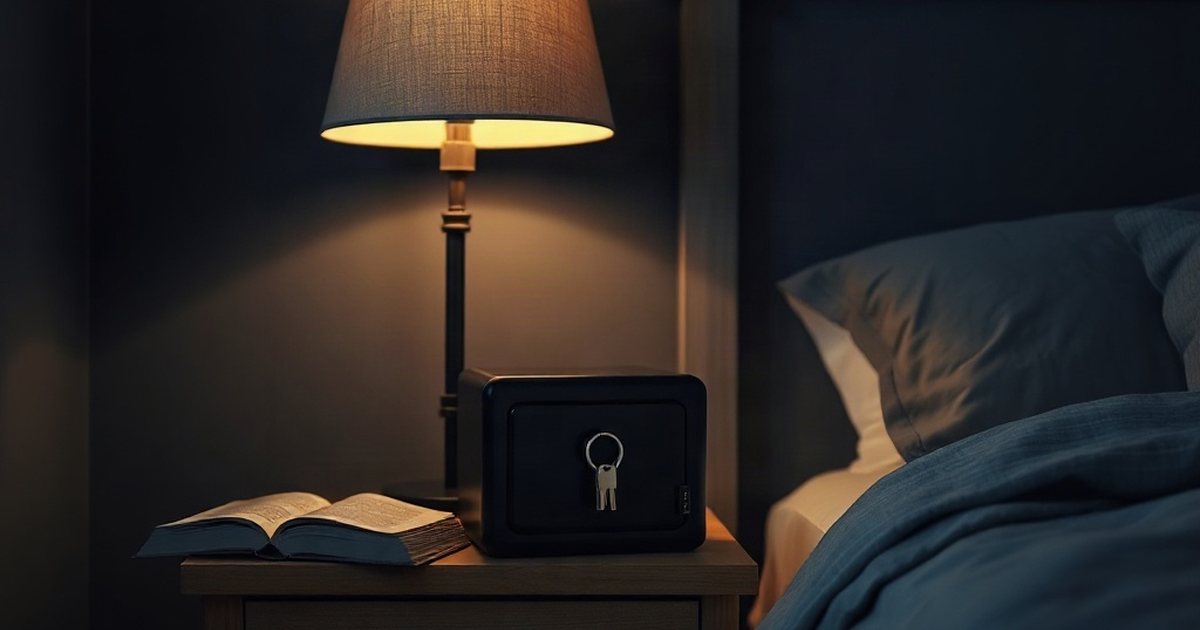
Both sections are written for handguns, but the pediatric advice is broader: it says all guns in a home should be locked and unloaded, with ammunition locked separately. [9]
For a household with teenagers, the practical question is simpler than the statute: who can reach the handgun, and can they load it? The loaded definition in KRS 527.100 shows how much turns on a cartridge in the chamber or cylinder. [1]
A lock or container controls access. It does not replace supervision.
FAQ
Does Kentucky require guns to be locked up?
The Kentucky sections discussed in this guide do not contain a lock-up requirement. KRS 527.100 and 527.110 address a minor’s handgun possession and providing a handgun to a juvenile. [1] [2]
How old is a minor under Kentucky’s handgun law?
KRS 527.100 applies to a person under the age of 18 years. [1]
What is the penalty for a minor with a handgun in Kentucky?
A Class A misdemeanor for the first offense and a Class D felony for each subsequent offense. A Class A misdemeanor term shall not exceed twelve months. [1] [5]
What is the penalty for providing a handgun to a juvenile in Kentucky?
KRS 527.110 states it is a Class D felony, and the sentencing section provides a term of not less than one year nor more than five years for that class. [2] [6]
This is general information, not legal advice. Statutes change, so read the current text of KRS 527.100 and KRS 527.110 or ask a Kentucky lawyer about your own situation. Controlling access with a lock still leaves supervision as a separate job.
Sources
- KRS 527.100 (possession of a handgun by a minor). Kentucky Legislative Research Commission (official statute site), accessed 2026-11-05
- KRS 527.110 (unlawfully providing a handgun to a juvenile or permitting a juvenile to possess a handgun). Kentucky Legislative Research Commission (official statute site), accessed 2026-11-05
- The Effects of Child-Access Prevention Laws. RAND Corporation (Gun Policy in America), accessed 2026-10-13
- The Effects of Child-Access Prevention Laws (state lists). RAND Corporation (Gun Policy in America); host blocks scripted fetches (403), page loads in a browser, accessed 2026-10-13
- KRS 532.090 (sentence of imprisonment for misdemeanor). Kentucky Legislative Research Commission (official statute site), accessed 2026-11-05
- KRS 532.060 (sentence of imprisonment for felony). Kentucky Legislative Research Commission (official statute site), accessed 2026-11-05
- 18 U.S.C. 922(z) Secure gun storage or safety device (full text of paragraphs 1 and 3). Legal Information Institute, Cornell Law School (U.S. Code), accessed 2026-10-13
- 18 U.S. Code 922(z) – Secure gun storage or safety device. Cornell Legal Information Institute (U.S. Code), accessed 2026-10-13
- Handguns in the Home (HealthyChildren.org). American Academy of Pediatrics (HealthyChildren.org), accessed 2026-10-13
Fire, burglary and lock ratings are quoted as the manufacturer or testing lab states them, with the source on each page. Safe-storage and child-access laws vary by state and change; check your state's current statute. No safe or lock replaces supervision of children around firearms. We do not sell or link to firearms or ammunition. This is general information, not legal advice. As an Amazon Associate we earn from qualifying purchases.
